Why a berry infusion may taste mostly of hibiscus
A berry name describes the intended flavour, while the ingredient list reveals which fruits and botanicals build it.
The picture and the mixture answer different questions
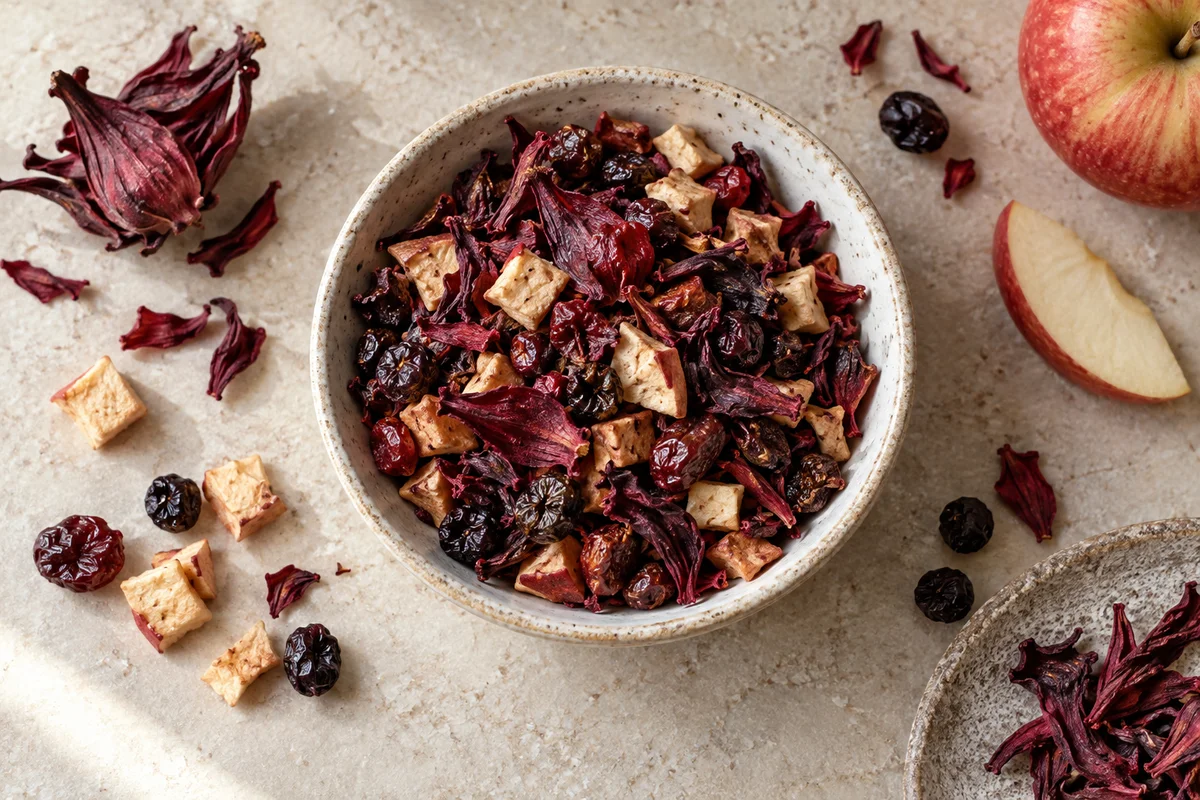
A large raspberry on a tea packet tells you the flavour the maker wants to suggest. It does not necessarily tell you which ingredient occupies most of the dry blend. Fruit infusions often combine a base of hibiscus, rosehip or apple with a smaller quantity of berries and, in some products, flavouring. The full list is needed to understand that construction.
This is not automatically a criticism of the mixture. A blend can be enjoyable without consisting mainly of the pictured fruit. The problem is an expectation mismatch: someone imagines a gentle cup of raspberry while the actual recipe delivers a bright, tart red infusion with a berry accent.
Separate red colour from berry aroma
Hibiscus can create a vivid red liquor and a strong sour taste. Neither feature proves a high berry content. Apple may supply a softer fruit middle, and rosehip another kind of fruitiness. The berry pieces or flavouring can then contribute the particular scent associated with the name on the front.
Try describing those parts independently. Does the aroma suggest strawberry while the taste is mostly tart? Is there a rounded middle, or does the cup move directly from perfume to acidity? These observations explain the drink more clearly than deciding that it tastes either real or fake based only on how red it looks.
Percentages help, but tasting still matters
Where percentages are given, they provide a useful picture of the proportions. They do not translate directly into equal percentages of perceived flavour. Some ingredients are far more aromatic or colourful than others, and the way the material has been prepared also matters. A small amount of a forceful component can remain very noticeable.
For someone who dislikes sharp fruit tea, the useful question is not simply whether the next packet says a different berry. Look at the underlying blend and its description. A recipe built around the same tart base may offer a similar experience despite a new photograph. Understanding the ingredients lets the berry name remain a flavour cue, rather than asking it to explain the entire cup by itself.