Keep a brewing note you will actually use
A useful tea note records what you did and what you would change. It can fit on a few lines without becoming a tasting diary.
Record the details you cannot reconstruct
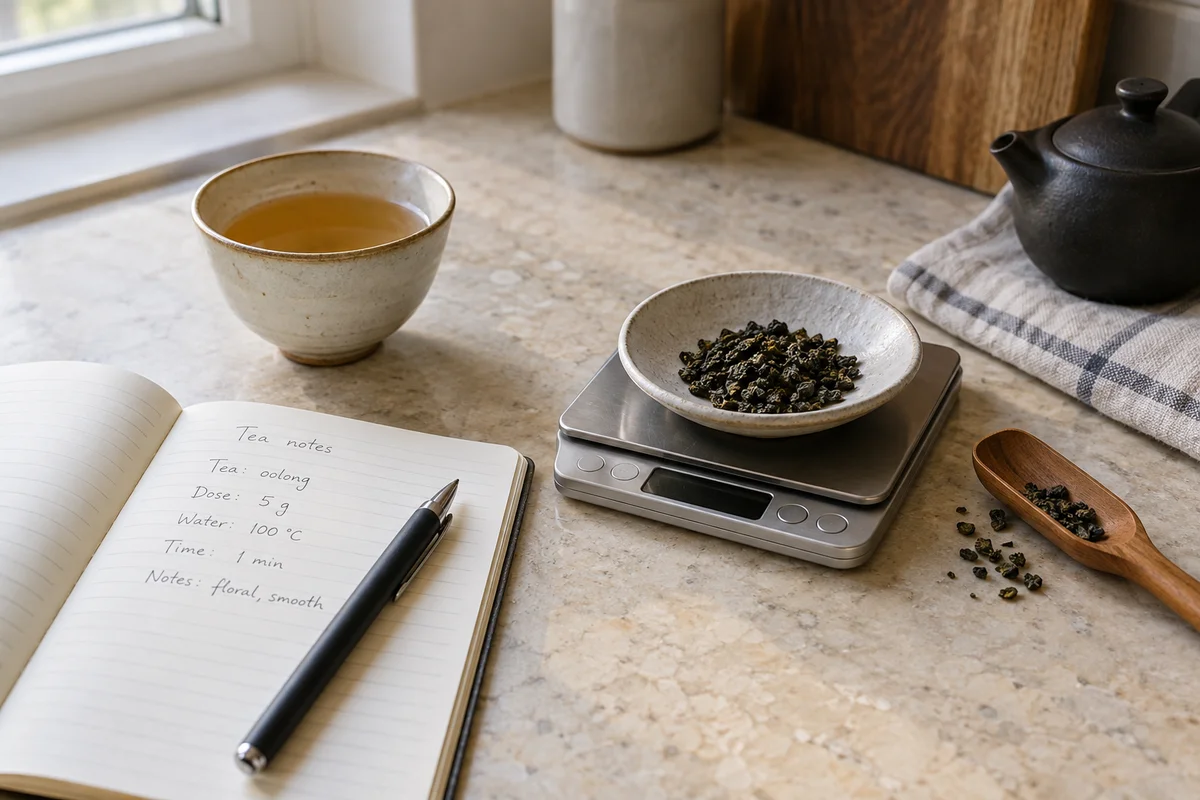
After a particularly good cup, it is easy to assume you will remember how you made it. A week later, the leaf portion, mug size and cooling pause may all be uncertain. Write down the few details that define the brew: which tea, how much dry leaf, how much water, the starting temperature or cooling routine, and the contact time. Include the vessel if you use several with different capacities.
Use whatever format you will actually revisit. A note on the packet, a small notebook or a plain phone entry can all work. There is no need to create a complicated spreadsheet before enjoying breakfast. The important distinction is between a clear observation such as 3 grams in the blue 250-millilitre cup and a vague memory of one generous spoon in a mug.
Describe the cup in your own words
You do not need a professional flavour vocabulary. Too thin for milk, pleasant toasted aroma or dry finish after the second sip are useful descriptions. Avoid adding tasting words because a seller used them if you did not notice them yourself. A note belongs to your experience of that particular brew; it is not a review that must sound authoritative or agree with everybody else's description.
Add one proposed change, not a list of every possible variable. Next time use slightly less leaf gives the next cup a clear purpose. If you change dose, temperature and time simultaneously, even careful notes may not explain the result. For repeated short infusions, a simple sequence of times and a word about each cup can be enough to recover the session later.
Keep the good recipe and retire the clutter
When you find a version you enjoy, mark it clearly and stop revising it unless something changes. A new packet, another water source or a different pot may justify another comparison. Old unsuccessful attempts do not have to occupy the front page forever. The log is a practical memory aid, not an obligation to evaluate every cup. On an ordinary busy morning, being able to glance at a familiar recipe and make it without further thought is exactly the benefit those earlier notes were meant to provide.