A cloth filter needs thorough drying
A reusable cloth filter needs more than a quick squeeze after brewing. Remove the leaves, clean it as directed and let it dry completely.
Choose a filter made for the job
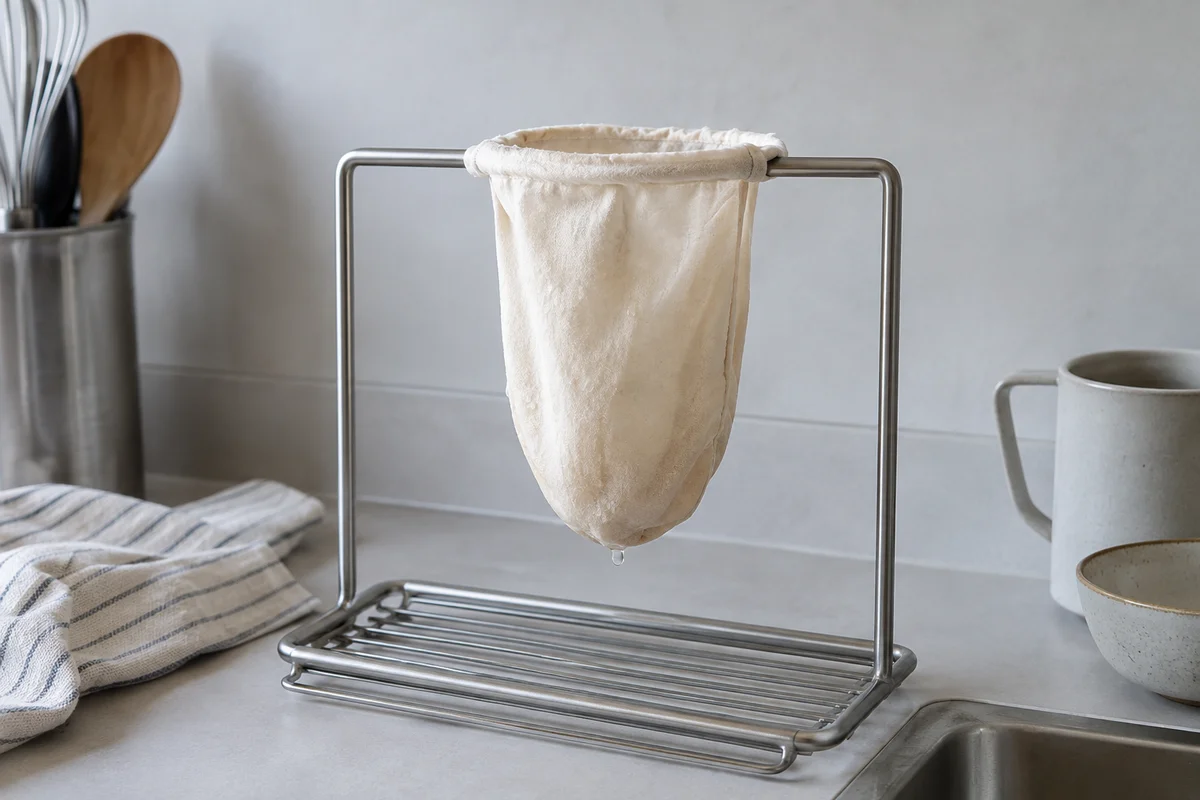
A reusable cloth tea filter is not the same as an arbitrary piece of fabric tied around leaves. Use a product intended for food contact and hot infusions, with clear care guidance from its maker. Check the seams, drawstring or frame before the first use. The material should remain supported in the vessel without allowing the opening to sink below the water and release the contents.
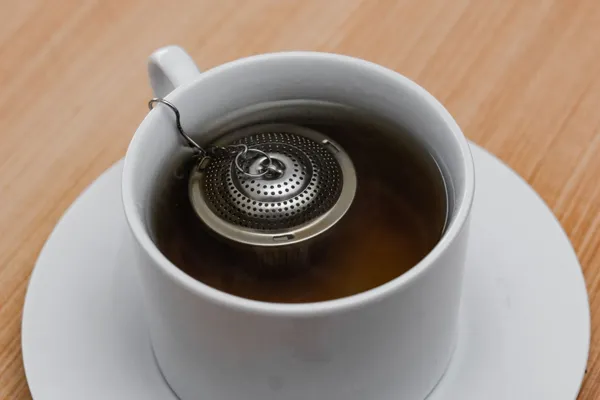
Follow any first-use washing instructions, then give the leaves enough room inside. A cloth bag filled tightly can crowd expanding tea just as a small metal ball can. Position it so you can remove it comfortably at the end of the infusion. Do not wrap a hot wet cord around your fingers or pull so hard that the filled filter swings and spills liquid.
Empty before the leaves dry into it
Once safe to handle, remove the spent leaves and rinse away particles while they are still easy to dislodge. Turn the filter as its design permits, paying attention to seams and folds. Use the cleaning method recommended for that particular product. A universal instruction to use no detergent, or to soak every fabric in a strong cleaner, ignores differences in materials and construction.
After cleaning, rinse thoroughly and let the filter dry fully in a clean airy place. Leaving it scrunched in a closed container or damp inside the teapot defeats the purpose of cleaning. If your kitchen has no practical place for complete drying between uses, a different filter format may suit your routine better. Reusability is useful only when the repeated cleaning and drying are actually manageable.
Know when washing is not enough
Staining from tea does not automatically mean the fabric is dirty, but persistent unwanted odour, visible mould, damaged seams or fibres breaking away deserve attention. Follow the maker's replacement guidance and do not keep using a filter that seems spoiled or structurally unreliable. Keep strong flavoured blends separate if their aromas carry into subtler teas and that bothers you. A clean, dry filter should make brewing straightforward; it should not become a source of uncertainty about what remains from the previous cup.