Retire a cup with a spreading crack
A spreading line, chipped rim or loose handle changes how a cup should be used. Keep damaged drinkware out of the next tea round.
Take it out of circulation
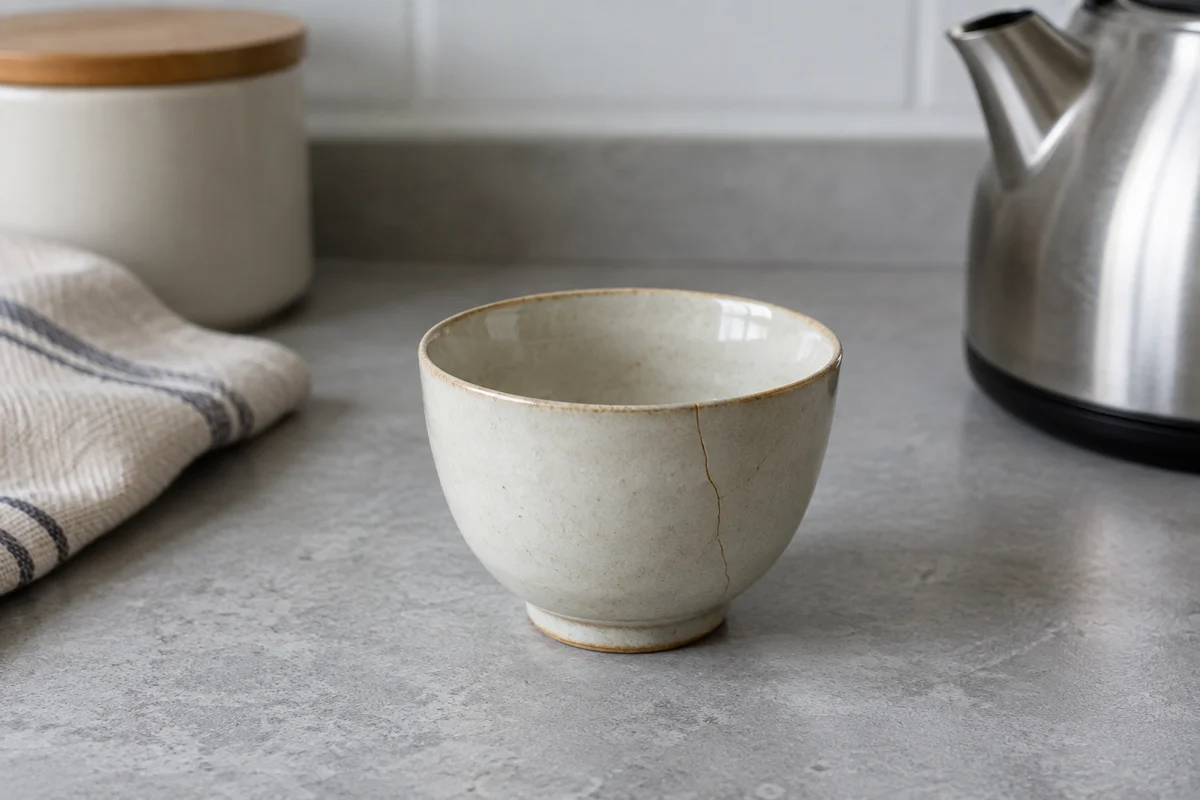
A crack often becomes noticeable during an ordinary task: drying a cup, lifting a pot from the cupboard or seeing tea collect along a pale line. Put the piece aside before the next use. Do not fill it with boiling water to find out whether it still holds. A vessel that leaks or breaks while being carried presents a different problem from an unattractive mark on an empty shelf.
Look at the whole piece without running a finger over sharp edges. The drinking rim, base, handle attachments and spout are all worth checking. A loose handle is especially easy to dismiss when the body appears sound, but it carries the weight of the hot contents. Move damaged items away from the clean cups so another person does not pick one up without knowing why it was set aside.
Do not turn uncertainty into a home repair
Some glazed ceramics have a fine network of surface lines as part of their finish; other lines may indicate damage. A photograph and the maker's advice can help identify the situation. Until you know, use a different cup. The fact that a line has been present for a long time is not enough to establish that a changing or leaking vessel remains suitable for hot drinks.
Ordinary household glue, decorative repair kits and tape are not a reliable answer for a surface that contacts hot tea or carries a filled pot. Do not assume that a product described as waterproof is suitable for food contact and repeated heat. If professional restoration is considered for a valuable piece, clarify whether the result is intended for display or for the original drinking use. Those are separate outcomes.
Keep the memory without the hot liquid
A favourite cup can be retained as a display object once any sharp edges are dealt with appropriately and nobody can mistake it for usable drinkware. It may also be simpler to photograph it and let it go. For disposal, follow local guidance for the material; ceramic cups and heat-resistant glass are not automatically accepted with ordinary glass bottles. Before replacing it, think about how the damage happened. More space on a crowded shelf or a gentler loading position may prevent the next accident.