Descale the kettle according to its instructions
Treat mineral deposits with the method approved for your kettle, then give the rinsing stage as much attention as the cleaning.
First identify what you are cleaning
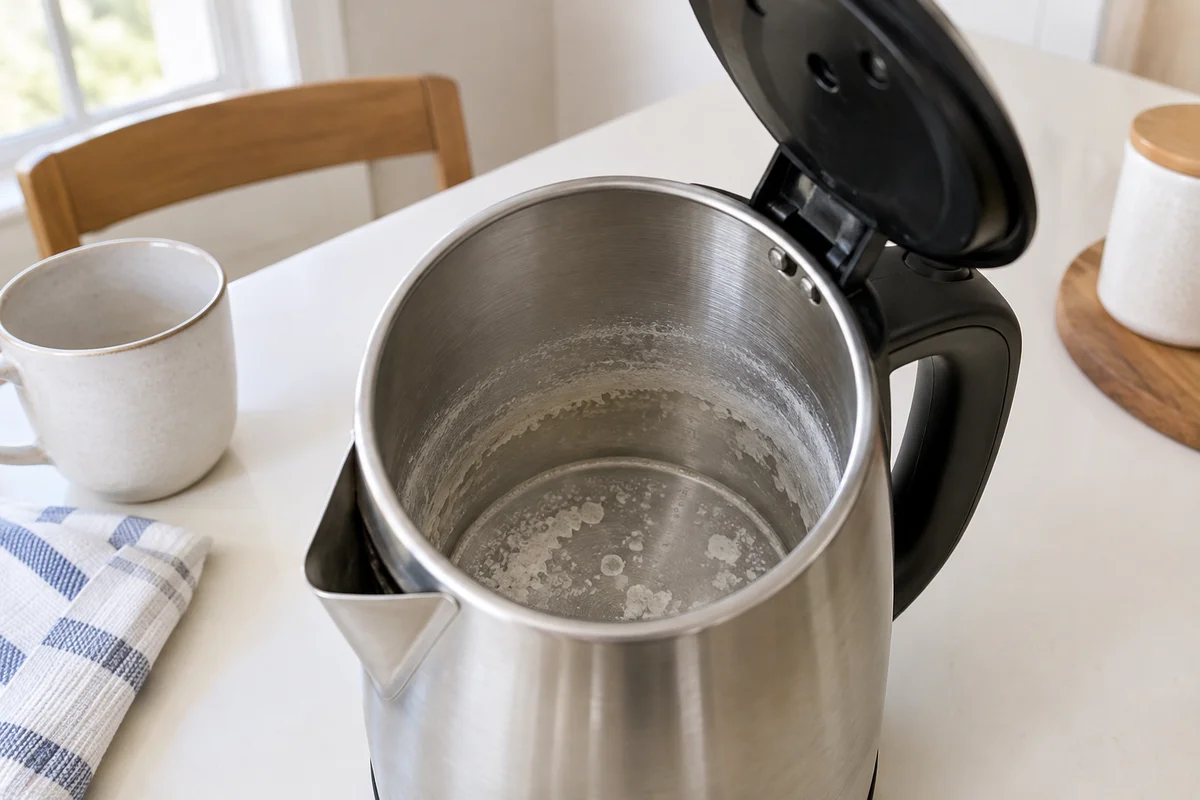
Pale, chalky deposits in a kettle can be mineral scale left by the water. They are different from tea residue, which should not normally be present in an appliance used only to heat water. Look at the cool, unplugged kettle and compare what you see with the manufacturer's care guidance. A loose filter may collect flakes as well as deposits on the base. Do not scrape the interior with a knife or metal tool to make it look new. If you see damage, an unfamiliar coating peeling away or a change you cannot identify, seek product-specific advice instead of assuming every mark needs an acid treatment.
Follow one complete method
Use the descaling method and product permitted for that appliance. The relevant instructions include dilution, amount, temperature, contact time and what to do afterwards. Do not combine a household remedy with a commercial cleaner or add extra strength because the deposit looks stubborn. Keep the kettle's electrical base and connections dry, and follow the manufacturer's directions about whether the cleaning stage involves heating. Different products and materials need different handling; an instruction for one kettle is not a universal recipe. Make it clear to other people that the kettle is being cleaned so nobody uses the solution for a drink.
If the instructions allow a repeated treatment for remaining scale, follow that process rather than scraping or leaving the first solution indefinitely. Check any removable scale filter separately and clean it only as directed. A filter is not necessarily meant to be detached by pulling hard at its edge.
Finish before making tea
Discard the cleaning liquid as its label directs, rinse thoroughly and complete any specified fresh-water boil-and-discard cycles. Cleaning is not finished merely because the visible deposit has gone. Do not taste a solution to decide whether enough cleaner has been removed. Once the required rinsing is complete and the appliance is ready for normal use, keep an eye on how quickly deposits return. Water and frequency of use will influence that. A care routine based on the manual and the condition of the kettle is more useful than an arbitrary schedule copied from someone with different water.