Check before putting teaware in the dishwasher
The pot, lid and filter may have different washing instructions. Check the individual parts before treating them as one dishwasher-safe set.
Start with the exact piece
Two white porcelain teapots can look almost identical while having different washing instructions. Decoration, metal fittings, a wooden handle or the construction of a filter can change what the maker allows. Look up the exact product or keep its care card, rather than extending the instructions from another piece in the cupboard. If you cannot identify an older or handmade item, ask the maker where possible and choose gentle hand washing until its requirements are clear.
Separate removable parts before deciding what belongs in the machine. A dishwasher-safe body does not automatically include every lid, gasket or infuser supplied with it. A small silicone piece can also be easy to lose if placed loosely in a basket. Use the recommended arrangement and keep anything excluded from machine washing aside, where it will not be added by habit during the next load.
Loading is part of the decision
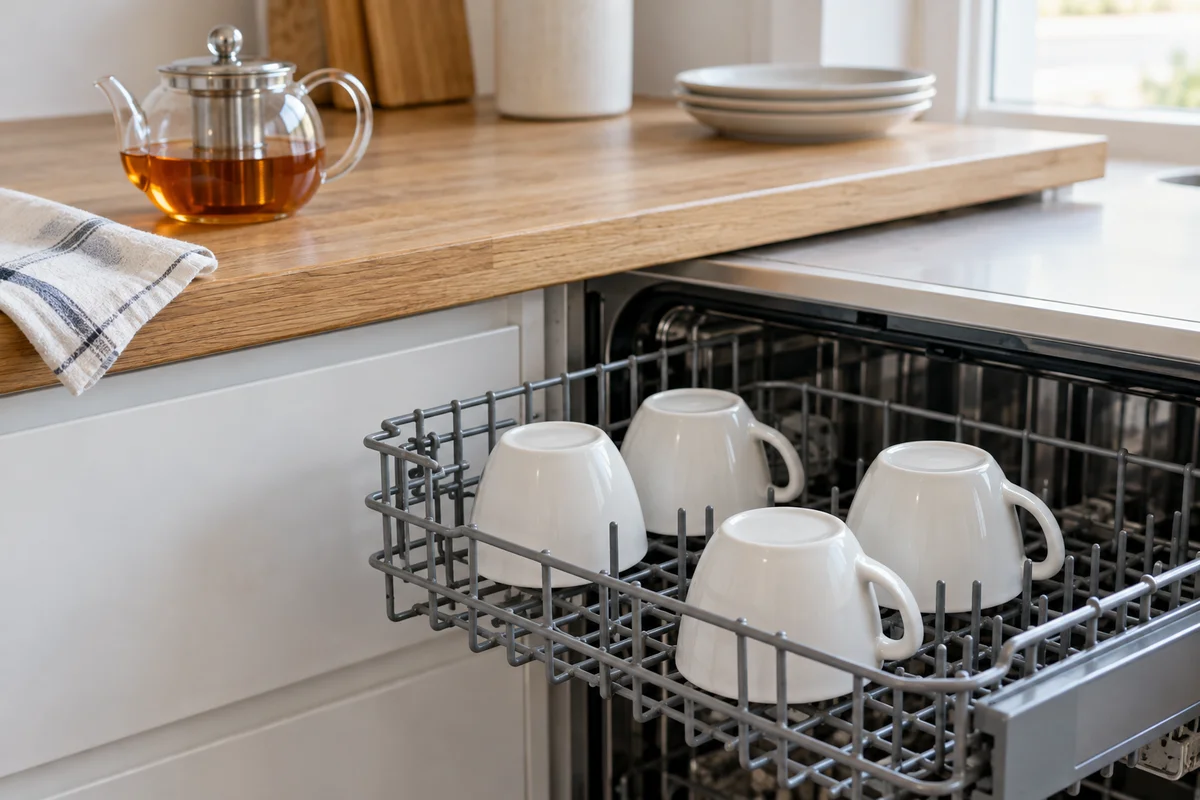
Empty the leaves into an appropriate waste container before rinsing the filter. Do not expect the dishwasher to remove a packed layer of wet leaf fragments from fine mesh. Place approved cups and pots where water can reach their interiors and drain out again. Keep delicate rims away from other hard items, and make sure a long spout or handle cannot be struck by a moving rack or spray arm.
An overcrowded load defeats the convenience. If a favourite pot only fits by leaning against a heavy pan, wash it separately instead. Follow the appliance and teaware guidance for programme and detergent rather than assuming the hottest cycle is always the best choice. Remove pieces when they can be handled safely, and check recessed areas for retained water before putting them into a closed cupboard.
Change the method when something changes
If a surface becomes rough, decoration fades or a fitting loosens, pause and review the washing instructions. A new defect is not a reason to run a stronger cycle. Persistent tea marks may need a product-approved cleaning treatment, but cosmetic staining and damage are different issues. Keep the routine simple enough that everyone using the kitchen understands it: which items go in, which parts come off, and which pieces are washed by hand.