When tea leaves your mouth dry
A drying sensation is part of tea's texture, not simply another word for bitterness. Notice when it appears before changing the recipe.
Texture has its own vocabulary
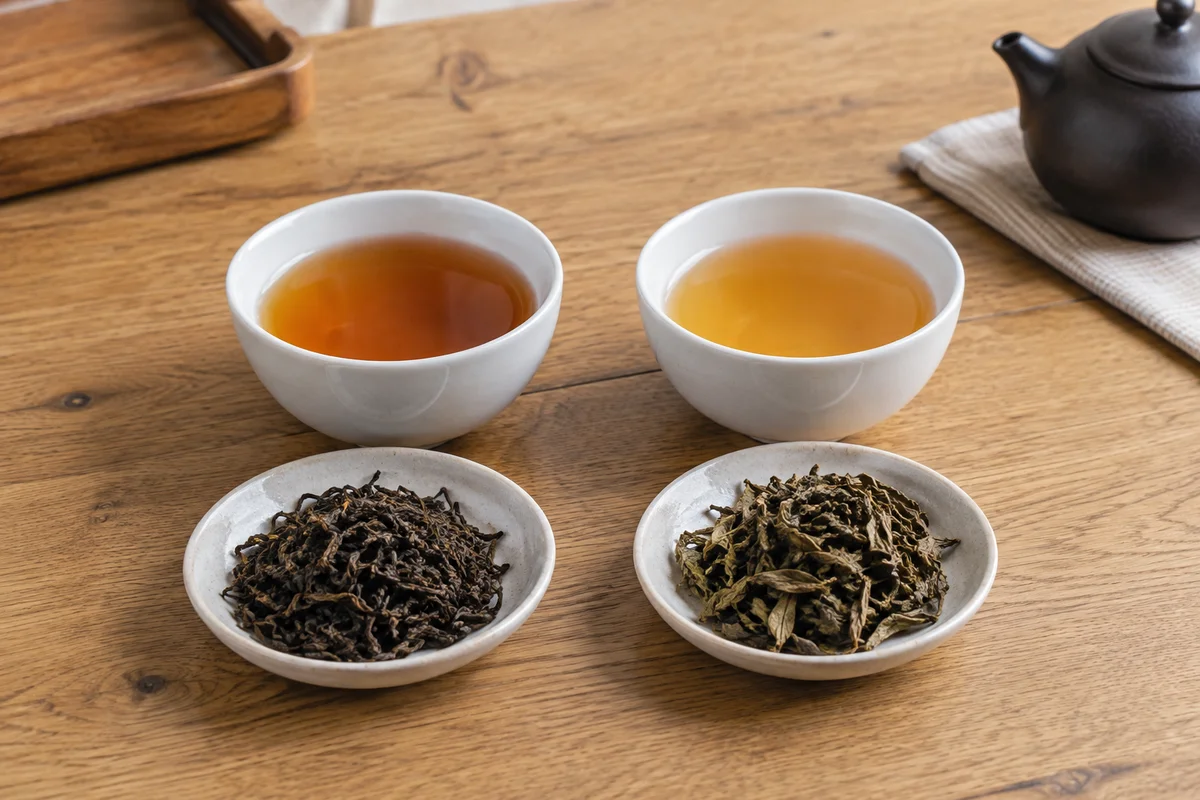
After a sip, the inside of the cheeks may feel slightly grippy or the tongue less slippery. Tea tasters call this astringency. It is different from a bitter taste, although the two can appear together. A brisk black tea can have a drying finish that feels refreshing to one person and excessive to another. The useful question is whether that sensation fits the cup you want to drink.
Compare a small sip before and after the tea has cooled a little. Notice whether the dryness arrives immediately or builds over several mouthfuls. Take a pause between comparisons and avoid tasting a whole line of very strong infusions in rapid succession. Otherwise the lingering sensation from one cup can make the next one difficult to judge fairly.
Do not turn one sensation into a diagnosis
A drying finish after tea is a sensory observation, not a reliable measure of dehydration, caffeine content or the quality of the leaves. Nor does a smooth cup prove that it contains less caffeine. Keep the tasting discussion separate from health conclusions. If dryness is persistent outside tea drinking or accompanied by other symptoms, changing a brewing recipe is not a substitute for seeking appropriate advice.
For the tea itself, first check how long the leaves remained in contact with water. A forgotten basket or a pot kept warm with leaves still inside may develop a more forceful finish than the recipe intended. Try the normal dose with a shorter, controlled contact time where the tea's preparation instructions allow it. Remove the leaves completely before you begin comparing cups.
Find a balance, not a zero point
If the cup becomes thin before the drying sensation feels comfortable, that particular style may not be the best match for your preferences. Try a different tea rather than continually weakening the same one. Milk can change the experience of a robust black tea if you enjoy it that way, but you do not need to add milk to every style. A small amount of astringency can provide shape and a clean finish. Eliminating it entirely is not a universal goal, and another drinker's preferred balance does not have to be yours.