Let the teapot dry with its lid off
Putting the lid back on is tidy, but it can close moisture inside. Give a washed pot time and space to dry.
Clean first, then dry
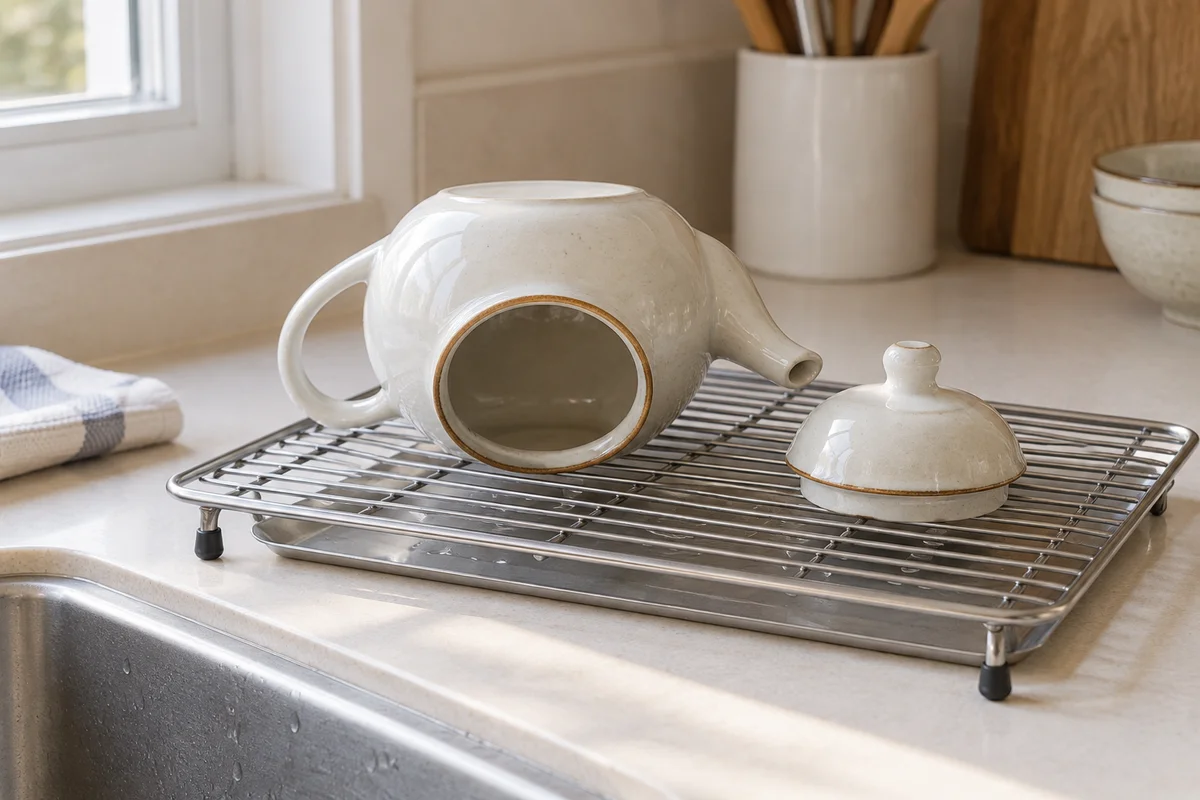
Leaving a pot open is helpful only after the used leaves and tea residue have been dealt with. An open lid does not turn yesterday's damp leaves into a clean vessel. Empty the pot, follow its material-specific washing instructions and rinse as required. Then let residual water drain away. Check the small places where it can collect: a lid's underside, the recess around an infuser and the base of a removable basket. Those pieces may need to dry separately. If the pot has parts that are not intended to be removed, do not dismantle them merely to make the drying arrangement look more complete.
Choose a stable resting place
Set the pot on a clean surface where it will not be knocked by the next person using the sink. Leave the lid beside it rather than balanced on the opening in a position where it could fall. Do not put a fragile vessel on an uneven pile of dishes to create a steep draining angle. Follow any guidance for the particular shape and material. A rack that supports the pot securely can be useful, but a stable upright position with the lid off may be more sensible than an improvised balancing act. Keep the parts away from dirty splashes while allowing air to circulate.
A cloth underneath should be clean and not already saturated. Replace or dry it as needed; otherwise the pot may be standing in the moisture you were trying to remove. Avoid using strong heat to hurry a material that is not approved for it.
Store it when the job is finished
Before closing the lid and putting the pot away, check that the inside and separate pieces have dried. There is no universal waiting time: shape, material and room conditions differ. If you regularly discover an old smell when opening the cupboard, look at the cleaning and drying routine rather than assuming the tea itself is responsible. An infuser stored wet inside an otherwise dry pot can undo the care taken with the larger vessel. Make the drying space part of the setup, even if that means keeping fewer pots on the shelf. A pot ready for the next cup should be clean, dry and easy to reach, not merely hidden neatly behind its lid.