An invitation to East Frisian Teetied
An East Frisian tea table offers a sequence to notice, but your host is a better guide than a memorised etiquette script.
Notice the cup before reaching for the spoon
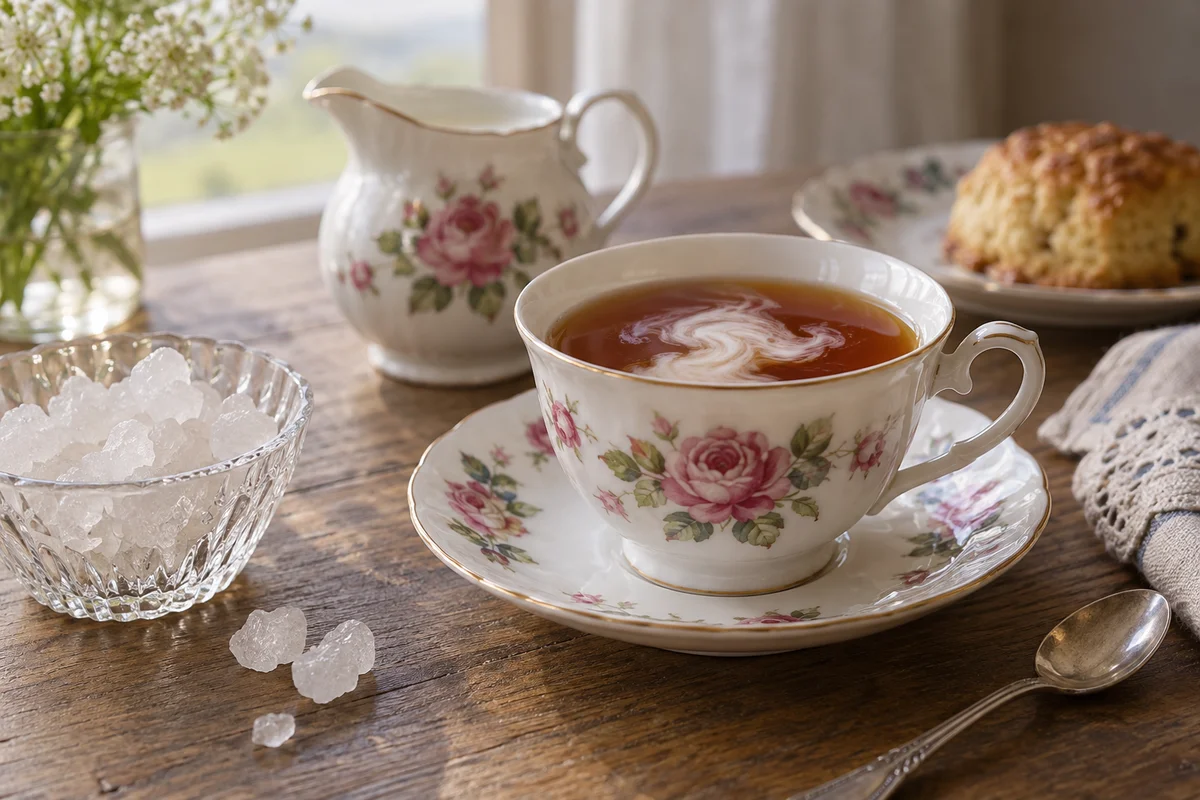
At a traditional East Frisian Teetied, rock sugar, strong tea, and cream create a cup with distinct layers. The cream cloud is part of the pleasure, and stirring is not the expected first move. If you are invited for the first time, watch the host's handling of the cup and ask a simple question when something is unfamiliar. The invitation is a chance to share time, not an exam in regional technique.
The small serving can be surprising if your usual tea arrives in a large mug. Allow the cup to be its own occasion rather than expecting one pour to replace your normal breakfast quantity. Notice the changing balance as you drink, and let the host explain any household preferences. Regional traditions are lived by people, so a family's ordinary tea table may not look exactly like a visitor demonstration or a photograph in a museum.
Join the conversation, not a performance
You do not need to narrate every action or turn the cream cloud into a long photo session. Ask before taking pictures of people or special family porcelain. A brief photograph of your own cup may be welcome, but the social pace belongs to the gathering. If you want to understand the equipment, choose a quiet moment to ask about the sugar bowl, the cream ladle, or the pattern on a cup rather than interrupting each pour.
If you do not take sugar or cream, say so before the tea is assembled. A considerate host can tell you what is possible; there is no need to pretend that every ingredient suits you. Equally, do not announce that you have improved the tradition by changing it. You can appreciate the customary form while enjoying a version that fits your needs. Courtesy is easier when preferences are stated early and without judgement.
Afterwards, buying a regional blend can bring back part of the experience, but it will not reproduce the entire table by itself. Keep the preparation advice and choose a quantity you will use. The most useful souvenir may be a clearer sense of how an ordinary drink can give shape to a visit: a cup served with attention, time for another conversation, and no hurry to turn every detail into a rule.