Elderflower and its delicate floral note
Dried elderflower gives a gentle floral cup whose character is different from the sweetness of elderflower cordial.
Set the cordial expectation aside
Elderflower is familiar to many people through syrup or cordial. That sweetened drink is not a direct preview of a plain dried-flower infusion. Without sugar and added acidity, the flower's own profile can seem quieter, more herbal and less obviously juicy. The difference is not a failure to extract the familiar bottled flavour; the two drinks have different constructions. A cereal-like undertone can coexist with the flowers' fragrance rather than replacing it.
A dried elderflower cup can carry a soft floral aroma with honey-like or lightly cereal-like associations. Those comparisons leave room for a dry finish. It need not taste like a spoonful of syrup to have a clear and pleasant elderflower identity.
Tiny flowers, a light-looking cup
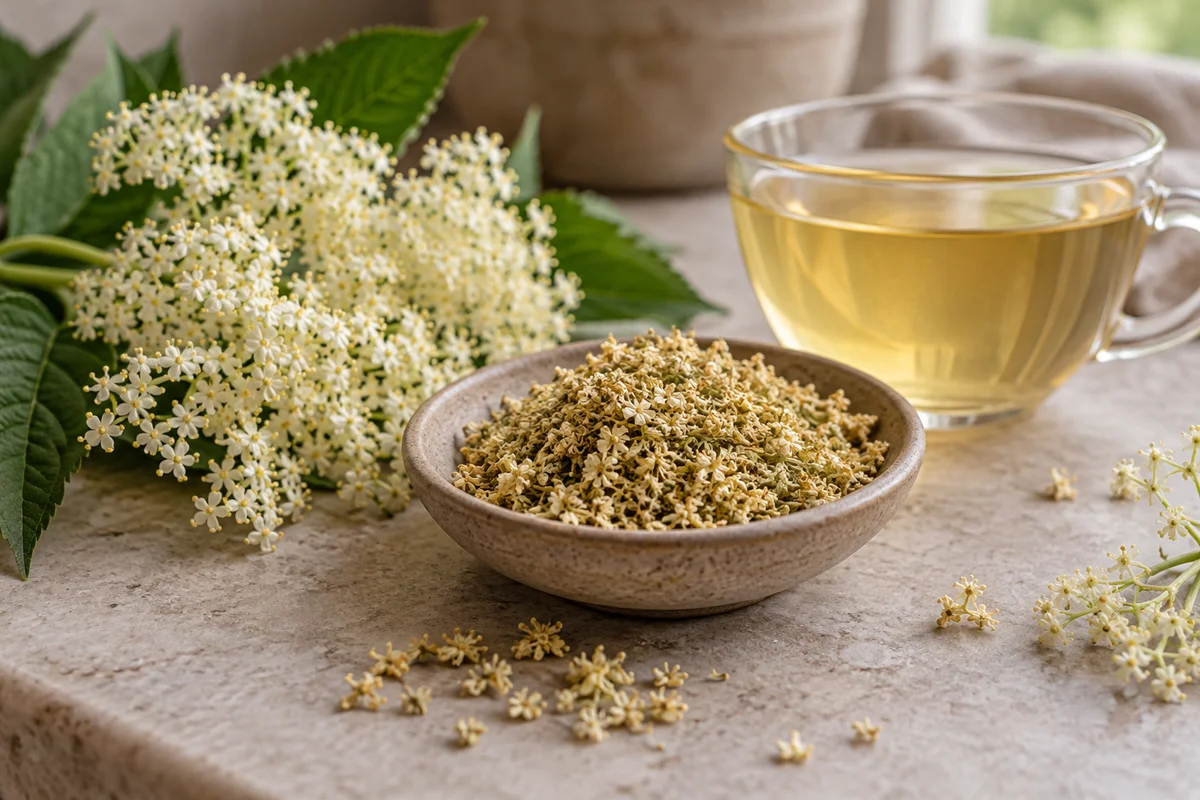
The ingredient consists of small dried blossoms rather than the dark berries produced later by the plant. Elderflower and elderberry are therefore not interchangeable names for the same tea material. A photograph of berries may fit a different product but would be misleading for an article about the flowers.
Dry blossoms can look cream, yellowish or light brown rather than the bright white of a fresh cluster. A pale infusion is also normal for a flower-led drink. Neither the colour of the material nor the lightness of the cup is enough to predict aroma strength. The scent and finish provide the more useful evidence.
A gentle ingredient can still be lost
In a mixture with strong mint, hibiscus or heavy spices, elderflower may become a background note. That can be an intentional choice, but a large flower illustration on the packet does not guarantee that it will lead the taste. A clear ingredient description helps explain the role it actually plays.
For a plain product, look for a defined floral opening and a clean, mild finish rather than demanding force. Use prepared food-grade blossoms and the supplied instructions; this is an ingredient guide, not a reason to substitute unidentified flowers or other parts of the shrub. Once those boundaries are clear, elderflower can be appreciated for its small-scale detail: a light fragrance, a soft middle and an aroma that does not need sugar to be recognisable.