Learn a gaiwan grip with cool water
A gaiwan becomes easier to understand with cool water and an unhurried practice pour. Comfort matters more than copying a graceful photograph.
Begin without tea or heat
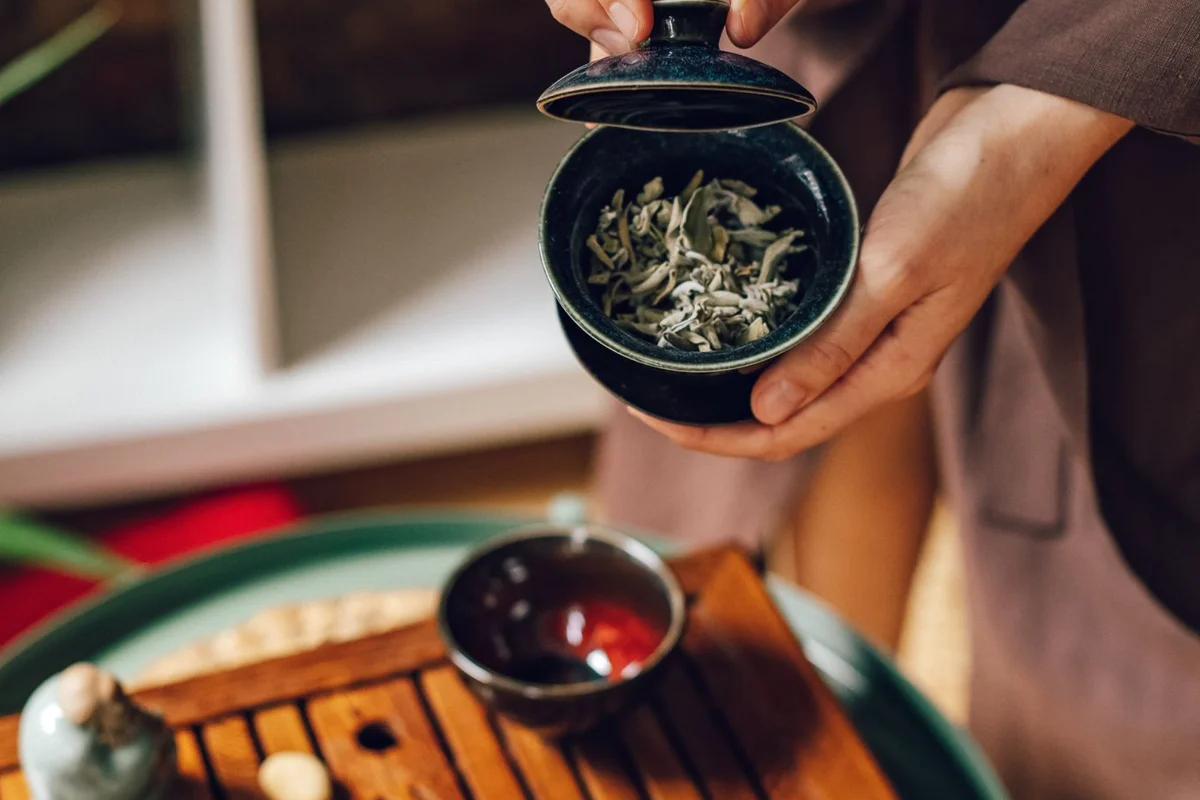
Set a receiving bowl or pitcher on a stable surface and practise over a tray or sink. Fill the gaiwan with cool water below the rim, put on the lid and make a small pouring gap. The lid acts as the barrier that holds larger leaves back during brewing. With plain water, you can learn how that gap affects the flow without also managing a hot vessel and a running infusion timer.
One common grip holds opposite sides of the flared rim with the thumb and a finger while another finger steadies the lid knob. Hand size and vessel shape affect whether that feels comfortable. Keep fingers away from the intended stream. If you cannot maintain a stable grip through a slow tilt and return, use a different vessel rather than forcing your hand into the shape shown in a demonstration.
Make the movement small and deliberate
Keep the receiver close, with its opening clearly under the pouring gap. Tip the gaiwan smoothly and watch where the water actually lands. A gap that is too narrow can make the pour frustratingly slow; too wide, and leaves will later escape more readily. Adjust the lid while the vessel is resting securely, then try again. There is no need to practise a dramatic high pour or a fast wrist movement.
Repeat until you can drain the vessel and return it to its saucer without readjusting your grip halfway through. Use the amount of water you expect to brew, since the weight changes the movement. Also check that the pitcher has room for the whole infusion. An overflowing receiver is an avoidable distraction when both hands and attention are occupied by the gaiwan.
Hot water introduces a separate limit
When you move on to tea, leave headroom and remember that the rim, lid and steam can become hot. A comfortable cool-water rehearsal does not guarantee cool fingers during brewing. If the grip becomes painful or uncertain, put the gaiwan down safely rather than trying to endure it. A handled pot is a perfectly useful alternative. Learning the tool should give you more control over tea, not make every infusion a test of how much heat you can tolerate.