A smaller gaiwan may suit the table better
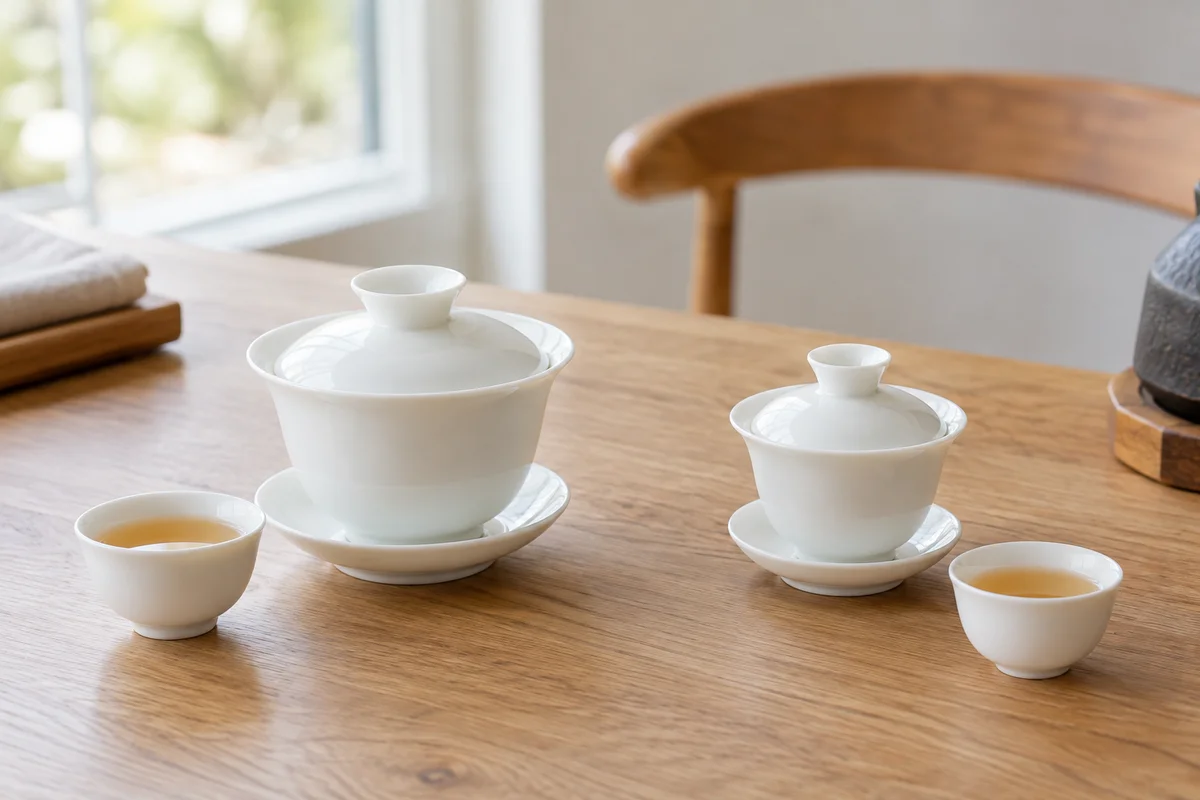
Capacity, rim width and the number of cups all matter when choosing a gaiwan. Bigger is not automatically more useful.
Work backwards from the cups
Start with the amount of tea you want to serve in one round. Two small cups may need far less liquid than a single breakfast mug. A gaiwan used for repeated short infusions does not need to hold the entire afternoon's tea at once. If each round produces more than you want to drink, the next infusion waits while the previous one sits, and the small-batch rhythm becomes less convenient.
Measure your cups with water to a comfortable drinking level. Add their working volumes rather than relying on the names espresso cup or tasting cup. Remember that wet leaves occupy space inside the gaiwan and that you should not fill it to the brim. A listed capacity may describe the vessel more generously than the amount you will comfortably pour during ordinary brewing.
Width can matter as much as volume
Two gaiwans with the same stated capacity can feel very different in the hand. A wide, shallow bowl asks for a different span than a taller, narrower one. The flare of the rim and the position of the lid knob also affect where fingers rest. If possible, handle the empty vessel, then practise with cool water once it is yours. You should be able to keep the lid controlled without an awkward stretch.
A very small gaiwan is not automatically easier for everyone either. Large hands can feel cramped, and a tiny knob may be fiddly. Choose for your own grip rather than treating a particular capacity as the correct beginner size. If you mainly brew at a busy desk, a small handled pot or roomy mug infuser may fit the setting better than any gaiwan.
Change the recipe when the vessel changes
Moving to a larger gaiwan changes the water amount, so do not copy a leaf weight without checking the recipe's ratio. Begin with guidance for the tea, measure the actual working fill and adjust one variable at a time. Keep a brief note of the vessel and fill level if you own more than one. This avoids blaming a familiar tea for a different result that came from an unnoticed change in scale. A well-sized vessel lets the tea round finish comfortably, with no surplus and no struggle to pour.