Why a film can form on tea
A fine film can form where tea meets air, influenced by compounds in the leaves and minerals in the water. Check the context before blaming dirty cups.
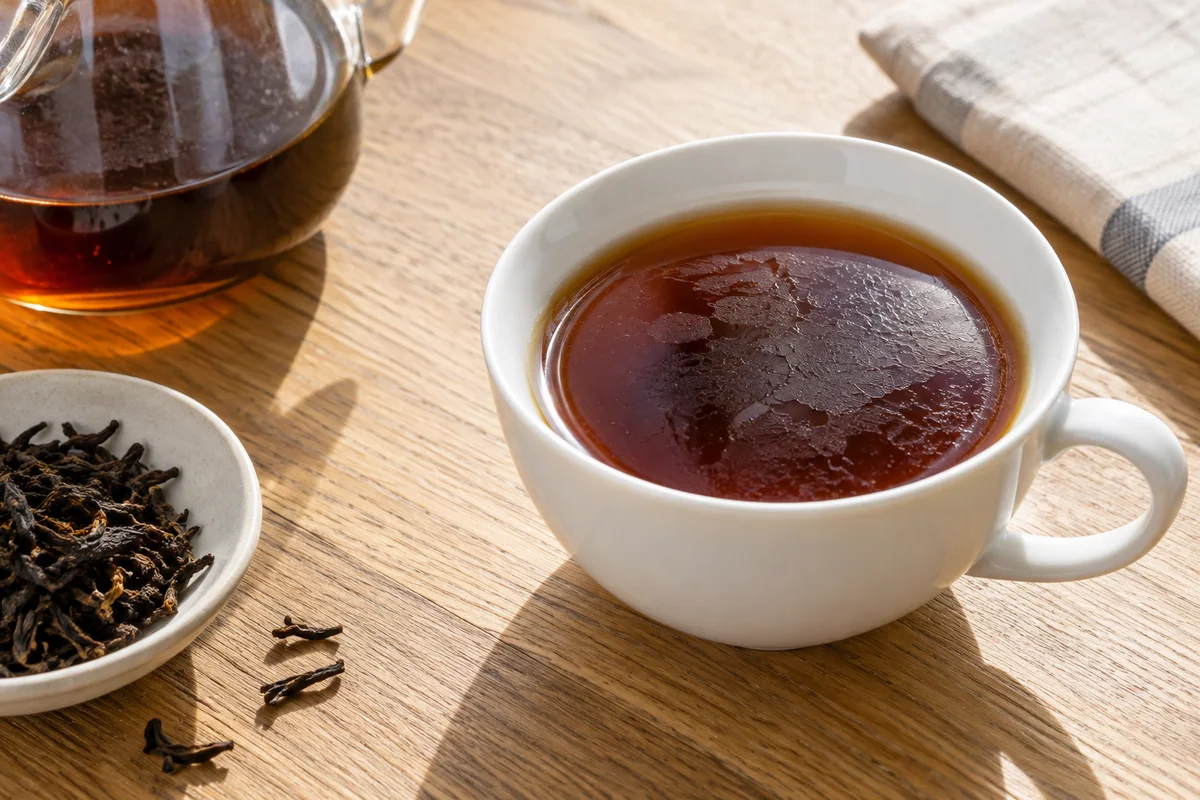
Look at the surface in good light
A thin shiny layer may become visible on a cup of tea as it stands. When disturbed with a spoon, it can break into small floating patches. Tea researchers have studied this surface film and the role of water composition in its formation. It is not simply an oil added to the drink, and its presence does not automatically mean somebody failed to wash the cup.
The appearance depends on the tea and the water, so two kitchens can produce different-looking cups from the same packet. Hardness is part of the picture rather than a single complete explanation for every surface mark. Before drawing conclusions, distinguish a newly formed thin film from obvious food residue, detergent left in the cup or a drink that has been standing under unsuitable conditions.
Try a comparison with a clean cup
Wash and rinse two similar cups thoroughly. Brew the same tea with your usual safe drinking water and with a suitable alternative that has a different mineral profile. Keep leaf amount, water volume, temperature and time consistent. Look at both surfaces after a similar interval, then judge the flavour as well as the appearance. A more attractive-looking surface does not by itself prove that the whole brew is better for your preferences.
If you use a filter, check its intended function and maintenance instructions. Some filters reduce particular minerals; others mainly address different taste or odour issues. A neglected cartridge is not a sensible answer to a cosmetic problem in tea. Cleaning the kettle may remove scale deposits from the appliance, but that is a different task from changing the dissolved composition of fresh water entering it.
Do not turn a visual clue into a safety test
A normal tea film is a brewing observation, not a method for deciding whether any drink is safe. Use clean utensils, safe water and the tea's preparation directions regardless of whether a film appears. Discard tea that has been mishandled or seems spoiled rather than relying on its surface looking ordinary. If the film merely bothers you aesthetically, changing the brewing water is a reasonable experiment. You do not need to invent a fault in the leaves to explain a difference that may come from the water.