Glass for tea must tolerate the heat
Transparency says nothing about heat suitability. Use glass identified for hot drinks and respect the limits of the complete vessel.
Read more than the material name
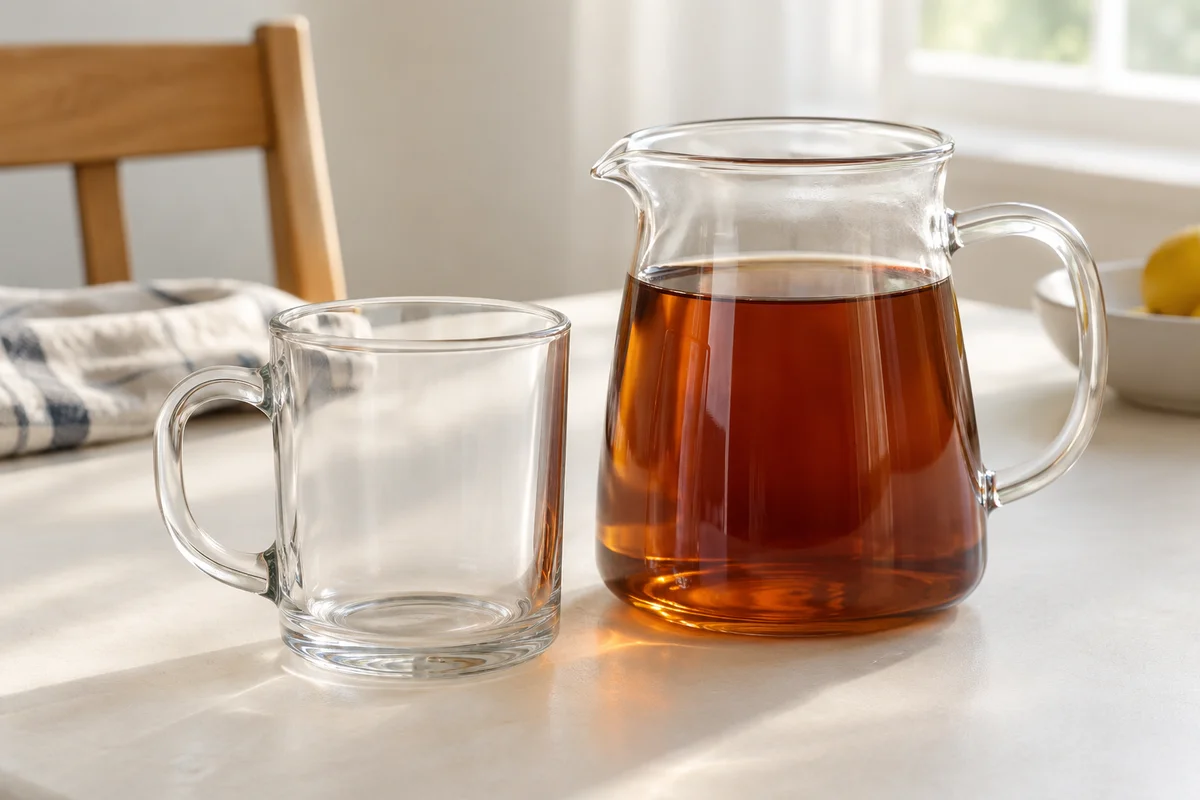
A clear tumbler that serves cold water beautifully is not automatically a suitable tea cup. Choose glass explicitly intended for hot beverages, then read the product's instructions for temperature changes and heating methods. Even when the body is described as heat-resistant, a lid, handle covering or decorative part may have different limits. Treat the complete product as a set of components rather than making assumptions from its appearance.
The word borosilicate is useful information about glass, but it does not grant permission for every appliance. A pot intended to receive hot water may still be excluded from direct flame or stovetop use. A manufacturer may approve one specific warmer and vessel combination without approving the same arrangement for other pots. Match the instructions to the model in your hand, especially when parts have been replaced.
Avoid abrupt changes around the brew
Set the glass on a dry, stable, suitable surface before preparing tea. Do not take a cold vessel straight from a refrigerator and fill it with very hot water unless the maker specifically permits that transition. Similarly, let a hot pot cool safely before rinsing it with cold water. A wet cloth under hot glass can create a sharp local temperature change rather than providing the protection you intended.
When making iced tea, consider the vessel as well as the recipe. Preparing a concentrated hot infusion and cooling it over ice needs equipment rated for that use; an attractive drinking glass is not enough. If the suitability is unclear, cool the tea in an appropriate container before transferring it. Do not improvise by putting a hot pot in a freezer to speed the process.
Heat resistance is not impact resistance
Protect rims and handles from knocks during washing and storage. Avoid hitting the wall with a spoon or stacking pieces that were not designed to nest. Inspect the glass when drying it, when light makes chips and fine lines easier to notice. Stop using a cracked piece for drinks and contact the maker if the cause or product condition is unclear. These small habits make transparent teaware enjoyable without asking it to tolerate uses its design never promised.