Hibiscus brings colour and tartness
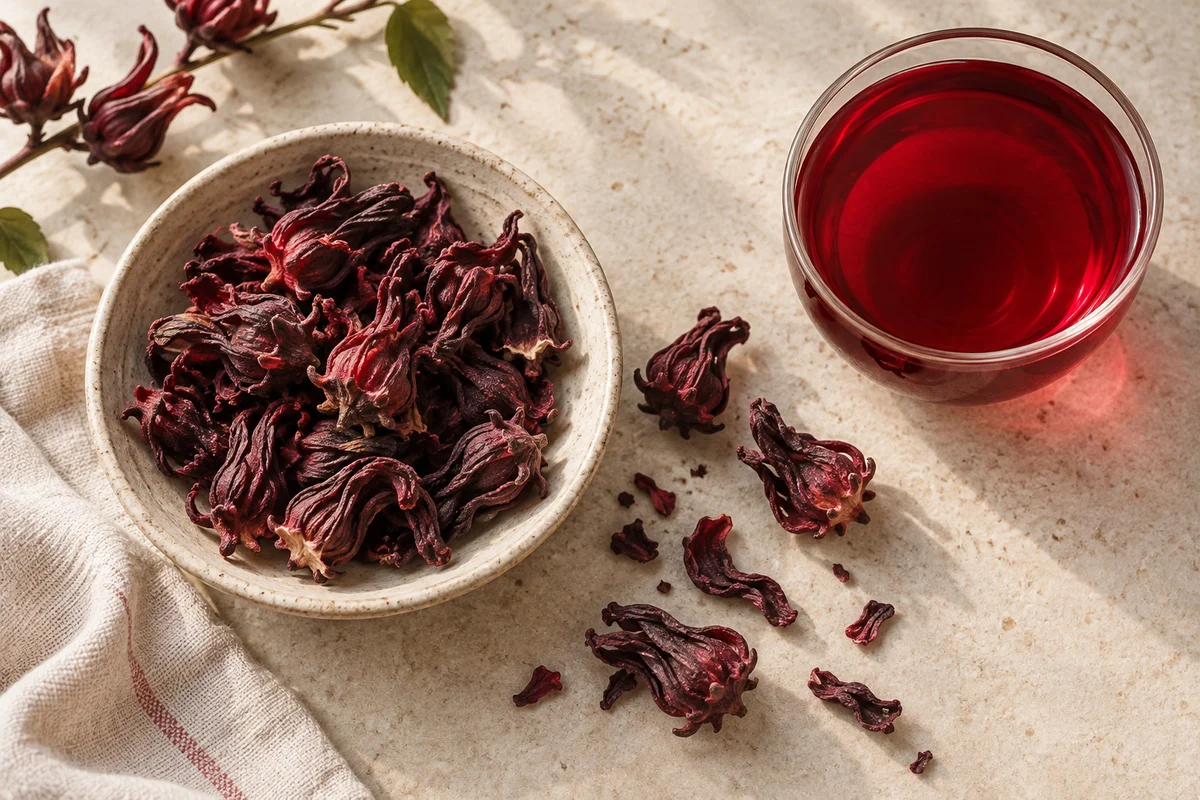
The red material used for hibiscus infusion is the calyx of roselle, bringing both colour and a pronounced tart taste.
The red pieces are not ordinary petals
Hibiscus infusion is commonly made from the dried calyces of Hibiscus sabdariffa, also called roselle. The calyx is the fleshy structure left around the developing fruit after the flower fades. In a dry packet it can look like deep red, curled fragments. This is different from collecting the showy petals of an ornamental hibiscus in a garden. Food-grade roselle is the ingredient to identify, rather than assuming that every plant carrying the familiar name belongs in a drink. Even a small visible portion can have a noticeable effect on the blend's appearance.
Colour arrives with tartness
The cup is known for its vivid red colour and a distinctly tart, fruity taste. Cranberry is a useful comparison for some drinkers, but it is not an ingredient in a plain hibiscus infusion. The bright colour can make the drink look sweet before it is tasted; the first mouthful often corrects that expectation. Redness and sugar are unrelated here. A beautiful ruby cup can be entirely unsweetened and much sharper than its appearance suggests.
The loud ingredient in a quiet blend
Hibiscus can give a fruit mixture its visual identity even when the name on the front celebrates another fruit. Its acidity can also lead the flavour. That is why a berry infusion may seem more tart and generic than expected from a photograph of raspberries. Reading the ingredients helps separate the source of colour from the source of the advertised aroma. The blend may be perfectly enjoyable, but those contributions should not be confused with a large quantity of the pictured fruit.
Describe the curve of the taste
Instead of calling every hibiscus cup strong, notice how the sourness behaves. It may arrive immediately, feel juicy through the middle and leave a clean, puckering finish. In another blend, apple or other ingredients can soften the overall impression without removing hibiscus's red signature. A plain version makes that role easiest to recognise. There is no need to turn the vivid colour into a nutritional promise; the ingredient already has a clear culinary identity through its tartness, hue and ability to reshape a mixture.