Look after a bamboo tea whisk
A bamboo whisk works best when its fine tines are treated gently and allowed to dry. Build care into the few moments before and after making matcha.
Prepare the tool before the powder
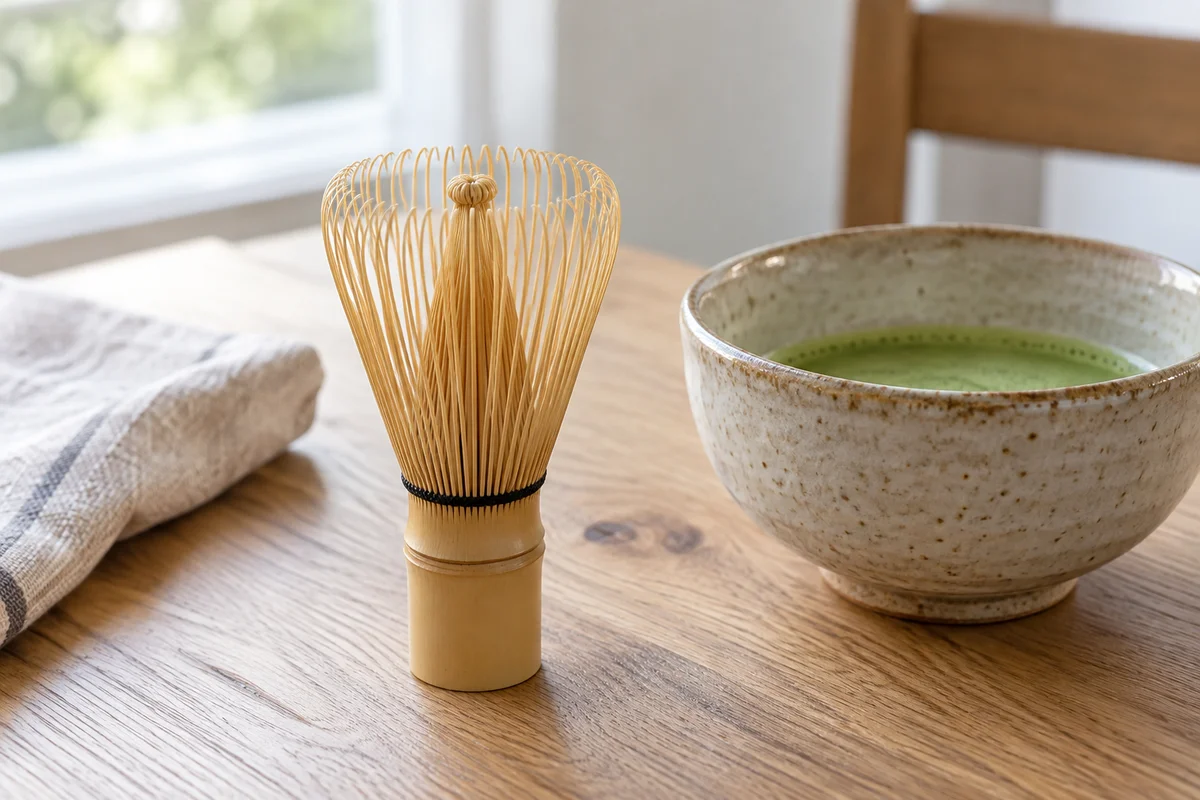
Before using a bamboo chasen, inspect the tines for broken pieces and check that the tool is clean. Follow its maker's preparation guidance; Ippodo, for example, recommends wetting the tips for about one to two minutes before whisking. Do this while measuring the matcha and preparing the bowl, so the care step becomes part of the routine rather than an extra task you remember too late.
Give the whisk enough room to move without striking the bowl's sides. Pressing hard against the base is not a useful substitute for distributing the powder well. If dry clumps are the problem, sift the matcha before adding water instead of trying to crush every lump with the bamboo tips. The whisk should move through the liquid, not act as a stiff scrubbing brush.
Clean before the residue sets
Rinse promptly after preparing the drink, following the product's instructions. Gently remove powder caught between the tines without pulling them apart sharply. Have a place ready to set the whisk down while you deal with the bowl; leaving it buried under dishes in the sink invites damage. Keeping it out of a busy washing-up pile is a small change that makes careful handling much easier.
Use the chasen for matcha and water as directed, then add milk or other latte ingredients separately. This keeps the cleaning task straightforward and avoids asking a delicate bamboo tool to mix every ingredient in the kitchen. Do not put it through a dishwasher simply because the ceramic bowl can go in. The two items have different materials and different needs, even though they are used together.
Drying is part of putting it away
Let the whisk dry with air around it. A suitable whisk stand can help maintain its shape; a closed delivery case is not a drying space. Choose a position where the tines will not be crushed by another utensil and where splashes will not repeatedly wet the bamboo. Replace the whisk when tips break, and stop using it if it develops visible mould or an unresolved unpleasant smell. A chasen is a working tool that wears with use, so looking after it also means recognising when it is time for another one.