Give the tea bag somewhere to land
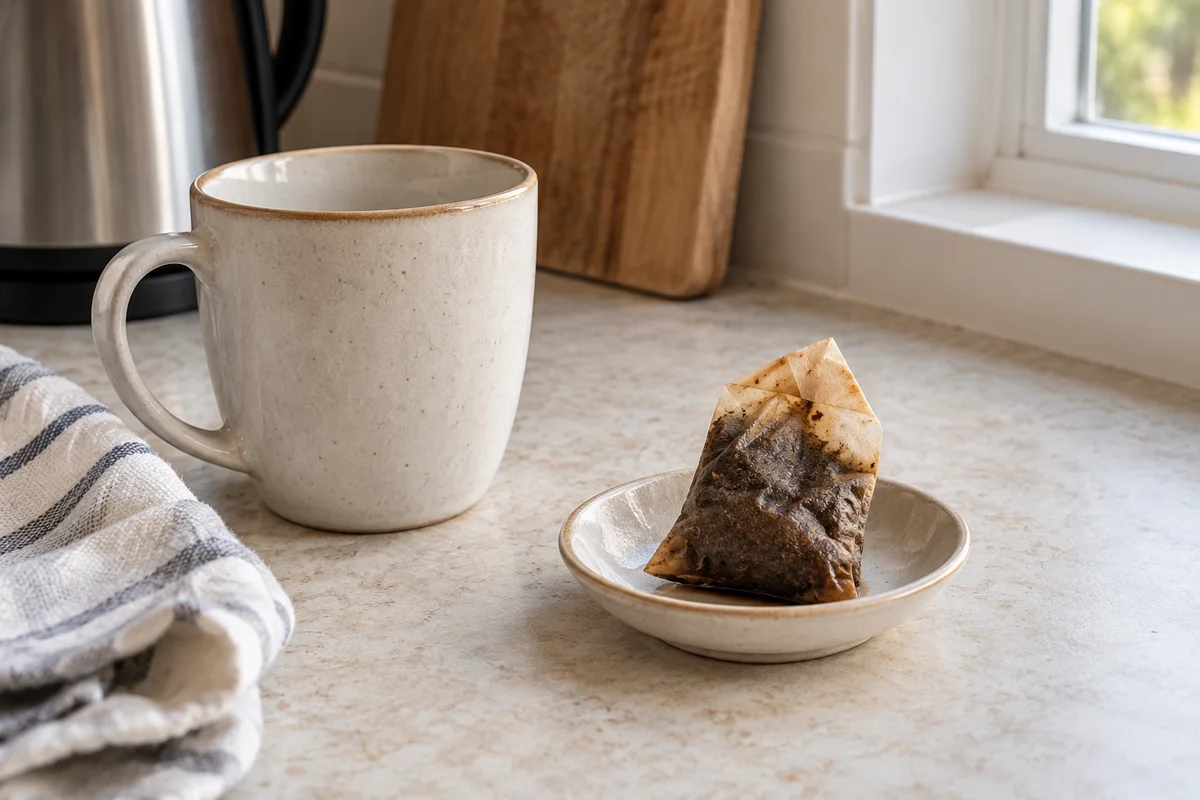
A small dish beside the mug makes it easy to finish the infusion on time and keeps a wet bag away from books, desks and fingers.
Prepare the last step first
The kettle is ready, the mug is filled and the timer has started. Only when it rings do you realise there is nowhere to put the wet tea bag. Leaving it in the cup while you search for a bin extends the infusion; carrying it across the kitchen sends a trail of drops behind you. A little dish placed beside the mug before brewing solves both problems without any specialised equipment.
Use a stable, washable dish with enough depth to contain the liquid that drains from the bag. A flat sheet of paper or an open book is not a useful substitute. If the tea is being served on a tray, leave space for the used bag rather than crowding every corner with cups. Guests should be able to finish their own infusion without improvising a landing place.
Lift without turning it into a juggling act
Use the string if the bag has one intended for handling, or support the bag with a spoon. Lift slowly and allow a brief drip over the cup, keeping your fingers clear of the hot liquid. Do not pull hard on a string trapped under the mug or wrap it tightly around your fingers. If the bag tears, stop tugging and use a suitable strainer to remove loose particles from the drink.
The timer's endpoint should lead to actual removal. Setting the bag on the rim while its lower half remains in the tea does not fully end contact. Once it is on the dish, you can add milk or other ingredients without the leaves continuing to change the cup. This separation makes it easier to compare tomorrow's brew with the one you liked today.
Clear up when the drink is ready
Let the used bag cool before disposal and follow the disposal guidance on its packaging, since bag materials differ. Empty and wash the little dish rather than leaving damp bags there for the day. In an office, a shared drip dish also needs regular attention; it should not become a communal pile of wet tea. The object itself can be ordinary and inexpensive. Its value lies in making the correct finishing step convenient enough that you actually do it.