Mugicha is roasted barley, not leaf tea
Mugicha is made from roasted barley, giving a cereal-like aroma without the tea leaf found in hojicha or genmaicha.
The grain is the ingredient
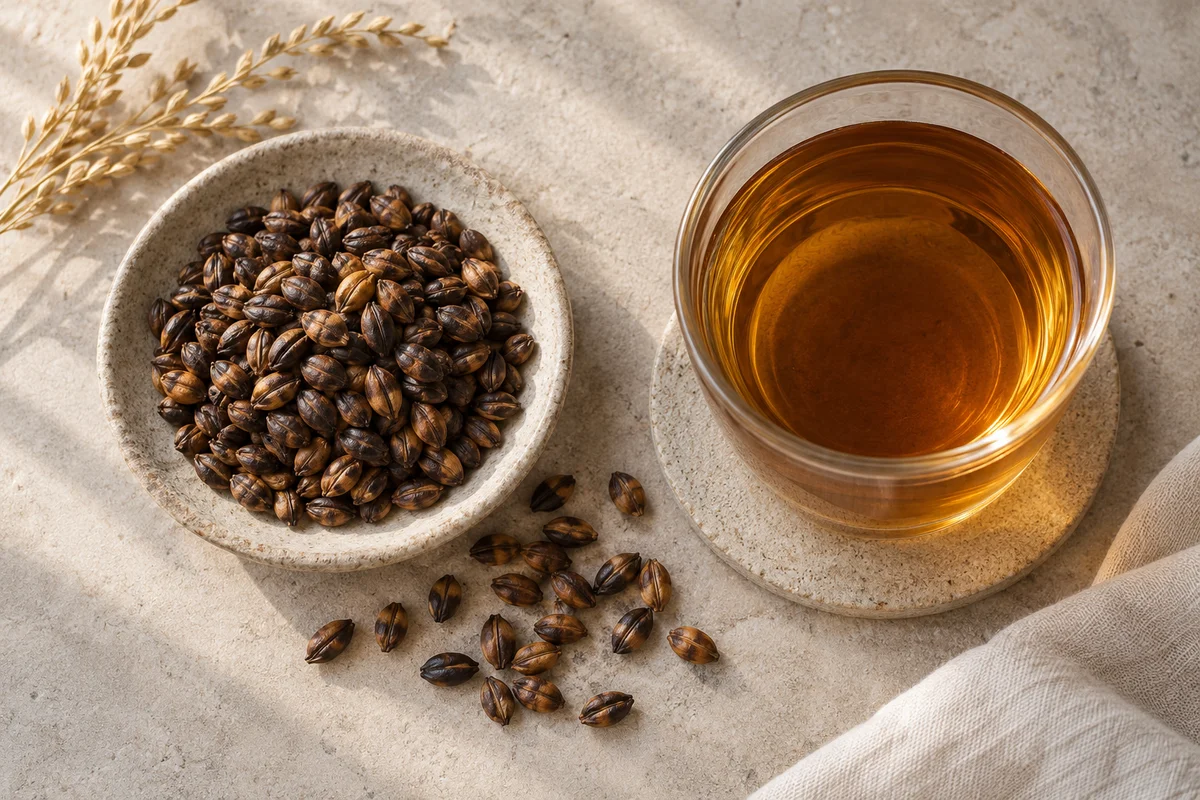
Mugicha is a Japanese-style infusion of roasted barley. In a plain version, the ingredient is barley rather than tea leaves. That makes it different from hojicha, which is roasted tea, and genmaicha, which combines green tea with roasted rice. The three can share a toasty impression without being interchangeable products. A brown cup and a Japanese name are not enough to identify what is inside. Seeing the grain beside the cup makes that difference particularly easy to grasp.
Roasted barley may be sold loose or cut and packed into infusion bags. The visible pieces can look much more like a pantry grain than anything on a leaf-tea shelf. That is exactly what they are; the everyday word tea describes the drink, not a requirement for Camellia sinensis.
Toasty does not mean coffee-like in every way
Mugicha can suggest toasted cereal, bread crust or a gently nutty aroma. Depending on the roast and product, it may feel light and clean rather than heavy. Comparing it with coffee can help locate the roasted scent, but it can also create an expectation of bitterness and body that the drink does not intend to meet.
A plain mugicha is naturally caffeine-free. Its dark appearance therefore does not make it equivalent to a strongly brewed black tea. This is a useful example of why colour, roast and caffeine should not be bundled together as one idea of strength. Each describes a different part of the product.
The ingredient still matters for dietary needs
Barley is a gluten-containing grain. The fact that it is used in an infusion should not be treated as a blanket gluten-free claim. Someone who needs to avoid gluten should use the product's reliable labelling and choose an appropriate alternative rather than assuming that a clear-looking drink is exempt from its ingredients.
For flavour, the useful questions are simpler: does the roast smell clean, does the cereal note remain pleasant, and does the finish feel light or overly charred? Mugicha does not need flowers, fruit or sweetener to justify its place among infusions. Its roasted-grain character is the point, and recognising the actual grain makes the cup much easier to understand.