Sobacha and its toasted grain aroma
Sobacha's toasted aroma comes from buckwheat, a seed used like grain rather than a form of wheat or tea leaf.
The name contains a misleading English word
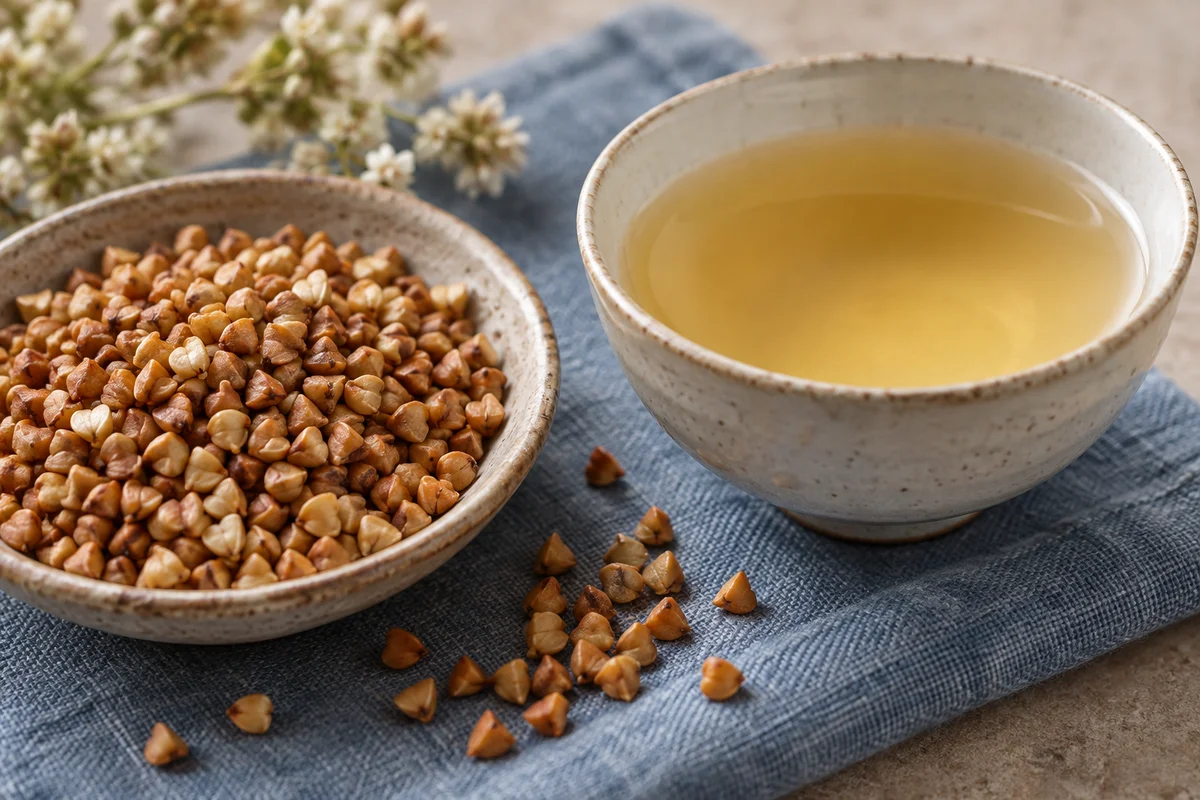
Buckwheat is used much like a grain, but it is not wheat. Sobacha is an infusion made from roasted buckwheat, so a plain version contains neither wheat tea leaves nor ordinary green tea. The small roasted pieces form the base of the drink. This is an example of how the broad tea shelf includes ingredients that are botanically quite different from the tea plant.
The Japanese word soba may also be familiar from noodles. That connection identifies buckwheat, but a cup of sobacha is not simply noodle-cooking water. Roasted material prepared for infusion has its own purpose and flavour profile.
A nutty aroma without added nuts
Sobacha often brings a toasted, nutty impression with a gently rounded character. Nutty is a tasting comparison, not proof that nuts have been added. The aroma can recall toasted cereal or a light biscuit-like warmth, while the liquid remains a simple unsweetened infusion. Some products feel more strongly roasted than others, so the name alone does not fix the exact intensity.
The pale gold to amber appearance may suggest a leaf tea, but the flavour comes from a different raw material. Compared with roasted barley, the distinction is not merely a change of packaging language. Barley and buckwheat are separate ingredients, and their roasted cups can show different balances even when both seem comforting and warm.
Read the actual product, not a category shortcut
Plain buckwheat is naturally free of gluten, but a finished product's ingredients and handling still matter for a gluten-free requirement. Buckwheat allergy is a separate issue: being different from wheat does not make it suitable for someone allergic to buckwheat. Reliable product information is more useful than a general assumption based on the name.
Plain sobacha is also naturally caffeine-free. Added tea leaf would change the composition, which is why the full list remains important in a blend. For the taste itself, notice the roast, the grain-like middle and the finish. The drink does not need to imitate coffee or green tea; the toasted seed gives it a clear identity of its own.