Rosehip in a fruit infusion
Rosehip supplies a rounded fruit character; the bright red of many rosehip blends often comes partly from hibiscus.
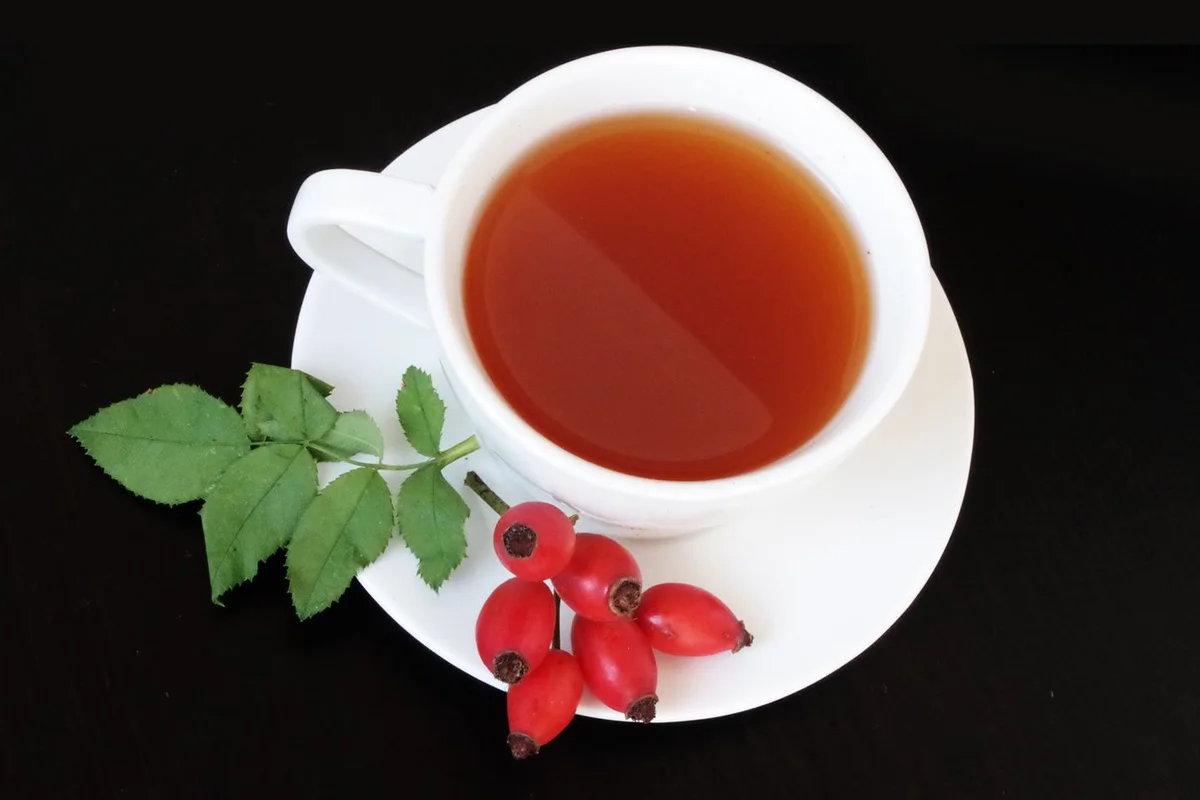
Fruit from a rose, not rose petals
Rosehips are the fruiting structures of roses. For an infusion, the dried material is therefore quite different from the delicate rose petals used for a floral fragrance. A rosehip drink can be fruity and gently tart without tasting like rose perfume. The shared plant connection should not lead to an expectation that these two ingredients perform the same job.
Prepared dried rosehip pieces often look rather plain beside colourful flower blends. Their contribution is usually easier to understand in the cup than from a decorative photograph. The ingredient adds a rounded fruit impression, sometimes with a slightly sweet-smelling edge, while still keeping a dry, unsweetened character.
Why the familiar cup is so red
Many people first meet rosehip in a blend with hibiscus. Hibiscus contributes a vivid red colour and a forceful acidity, so the remembered profile of rosehip tea may actually belong to the partnership. A pure rosehip infusion can be much less dramatically red, with a warmer orange or amber appearance depending on the material and preparation.
That difference is useful rather than disappointing. It shows why a single ingredient and a named mixture should not be treated as interchangeable. If the goal is to understand rosehip itself, a cup without hibiscus makes its quieter fruit character easier to notice. If the bright red blend is the preferred drink, its two main ingredients can still be recognised as doing different work.
A fruit base is not fruit juice
Dried fruit infused in water does not behave like a glass of juice. The aroma can suggest fruit while the body remains light, and the taste need not carry much sweetness. Expecting the richness of a purée or syrup is likely to obscure what the infusion actually offers. Judge it as a light drink made from dried material.
Use prepared food-grade rosehip rather than treating an unidentified garden harvest as equivalent. For the sensory description, keep the focus on fruitiness, tartness and the finish. Claims about vitamins are not necessary to make the ingredient interesting, and the appearance of a fresh red fruit cannot establish the nutritional content of a particular brewed cup.