What a sharing pitcher does
A small pitcher receives the complete infusion before it is divided between cups. That pause simplifies serving and separates brewing from drinking.
One infusion, then several cups
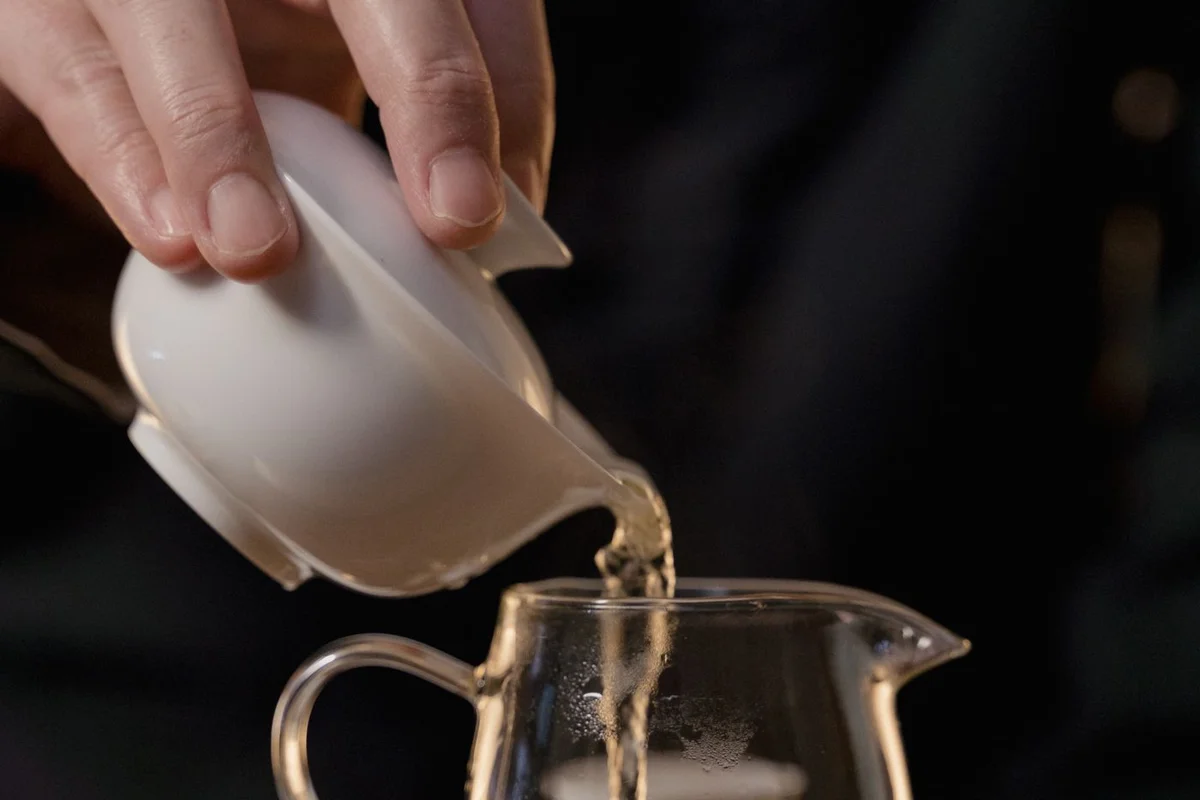
When tea is poured straight from a brewing vessel into several cups, the last cup may receive liquid that spent longer with the leaves. A sharing pitcher collects the entire infusion first. You can then divide that mixed liquid between cups at an unhurried pace. It is a useful intermediate vessel when small pots or gaiwans are used, particularly if pouring and serving otherwise feel like competing tasks.
The pitcher does not need an elaborate shape. It needs enough working capacity for the complete infusion, a stable base and a spout you can control. Allow some spare room rather than matching its brimful capacity exactly to the brewer's stated size. If you add a small strainer at its opening, make sure the strainer sits securely and does not make the receiving arrangement top-heavy.
Finish brewing before deciding who gets more
Place the pitcher close to the brewer so the transfer is short and predictable. Empty the finished infusion into it, then set the brewing vessel down before distributing the tea. This separates two movements that can be awkward to combine. It also makes it easier to offer different serving sizes without leaving part of the tea sitting on the leaves while someone decides how much they want.
For one drinker, the same arrangement can still help. A small cup can be refilled from the pitcher while the leaves remain drained between infusions. The trade-off is another vessel to wash and some heat loss during transfer. If a mug infuser already gives you the amount and pace you like, a sharing pitcher is optional. Its value is in solving a serving problem, not in completing a compulsory collection of tools.
Keep rounds distinct when you want to compare them
Empty the pitcher before adding the next infusion if you want to notice how the tea changes from round to round. Combining leftovers with a fresh infusion gives a blended result instead, which may be pleasant but answers a different question. Rinse and clean the pitcher according to its material after the session, paying attention to the spout and handle attachment. A clear or pale interior makes it easy to see remaining tea and rinse water, but comfortable handling remains the more important feature.