Check a stoneware pot when it is full
A pot that feels reassuring when empty may be tiring to pour when full. Judge weight, handle shape and useful capacity together.
The useful test includes water
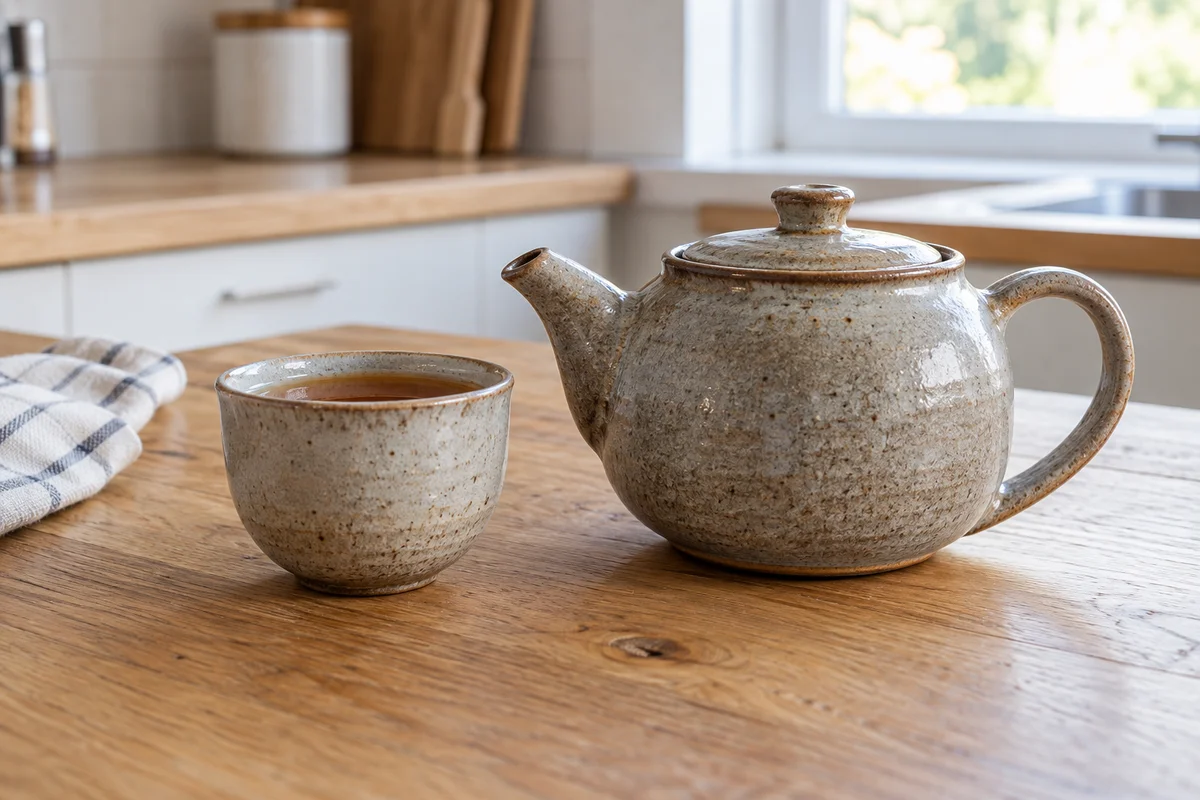
An empty stoneware teapot tells you little about the effort of serving a full round. Add the weight of the tea, the lid and any wet filter, and the movement changes considerably. If you already own the pot, practise with cool water over the sink. Fill it only to its stated working capacity, then pour into the cups you normally use. Notice when your wrist begins to compensate for the load.
The problem is not simply whether you can lift it. You need to hold it steady while gradually changing the angle, then bring it upright without spilling. A handle that forces your knuckles against the body may become awkward when that body is hot. A small grip with little room for your fingers can be uncomfortable even on a relatively light pot.
Match the vessel to an ordinary serving
Think about the amount you actually drink together, rather than buying enough capacity for an occasional crowded table. A smaller pot can serve two cups comfortably and be refilled later. For a larger group, two manageable vessels may suit the table better than one heavy centrepiece. Position cups close enough that you are not holding the filled pot at arm's length while reaching across someone else's place.
Keep the lid's behaviour in the test. Some lids need to be supported while pouring; others have a retaining shape. Follow the maker's method and do not assume a decorative knob stays cool. If steady pouring requires an uncomfortable two-handed arrangement, another handle or smaller capacity may be a better fit. There is no reward for struggling with a favourite-looking object every morning.
Material does not decide every permission
Check the actual care instructions before using a stoneware pot with heat appliances. A serving teapot is not automatically a stovetop vessel, and a microwave-safe body may have a metal filter that must be removed. Avoid abrupt changes from hot liquid to cold rinse water. After use, let the pot cool safely, wash as directed and dry the lid separately. The best everyday stoneware pot combines a pleasant surface with an easy, controlled movement from table to cup.