Taste the same tea again as it cools
One tea can seem different across a single cup. Tasting it again as it cools helps separate brewing choices from the temperature of the sip.
Do not judge only the first warm sip
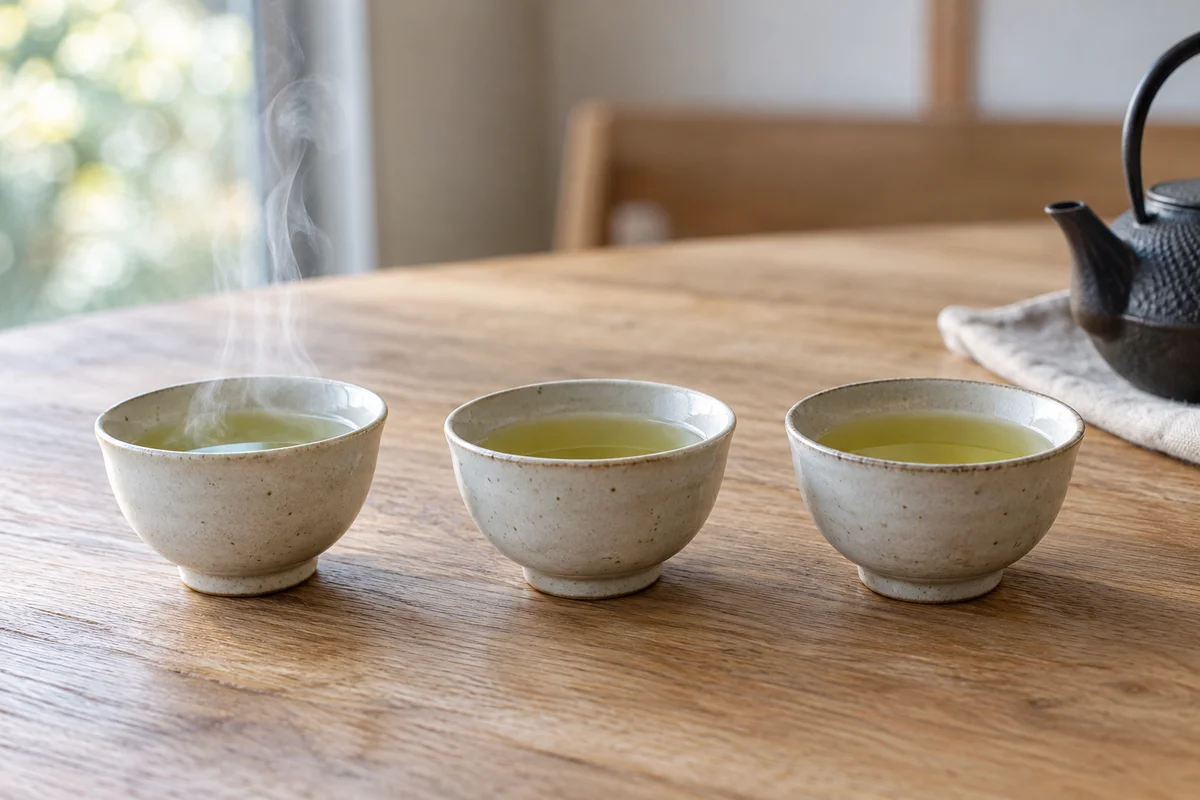
The first comfortable sip may offer a strong aroma, while a later one reveals a finish you barely noticed before. That does not necessarily mean the tea has gone wrong. Temperature influences the way a drink presents itself, and a cup changes as it sits. If you usually finish tea slowly, the flavour at that later stage is part of whether the recipe suits your everyday drinking.
Separate the leaves at the intended endpoint before making this observation. Otherwise a stronger final sip may reflect continued extraction as well as cooling. Use a clean cup and leave the drink plain for the first comparison. Adding sugar, lemon or milk halfway through would create a different experiment and make it harder to connect the change with temperature alone.
Use two or three simple checkpoints
Take a small sip when the tea is comfortably warm, another after it has cooled further and, if you are still enjoying it, a final one near room temperature. You do not need exact temperature numbers for this informal exercise. Note a concrete change: the floral scent became quieter, the roast seemed clearer, or the finish felt more drying. Avoid searching for a long list of flavours simply because a tasting chart offers them.
A wide cup and a narrow mug cool at different rates, so keep the vessel similar when comparing recipes on different days. If tasting two teas side by side, prepare manageable portions and allow both to reach comparable drinking temperatures. The cup made first should not be judged as inferior merely because it has been standing longer while the second was still being prepared.
Use the result in a practical way
If you like the tea only when very warm, make a smaller portion or choose a serving routine that fits your pace. If it becomes more interesting after cooling, allow that pause rather than rushing to drink it. Do not leave brewed tea standing for hours merely to extend the experiment; this is a short tasting within a fresh serving session. The point is to recognise when the cup is most enjoyable to you, and to avoid changing the recipe to solve a difference that comes from how quickly you drink.