A scoop measures volume, not a fixed tea weight
Two scoops that look equally full can hold very different amounts of leaf. Learn your scoop with the tea you actually drink.
The scoop has no universal dose
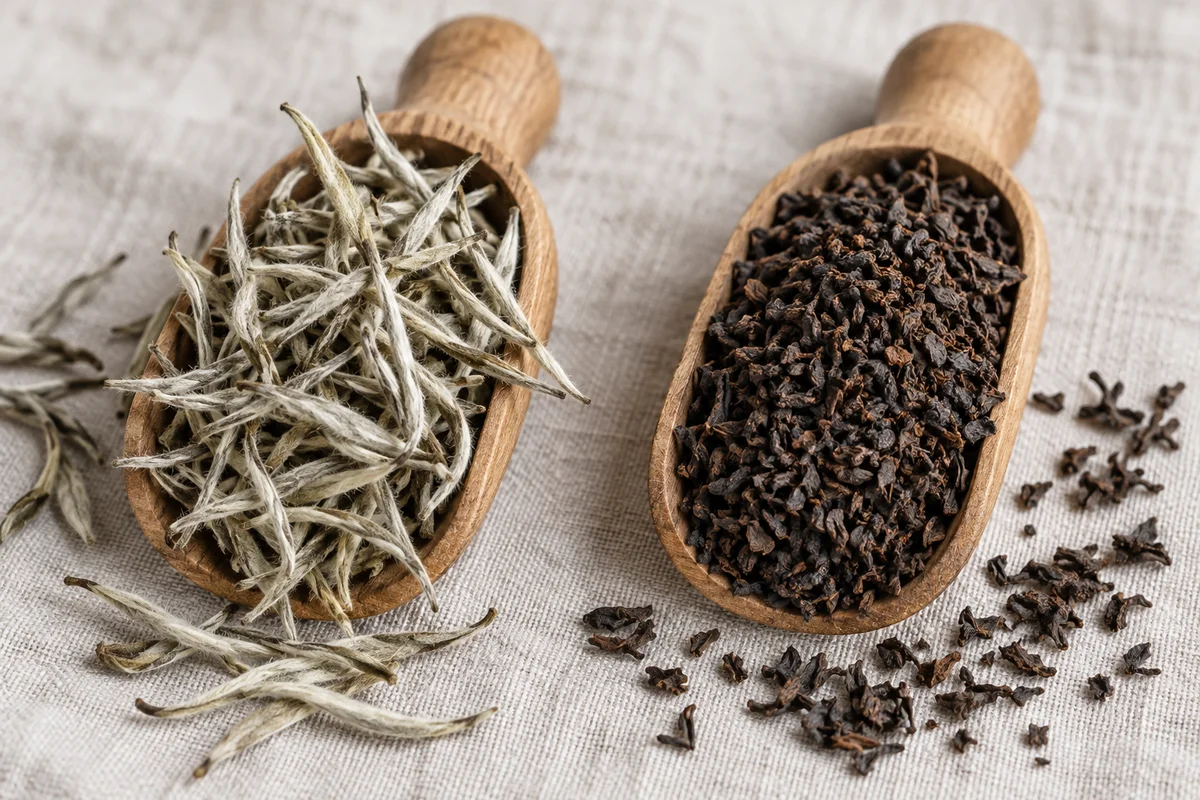
A large white tea leaf can bridge the bowl of a spoon, leaving empty space underneath. Small broken leaves settle closely together, while rolled tea may form a tidy mound. All three portions can look like one generous scoop. Their weights need not match. A tea scoop is a useful way to transfer and estimate leaves, but its shape does not make every portion a fixed number of grams. Even ordinary teaspoons vary between cutlery sets. When a packet gives both a weight and a spoon measure, treat the spoon measure as an approximation for that particular tea, not a conversion to carry over to everything in the cupboard.
Make one comparison worthwhile
If you have a scale, weigh several portions made with your usual scoop and technique. Keep the scoop level if that is how you normally use it; do not press fragile leaves down to reach a target. Notice the range rather than taking one reading as a permanent truth. A light, leafy tea might need a different number of scoops from your breakfast blend. Write the useful amount on a small note kept with the tea, together with your normal water volume. You are establishing a convenient kitchen reference, not defining a new standard teaspoon. Check again when the leaf shape changes or you move to a different batch with noticeably different pieces.
Choose a shape that makes handling easy
A broad, shallow scoop can support long leaves without breaking them, provided it fits the packet opening. A deeper spoon may be tidier for small, compact tea. Try the movement you will actually make: reaching into the bag, lifting out a portion and tipping it into the pot. Keep the scoop dry, especially if it lives near a steaming kettle. Do not dip a wet teaspoon into a tea container after stirring your cup. If your familiar scoop already gives satisfying results, you do not need a specialised replacement. Its most valuable feature may simply be that you know how much it holds of your favourite tea and can use it without scattering leaves across the counter.