A bitter cup needs a smaller experiment
Before blaming the tea, separate an unwanted bitter taste from a drying mouthfeel and check the way the cup was brewed.
Name the part you dislike
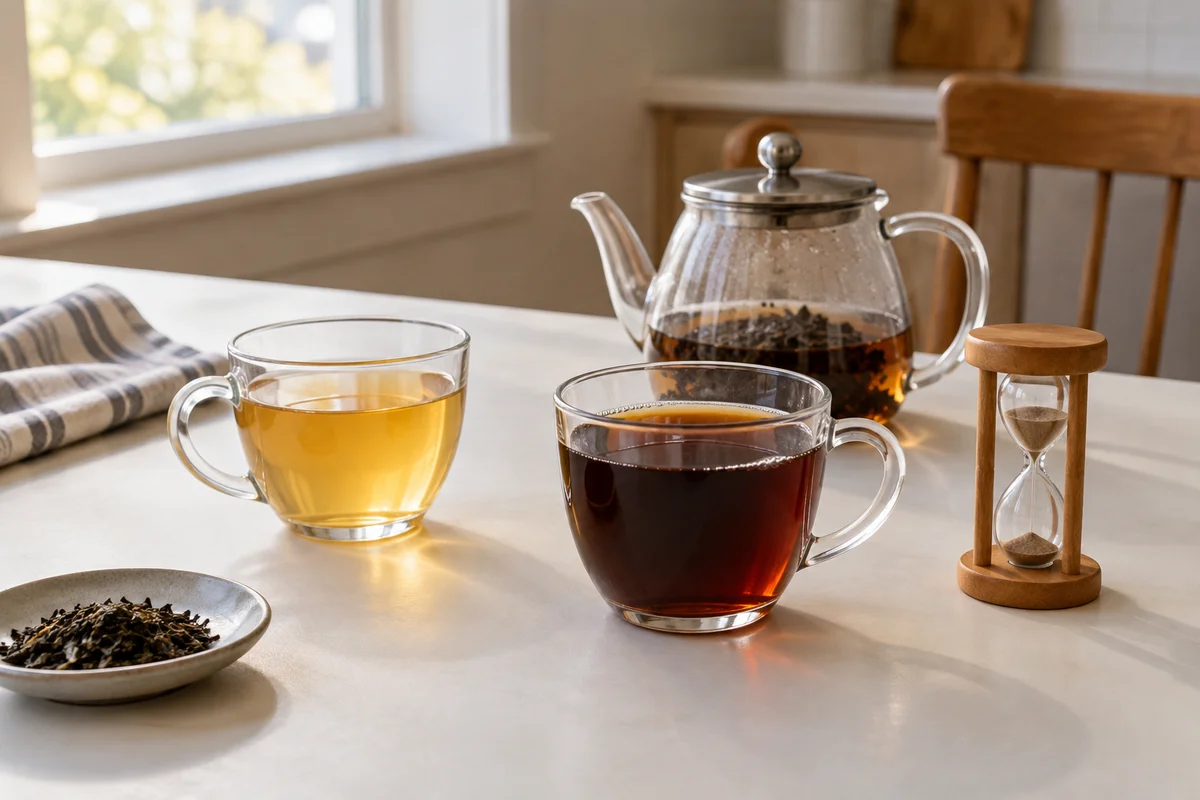
A cup can taste sharply bitter, leave the mouth dry, or do both. Those sensations are related to the tea and its preparation, but they are not interchangeable. Let a small sip cool enough to taste without discomfort and decide what bothers you. If you normally add milk or sugar, try a little plain tea first so that the next experiment addresses the brew rather than simply increasing the amount of an addition.
Check for an accidental long steep
The most obvious cause may be a basket left in the mug after the timer sounded. Check whether the tea was actually separated from the leaves at the intended time. A slow-draining pot can also extend contact. For the next attempt, use the same portion and water but finish the infusion promptly. If the tea improves, you have found a practical adjustment without needing a new kettle or a different brand of leaves.
Temperature and dose deserve separate trials
If timing was already consistent, compare your recipe with the packet's advice. Some leaf teas respond well to a lower starting temperature, while others are deliberately prepared with very hot water. There is no single cool setting that makes every tea better. Try one modest temperature change while keeping the dose steady. On another occasion, reduce a generous leaf portion instead. Do not lower the required temperature or minimum steep for ordinary herbal and fruit infusions; their preparation directions also serve a hygiene purpose.
Keep the tea's character in view
A strongly roasted, finely broken or naturally brisk tea may never resemble a soft floral infusion. Adjustments can reveal a balance you prefer, but they cannot turn one style into another. Diluting an already strong cup with a little suitable drinking water may make it easier to drink, although it does not reverse the extraction that has happened. If several sensible trials remain unpleasant, choose a different style rather than forcing yourself to appreciate this one. Keep a brief note of the recipe you tried, because bitter is a useful observation only when you can connect it to what went into the pot.