Where to put a tea thermometer
A probe touching the pot wall can tell you about the wall rather than the water. Position and timing make a temperature reading useful.
Know which part measures
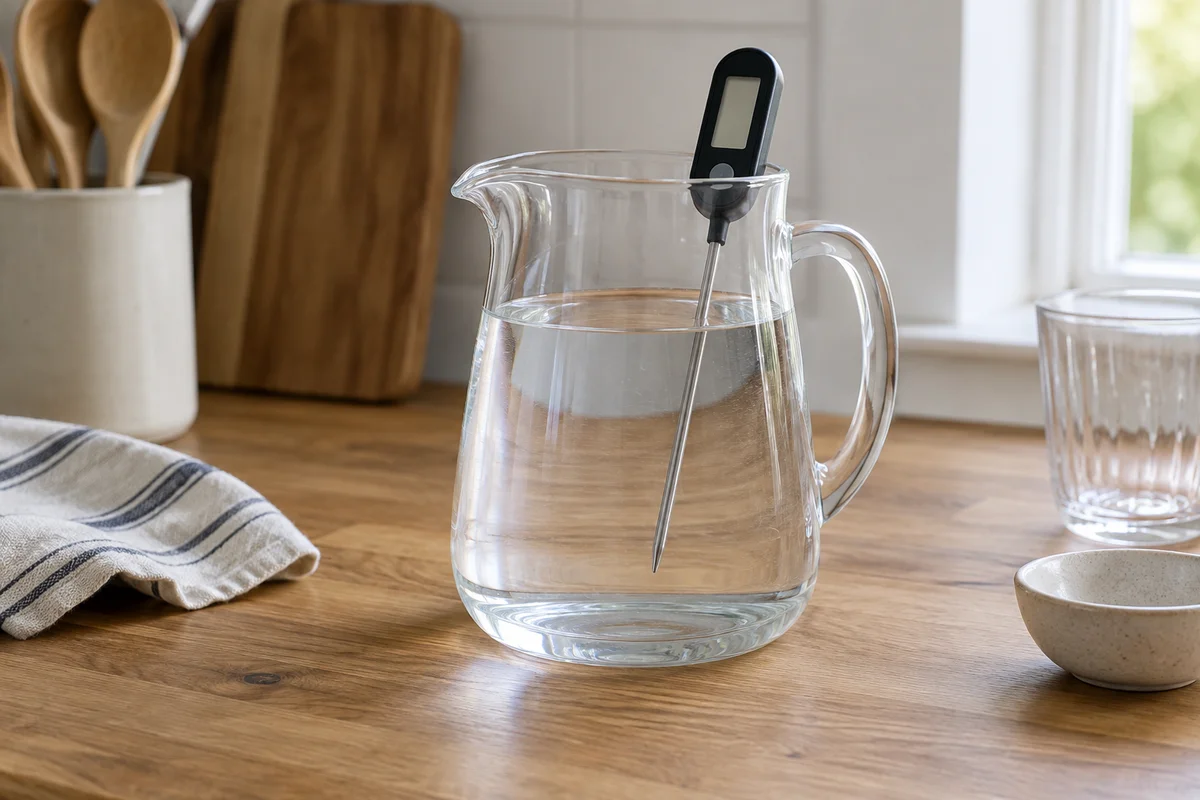
Food thermometers do not all sense temperature at exactly the same point. Some use a small area near the tip; others need a greater depth of immersion. Read the instructions before putting the probe into a shallow tea bowl. If the required sensing area cannot sit in the water without touching the base, choose a deeper vessel for a water-only trial rather than treating an unstable reading as precise.
Keep the probe away from the wall, bottom and direct stream from the kettle. The aim is to observe the water in the brewing vessel, not the hottest splash entering it or the material of the pot. A clip can help only if it fits securely and is intended for the thermometer. Do not rest an electronic display where steam or spilled water can enter it.
Allow the instrument to respond
A reading may take a little time to settle. Meanwhile the water itself is cooling, particularly in a small open cup. Follow the thermometer's response guidance and compare measurements taken at similar points in your routine. Writing down after pouring is more useful than recording a number with no indication of when it appeared. Avoid repeatedly lifting the lid for measurements if you are trying to understand an otherwise covered infusion.
For a first check, use plain water and leave the tea out. You can concentrate on positioning the probe without also timing the leaves. Once you understand the heat loss in that particular vessel, you may not need to measure every brew. A consistent kettle setting, water amount and prewarming routine often provide a simpler everyday reference.
Keep measurement and serving separate
Clean the probe according to its instructions before and after use, and give it a safe place to rest. A long thermometer sticking out of a small mug is easy to knock over. Remove it before carrying the drink. If the displayed temperature seems implausible, check the units, battery and permitted measuring range before changing your tea recipe dramatically. The tool is there to clarify one part of the process; it should not make pouring or serving more awkward than it needs to be.