Think before dedicating an unglazed pot
An unglazed pot asks for a little more thought about tea choice and care. First establish what the inside is actually made to do.
Look inside before making a plan
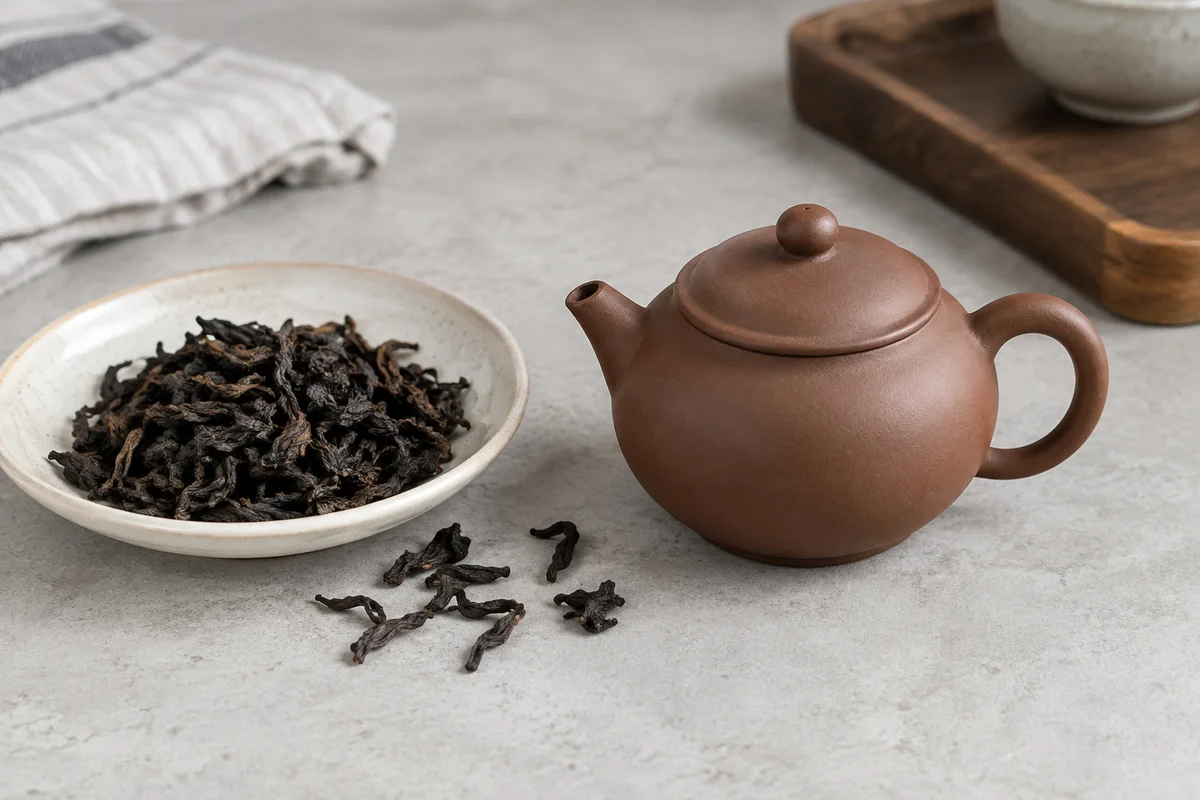
A rough, earthy exterior does not prove that the inside of a teapot is unglazed. Some pots combine an unglazed outer surface with a glazed interior. Read the description and inspect the inside rather than deciding from colour or a photograph. This distinction matters when the attraction of the pot is its interaction with tea, or when you expect it to be easy to switch between very different flavours.
Buy a vessel intended for preparing drinks, with identifiable care instructions. A decorative clay object, an unknown second-hand pot or an appealing market find may not provide enough information about suitability for hot beverages. Questions about the material belong with the maker or seller before use. A story about tradition cannot substitute for knowing what the specific vessel was designed for.
Choose a manageable role
For a first unglazed interior, a relatively narrow range of teas makes the routine easier to understand. You might reserve it for plain roasted teas that you already enjoy, rather than alternating those with strongly scented blends. This is a practical way to limit lingering aromas, not a promise that the clay will transform an ordinary tea into an exceptional one. The effect of any individual pot is not something to infer from its price alone.
Check capacity, lid fit and pouring comfort as carefully as the material. A beautiful small pot can still be wrong for your usual serving size. Try the grip and flow with cool water before the first hot infusion. Leave enough space for expanded leaves, and make sure the outlet can drain without persistent blockage. These basic details will affect every session, regardless of the clay's reputation.
Keep the care instructions with the pot
Follow the maker's first-use and cleaning directions. Do not invent a seasoning ritual involving boiling the whole pot, cooking it with food or applying oil. Such methods are not universally suitable. Remove leaves promptly, rinse or wash as instructed and allow the interior to dry thoroughly with the lid off. Store it somewhere ventilated rather than closing it while damp. If a persistent unpleasant smell or visible growth develops, stop using it and ask for product-specific advice instead of disguising the problem with stronger tea.