White tea is more than silver buds
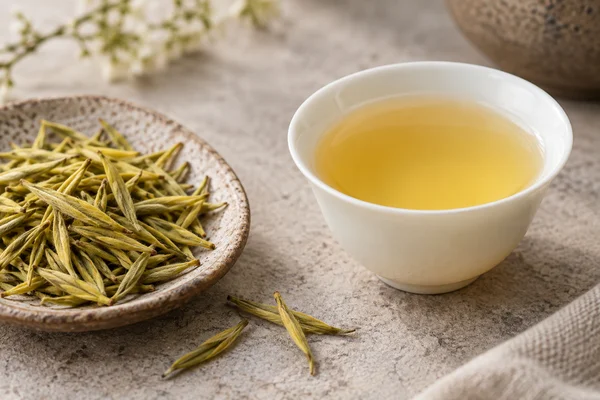
Silver buds are only one expression of white tea. Leafier styles can have a fuller cup without leaving the category.
The name does not describe the drink
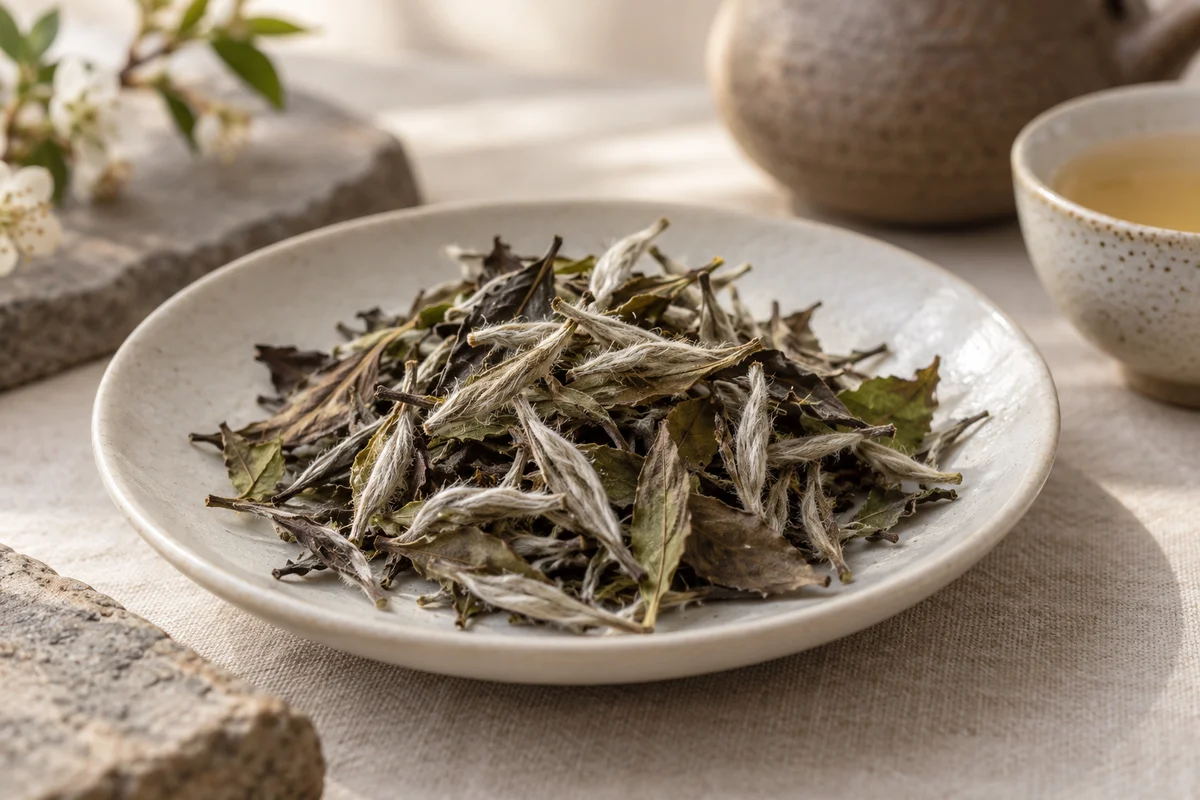
A cup of white tea is rarely white. It may be pale gold, deeper yellow or amber, depending on the leaves, their age and how they are prepared. The name is associated with the fine pale hairs on young buds. Those buds can be striking, but a packet with larger green and brown leaves can also be entirely ordinary white tea. Looking for a uniformly silver appearance would exclude much of the category before you had tasted it.
A gentle-looking process still needs care
White tea is commonly made by withering and drying the harvested material, without the intensive rolling associated with many other teas. That short description should not be confused with doing nothing. Producers must manage the loss of moisture and the condition of the leaf. Weather and drying decisions influence the result. Some oxidation can occur during withering, so white tea is not simply green tea that skipped a final shaping step. Nor does a lightly processed appearance guarantee a mild drink.
Bud and leaf change the balance
Silver Needle focuses on buds. White Peony includes buds and leaves, while Shou Mei tends towards a leafier appearance. Rather than arranging them on a simple ladder from best to worst, think about the cup you want. A bud-focused tea may offer a fine aroma and a quiet texture; leafier material can provide a broader, more immediately apparent flavour. Individual lots differ, and a beautiful photograph of downy buds cannot tell you whether you will enjoy the infusion.
Read the leaves after the cup
Taste a plain white tea before adding anything and leave a little to cool. Try describing the impression in everyday language: hay, flowers, fresh nuts, dried fruit, or simply a soft sweetness. These are comparisons, not ingredients that must be present. Afterwards spread a few wet leaves on a saucer. Notice whether you have mainly buds, paired young leaves or larger leaf pieces. This small exercise connects the label to the material in your pot without turning tea drinking into a grading exam.