Tea, preserves, and hospitality in Azerbaijan
In an Azerbaijani tea setting, the glass and its accompaniments invite attention. Let the host explain how this particular table works.
Look at what comes with the tea
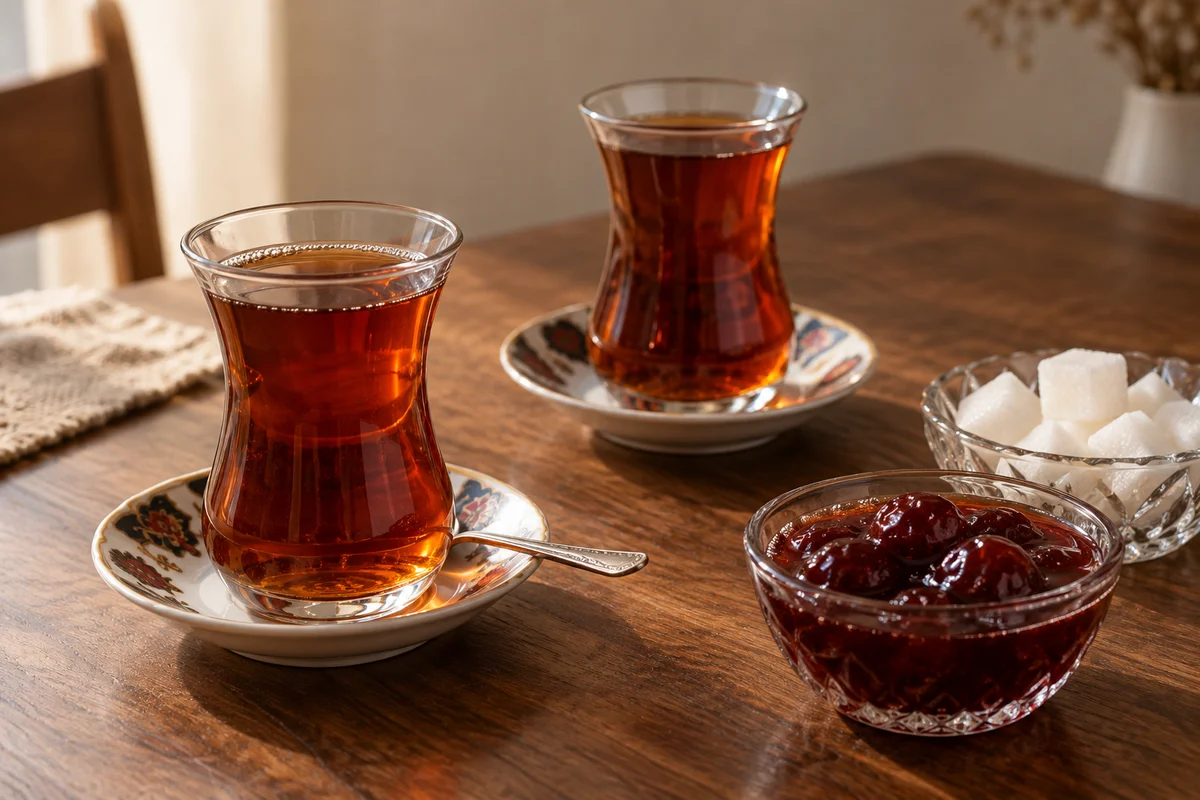
A pear-shaped armudu glass is a familiar part of Azerbaijani tea service, and the table may include preserves, sweets, lemon, or dried fruit. These accompaniments make the setting more than a lone drink. They do not form a fixed checklist that every household must reproduce. Notice what your host has chosen and ask how it is usually enjoyed there, rather than assuming every item should be stirred into the tea.
The culture of çay recognised by UNESCO includes Azerbaijan and Türkiye and emphasises hospitality and social connection. That shared recognition does not make all practices in the two countries identical. A useful visitor's approach is to notice the particular people, place, and occasion. Family habits, local ingredients, and the reason for gathering can shape the table. One enjoyable visit gives you a specific experience, not authority to describe how an entire country always drinks.
Take a small serving and ask
If preserves are offered, begin with a modest amount and follow the host's explanation. You may find that the sweet accompaniment and plain tea create the contrast, rather than the drink being sweetened in advance. Ask before adding sugar if you are unsure. For allergies or ingredients you avoid, clarify the relevant dish directly; a familiar-looking preserve or pastry is not enough information to make that decision on somebody else's behalf.
The small glass encourages attention to heat as well as flavour. Let it become comfortable to handle and drink, and avoid rushing because others are already taking another serving. You can accept hospitality while setting your own pace. A simple expression of appreciation and a clear answer about a refill are more helpful than trying to perform gestures remembered from an unrelated tea culture. The host is offering a drink and company, not testing your memory.
Remember the specific details
If you want to bring the experience home, note the tea's name or ask about an accompaniment you particularly liked. Avoid buying a random decorated glass and expecting it to reproduce the whole occasion. The memorable part may be the balance of a tart fruit preserve with a plain cup, or the way conversation continued while glasses were refilled. Those details can inspire a thoughtful gathering of your own without turning a personal visit into a rigid national recipe.