Ceylon is an origin, not one flavour
Sri Lanka's black teas range from delicate and fragrant to dark and substantial; Ceylon does not name one blend.
One island, several tea landscapes
Ceylon is the established tea name associated with Sri Lanka. A packet labelled Ceylon black tea therefore points toward an origin rather than a single flavour formula. The island has distinct growing regions and different elevations, with weather and seasonal conditions adding further variation. It is perfectly possible for two plain Ceylon teas to make very different cups.
Sri Lanka's recognised tea-growing regions include Nuwara Eliya, Uva, Uda Pussellawa, Dimbula, Kandy, Sabaragamuwa and Ruhuna. You do not need to memorise the list to enjoy the tea. It does help to recognise a regional name as useful information rather than decorative wording attached to an otherwise identical product.
The range inside the name
Some higher-grown styles are valued for a lighter, fragrant cup; other regional teas offer deeper colour and a fuller impression. These broad associations are starting points, not a way to predict every packet from altitude alone. A blend can also combine teas selected for consistency, so an everyday Ceylon tea need not taste like one specific garden.
The word bright, often used in black-tea descriptions, can refer to a lively character in the cup rather than a physically pale colour. A tea may be bright and amber, brisk without being rough, or fragrant without smelling strongly floral. Reading several descriptors together gives a better picture than treating one adjective as a complete profile.
Do not taste the grade letters
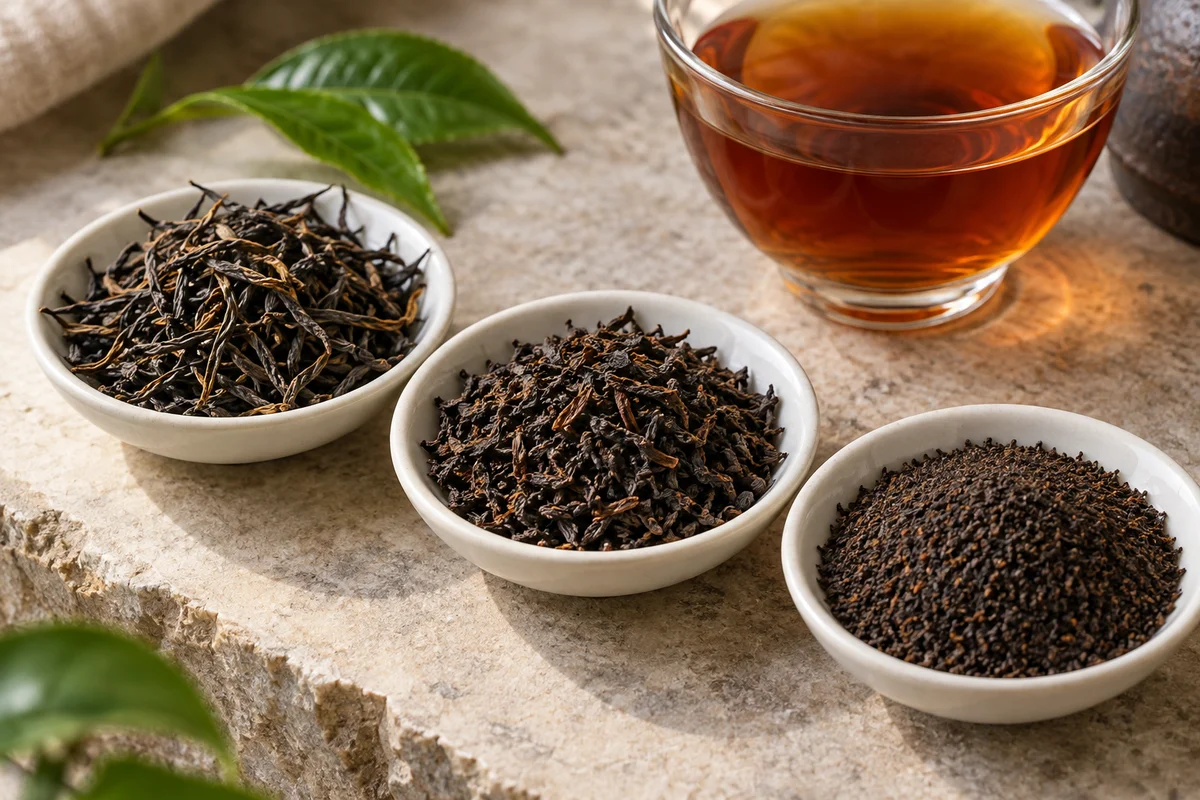
Letters such as OP and BOP describe leaf grades. Orange Pekoe does not mean orange-flavoured tea, and broken leaf is not automatically defective leaf. The particle size affects how the material behaves, while the origin, manufacture and condition of the actual tea still matter. A neatly graded leaf cannot promise a favourite flavour on its own.
When comparing Ceylon teas, keep the question modest: is this particular cup lighter or fuller, more aromatic or more brisk, cleaner or rougher at the end? That vocabulary leaves room for the island's variety. It also makes a regional label meaningful without turning geography into a ranking where one elevation or leaf size must always be superior.