Second flush Darjeeling and muscatel
Muscatel describes a grape-like impression, not added wine and not a promise made by every summer harvest.
The later seasonal voice
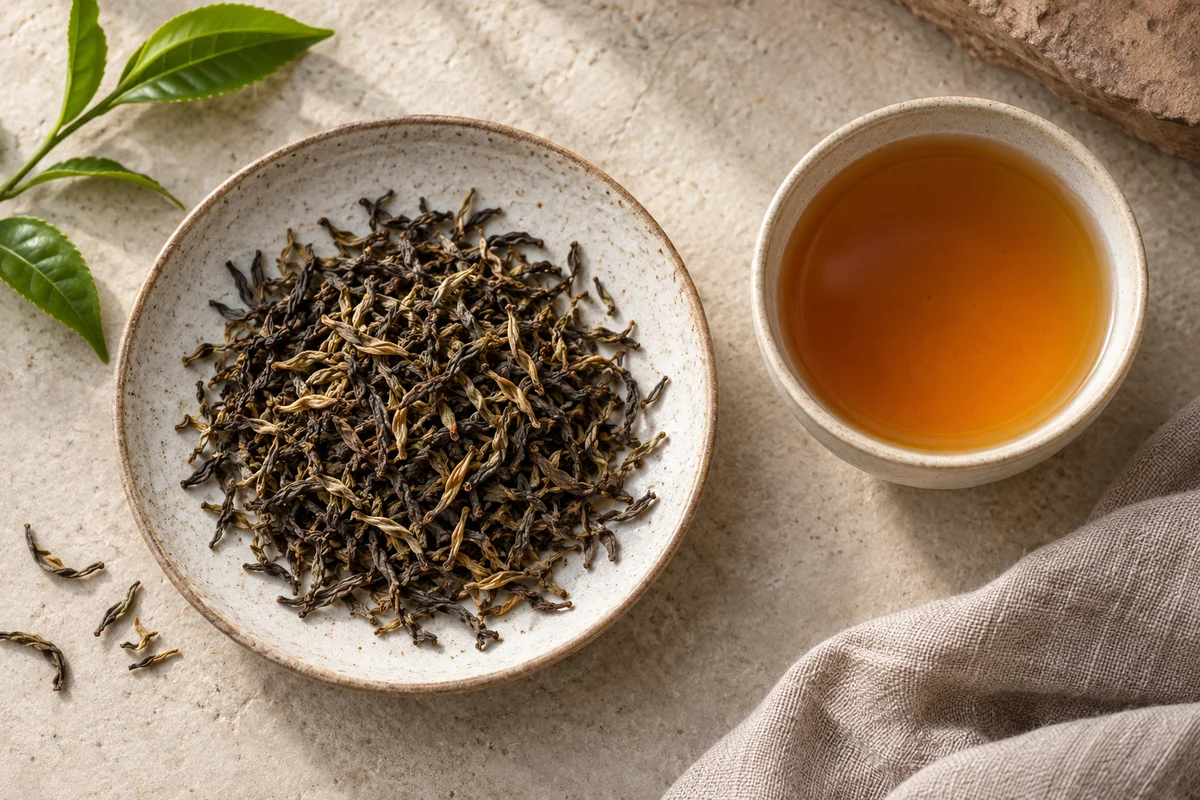
A second flush Darjeeling comes from the next main growth and harvest period after the spring picking. Compared with a typical first flush, the familiar summer black-tea style often has a fuller body, darker leaf and a more amber-coloured infusion. Those are useful tendencies, not a set of measurements that every estate must meet.
The change is not simply a matter of spring tea becoming older in storage. These are newly harvested leaves grown under different seasonal conditions and then made into a separate tea. A first flush packet kept until summer does not become second flush. The harvest description belongs to the leaf's time on the plant, not the date you open the bag.
What muscatel is doing on the label
Muscatel is a tasting term associated with certain Darjeeling teas, especially second flush lots. It suggests the aromatic character of muscat grapes, sometimes with a ripe-fruit or gently wine-like impression. It does not mean that grapes, wine or grape flavouring have necessarily been added. For a plain tea, the ingredient remains tea leaf.
Not every second flush produces an obvious muscatel note. Some cups are more woody, nutty or simply brisk. Nor does a tasting description require the drinker to imagine one exact fruit. If the tea seems pleasantly rounded and fruity but you cannot identify grapes, you have not failed a test. Descriptors offer a route into attention rather than a correct answer to memorise.
Give the finish some attention
The darker colour can encourage comparisons with Assam, but the two origins should not be collapsed into one style. A Darjeeling may retain an airy fragrance and a precise, drying finish even when its middle feels fuller than a spring tea. Malty strength is not the only way a black tea can have substance.
Look for a description that separates harvest, origin and flavour. An estate name identifies the place; second flush identifies a season; muscatel describes a possible sensory quality. Keeping those three jobs apart makes the tea easier to understand and prevents a single attractive word from becoming a guarantee that no individual leaf can reasonably fulfil.