Dong Ding and the balance of roasting
Dong Ding is closely associated with Taiwanese oolong and roasting, but the roast level is worth asking about.
An established name with variation
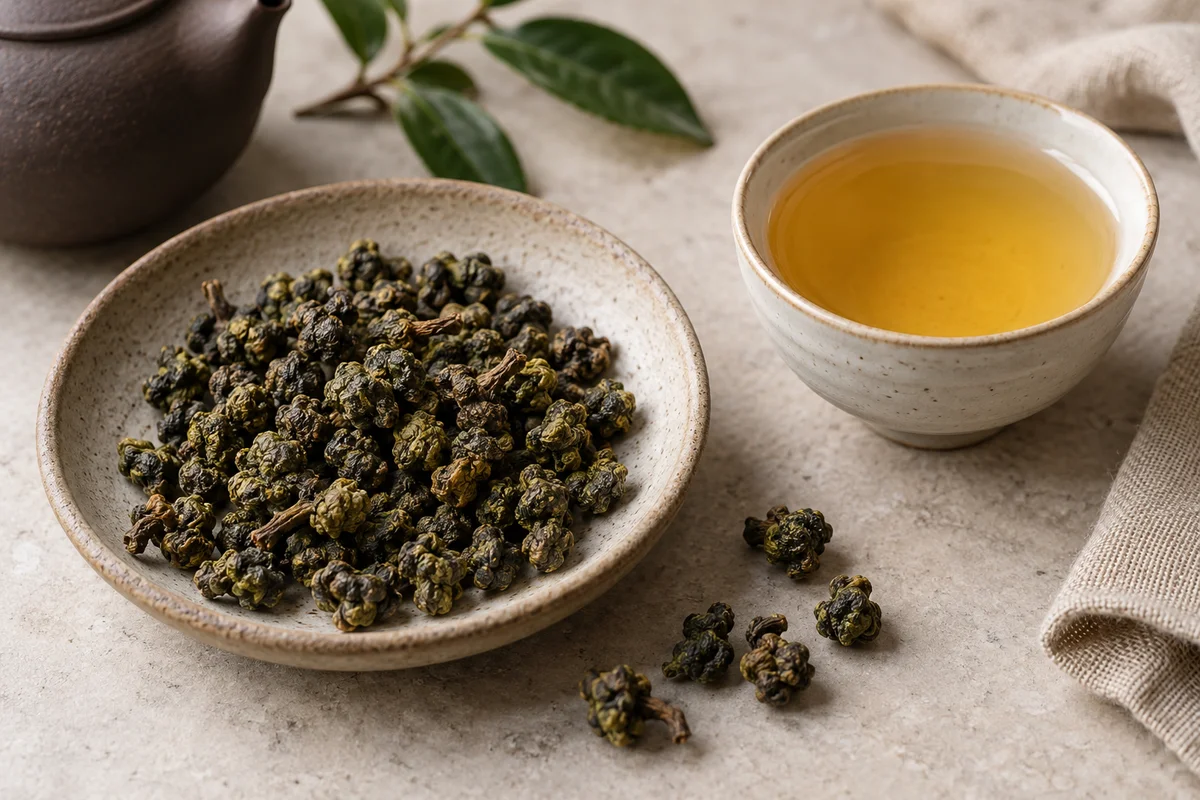
Dong Ding is a familiar name in Taiwanese oolong, associated with the Lugu area and a style often presented with a noticeable roast. Yet a packet bearing the name can be lighter or more roasted than the one you remember. Some producers also offer unroasted interpretations and explain them in relation to local practice. Rather than assuming that one colour or aroma is the only legitimate version, ask what the maker means by the name on this particular tea.
The roast needs a supporting leaf
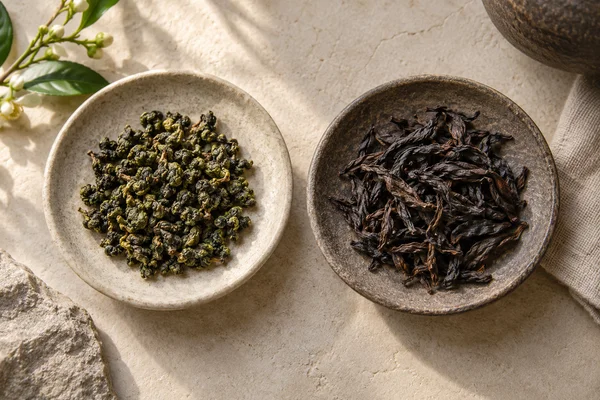
In a satisfying roasted oolong, the toastiness is part of a larger flavour. It may sit beside fruit, nuts or a lingering sweet impression. Roasting does not simply paint flavour onto an otherwise irrelevant leaf. The material and its earlier processing influence how the finished tea holds together. That is why two similarly dark-looking rolled teas can taste quite different, and why choosing the darkest one is not a reliable shortcut to the most interesting cup.
Think about the finish as well as the opening aroma. Does a warm roasted impression give way to something fresh or fruity? Does the cup remain comfortable, or does a harsh edge take over? These questions are easier to answer than an abstract debate about the perfect roast percentage.
Try it through a short session
Follow the supplier's method, leaving space for the rolled leaves to open. If the instructions support several infusions, compare the first and second without expecting them to match. A prominent roast can become less dominant, letting another part of the leaf show through. Stop when the drink loses its appeal rather than continuing only because a description promised endurance.
For a first purchase, choose a modest amount with a clear roast description. If you enjoy it, the next comparison can be a lighter or darker version, ideally with enough shared information to make the difference meaningful. Dong Ding becomes easier to understand when the label is connected to a specific producer's choices. That understanding is more useful than memorising a single supposedly universal flavour profile.