An enamelled tea pot is not automatically a kettle
An iron body can hide a delicate enamel lining. Identify whether the vessel brews tea or heats water before putting it near a stove.
Similar shapes can have different jobs
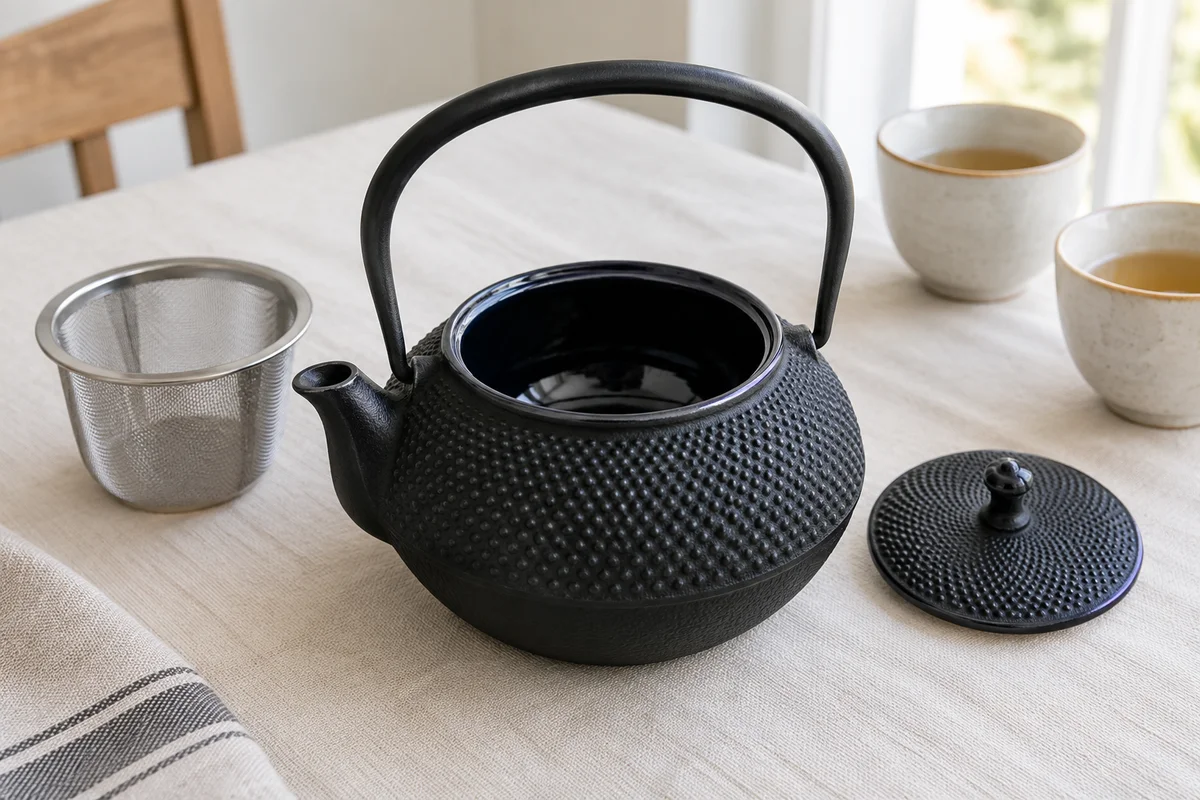
A cast-iron teapot and an iron kettle may share a rounded body and an overhead handle, yet have different instructions. An enamel-lined brewing pot is commonly meant to receive water heated elsewhere. Do not put one on a stove merely because iron cookware can be used there. The product's stated purpose and approved heat sources decide the matter, not its weight or traditional-looking silhouette.
Look for the maker's identification and instructions while the vessel is empty and cool. If you cannot establish its intended use, keep it away from direct heat until you can. A removable tea basket suggests brewing, but it is not a substitute for confirmation. The shiny interior of a lined pot also deserves a gentle inspection for chips or other damage before the first preparation.
Arrange the pour before adding heat
Place the pot on a suitable stable trivet, with the handle accessible and the cups nearby. Practise the lift with cool water at your intended fill level. Iron is heavy, and the load can surprise someone expecting the movement of a thin porcelain pot. Check how the lid is supported during pouring and whether the handle remains in a comfortable position throughout the movement.
Use an appropriate leaf quantity for the water and remove the basket or transfer the finished infusion when it is ready. A substantial body does not prevent oversteeping if leaves remain in the liquid. If you enjoy tea slowly, separating it from the leaves matters more than relying on the pot's appearance as a warming object. Keep hands away from surfaces that have become hot, including the lid and any metal handle parts.
Protect the lining and dry the details
Clean according to the specific manufacturer's guidance, with tools that do not scratch the enamel. Avoid treating the interior like a pan that needs seasoning, and do not scour it with metal pads. After cleaning, pay attention to moisture around the spout, lid and handle fittings as well as the main cavity. Let the vessel dry thoroughly before storage. If enamel chips or the vessel becomes damaged, stop using it and consult the maker; a home repair is not a reliable way to restore a hot-drink surface.