Gunpowder tea: small pellets, unfolding leaves
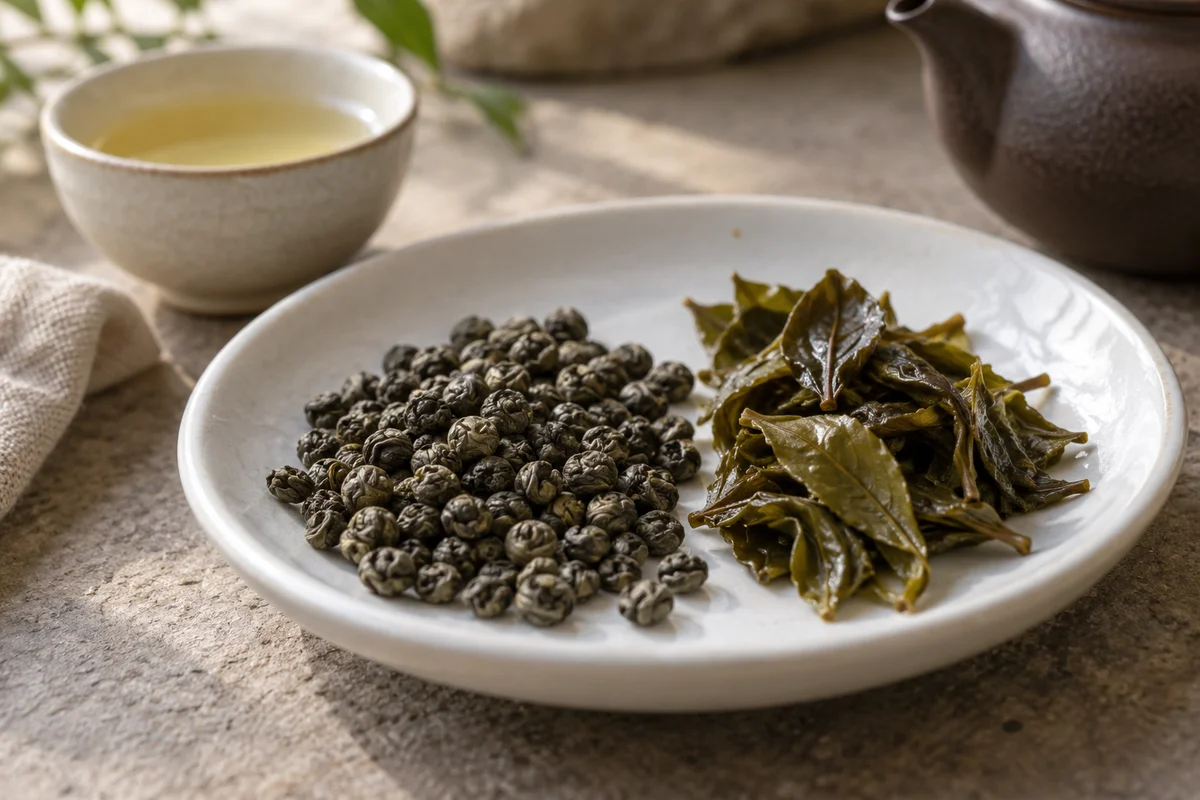
Gunpowder gets its name from its rolled shape. Those compact pellets change how a spoonful looks and opens.
No smoke is required
Gunpowder is a green tea whose leaves are rolled into small pellets. The name refers to their resemblance to old-fashioned gunpowder grains, not to an ingredient or a requirement that the tea be smoked. That distinction matters because the word can lead a newcomer to expect a campfire aroma before opening the packet. The tea may have a robust, earthy or lightly toasted impression, but smoking is not what defines this style. The rolled leaf is the more useful starting point.
A compact shape hides the amount
A spoonful of dense pellets can hold more leaf than a similarly full spoon of large, airy leaves. This makes visual comparisons unreliable. If you move from a fluffy white tea to gunpowder and keep the same heaped spoon, the resulting cup may be much stronger than expected. Weighing a serving once can help establish what your usual spoon actually contains. You need not weigh every cup forever; one observation can correct a misleading habit.
The pellets loosen in water and reveal their leaf structure. Leave room for that expansion. An infuser packed tightly with dry balls can become crowded after they open, making extraction less even and decanting more awkward.
What a smaller pellet tells you
Different grades and products have different pellet sizes. A smaller, more evenly rolled appearance may be part of the description, but it does not settle every question about quality or taste. The condition of the leaf and the finished cup still count. Dust at the bottom of a packet can also behave differently from the larger pieces, so avoid making your entire judgement from the last spoonful alone.
A straightforward first cup
Begin with the supplier's directions and taste the tea without mint or sugar before exploring blends that use it. Notice the green aroma beneath any stronger, earthier impression. If the cup is bitter, reconsider quantity and preparation instead of deciding that the dramatic name guarantees a harsh drink. Understanding the compact dry shape is often the simplest way to make this tea less intimidating and more predictable in an ordinary kitchen.