Why hojicha looks brown but belongs with green tea
Hojicha's brown leaf and toasted aroma come from roasting. Its place in the green tea family can be surprising.
Brown does not always mean black tea
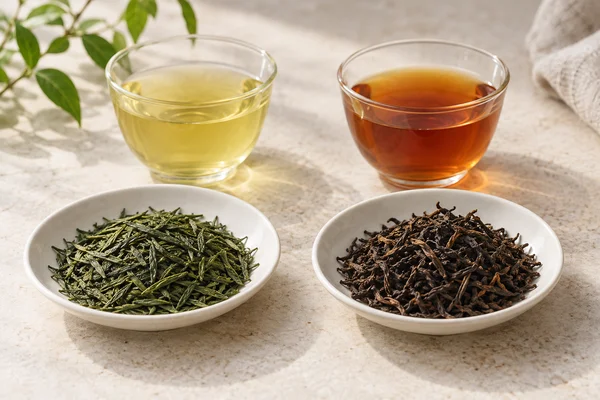
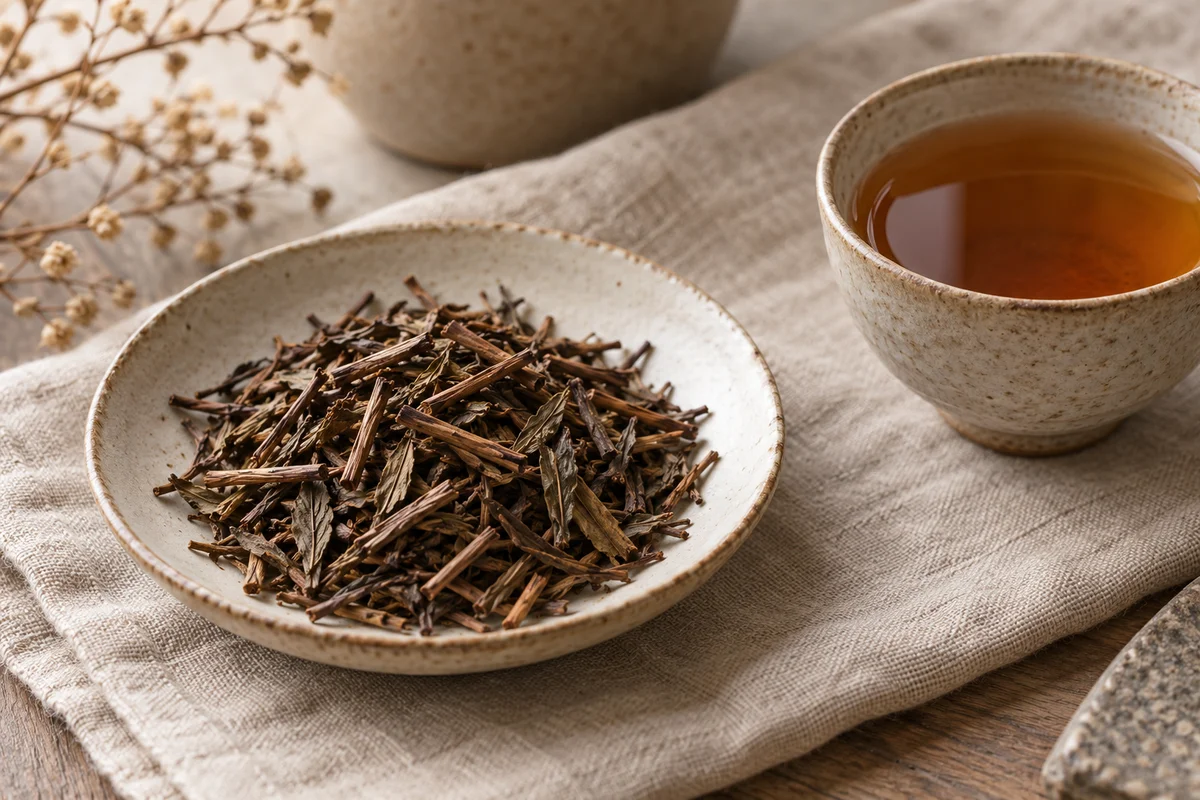
Hojicha can be the easiest way to discover that tea categories are not simple colour charts. Its leaves are brown, and the cup may be amber or copper rather than green. Yet it belongs with Japanese green teas because of the underlying processing before roasting. The roast changes what you see and smell. If your experience of green tea has been limited to sharp or grassy cups, this warm, toasted style may feel like a different conversation altogether.
The roast has its own vocabulary
Try smelling a small amount of dry hojicha before adding water. Toasted nuts, warm wood, bread crust or a gentle caramel-like impression are useful possible comparisons. They are not ingredients, and a roasted aroma need not be sweet in the way a sugary drink is sweet. Nor should roasting automatically be called smoking. Smoke is a separate influence; a hojicha can smell richly toasted without tasting like a campfire. Notice whether the fragrance is rounded or harsh.
Leaves and stems both belong
Some hojicha is mostly leaf, some contains many stems, and some is sold specifically as roasted stem tea. These variations can affect the balance of aroma and body. A packet with pale woody pieces is therefore not necessarily padded with unwanted material. Look at how the product is described. The pieces are part of the intended tea when a producer selects them for that style, rather than a reason to dismiss it before making a cup.
A useful change of pace
Prepare your first serving according to the maker's directions and taste it without milk. A lighter-bodied infusion can still have a strong fragrance, so do not confuse aroma with thickness. If you enjoy it plain, later try it alongside a simple biscuit or meal and see whether the toasted character complements the food. Hojicha is often described as low in caffeine, but it is not automatically caffeine-free. Choose on the basis of the actual product and your needs, while letting flavour remain the main reason for keeping it in the cupboard.