Offer guests a choice without a tea lecture
Two clear choices, comfortable cups, and an easy way to decline usually matter more than an impressive tea collection.
Make the first question easy
When guests arrive, a long list of unfamiliar teas can feel more like a quiz than an offer. Begin with two understandable choices, described by flavour rather than status. Something brisk that works with milk and something lighter or roasted may be enough, depending on what you have. Include water or another suitable drink as an ordinary option. The point is to make people comfortable, not to prove how many packets are in the cupboard.
Ask about ingredients and caffeine preferences without turning the conversation into an interrogation. A guest can say no without explaining a personal reason. If you offer a herbal or fruit infusion, check its ingredients before describing it as suitable; a comforting name on the package is not a complete description. Keep the packaging available if someone needs details. Clear information is more hospitable than a confident guess about a blend you have not recently read.
Put the practical details within reach
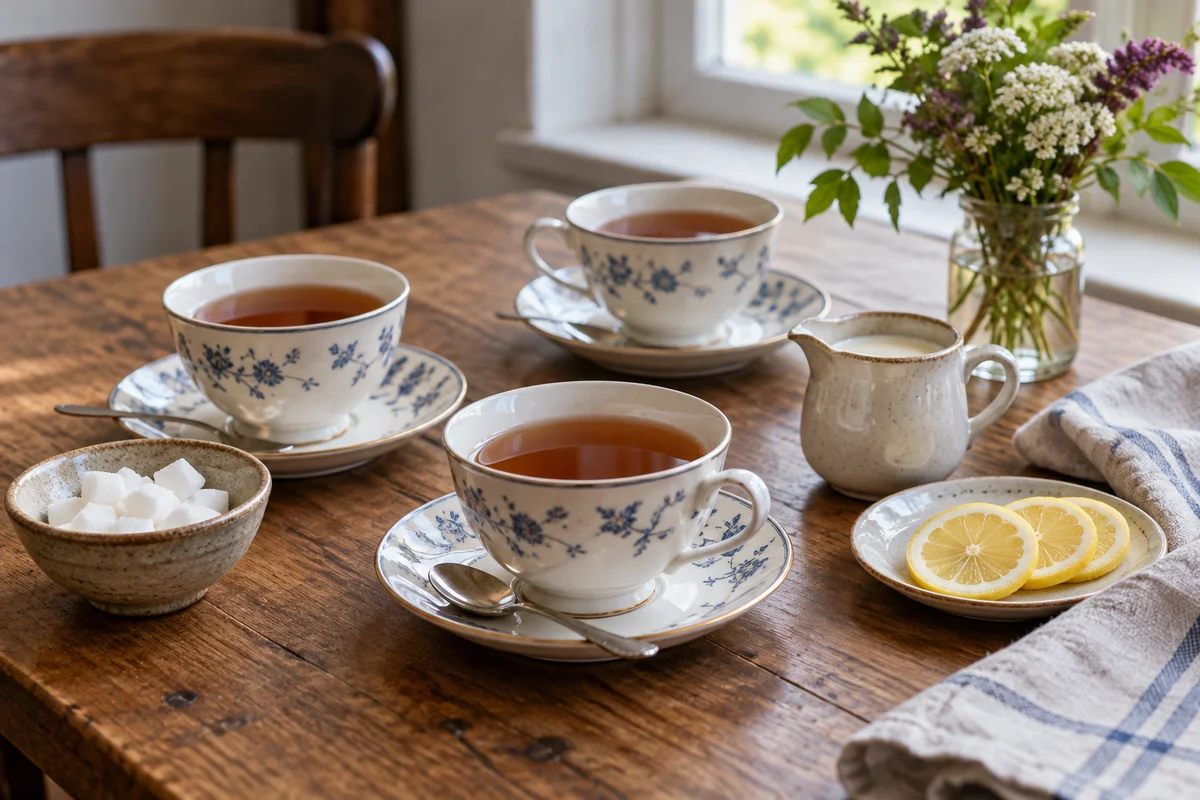
Choose cups that are comfortable to hold and leave enough room on the table for setting them down. A beautiful tiny vessel may be enjoyable for a focused tasting, but it is not automatically the best choice for a long conversation on a sofa. Offer milk, sugar, or other accompaniments where appropriate, without presenting their use as a mistake. If a tea is especially delicate, you can describe it briefly while still allowing the guest to decide.
Serve a manageable amount and make refills easy to request. Continually topping up a cup without asking can leave someone drinking more than they wanted or losing track of the flavour. A simple offer is enough. Keep hot water away from crowded edges and do not expect guests to reach across one another. Comfortable hospitality often comes from these small arrangements rather than a perfectly coordinated set of objects.
Let knowledge follow interest
If someone asks about the tea, share one useful detail: where you bought it, what flavour you enjoy, or why you chose it for the afternoon. Pause before continuing. An interested guest can ask another question; a guest who wants to talk about something else should not have to escape a lecture. The tea has already succeeded if it gives the conversation a pleasant setting. Expertise can remain available in the background without becoming the price of accepting a cup.