Kabusecha between brightness and umami
Kabusecha can connect sencha's freshness with a more rounded savoury note. The shading description needs context.
A useful bridge, not a halfway formula
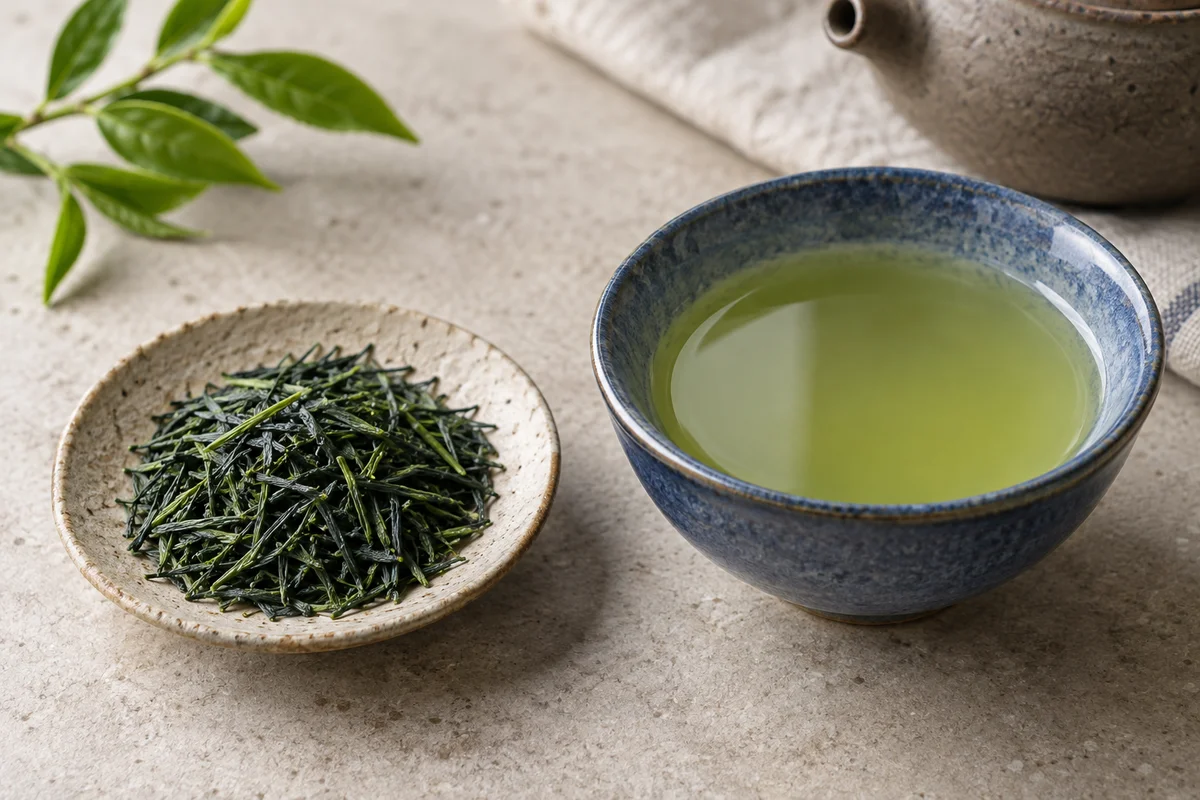
Kabusecha is often described as a bridge between sencha and gyokuro. The plants are shaded before harvest, usually in a different way or for a shorter period than the more heavily shaded gyokuro style. That can produce a cup that combines freshness with a rounded savoury impression. But bridge is only an introductory comparison. It does not mean that every kabusecha tastes exactly halfway between two other teas, or that one fixed number of shaded days explains the finished drink.
Shade is one part of the description
The cultivar, growing conditions, steaming and finishing also matter. Some kabusecha has the familiar needle-like form of sencha; other products may be made in a curled style. A deeply steamed example can behave differently in the pot from a more intact leaf. Read the complete description rather than stopping at the word shaded. If a seller provides the producer's method, that information helps set expectations more reliably than a general claim that shade always creates sweetness.
Notice the balance rather than a single note
Try the first cup without food so that the relationship between savouriness, green fragrance and any drying edge is easier to notice. A tea can feel rounded without tasting sugary. It can also have a lively finish without being unpleasantly bitter. The point is not to hunt for the maximum amount of umami, but to see whether the different sensations sit comfortably together. Your preferred balance may be lighter than the style a detailed tasting description celebrates.
Choose a comparison that teaches something
If you already drink sencha, a small kabusecha sample offers a practical next comparison. Follow each packet's preparation guidance and avoid judging the new tea from a single rushed, overheated cup. Look at the leaf after brewing and note whether it remains fairly intact or breaks into fine particles. Then compare the cooled drinks. This keeps the experiment grounded in what the tea actually does, rather than in an imagined hierarchy where more shade must always mean a better product. Even the same named style can change with a different harvest.