Kukicha puts the stems in the spotlight
Stems can be the point of a tea, not an unwanted extra. Kukicha makes that clear in both appearance and flavour.
A different part of the plant
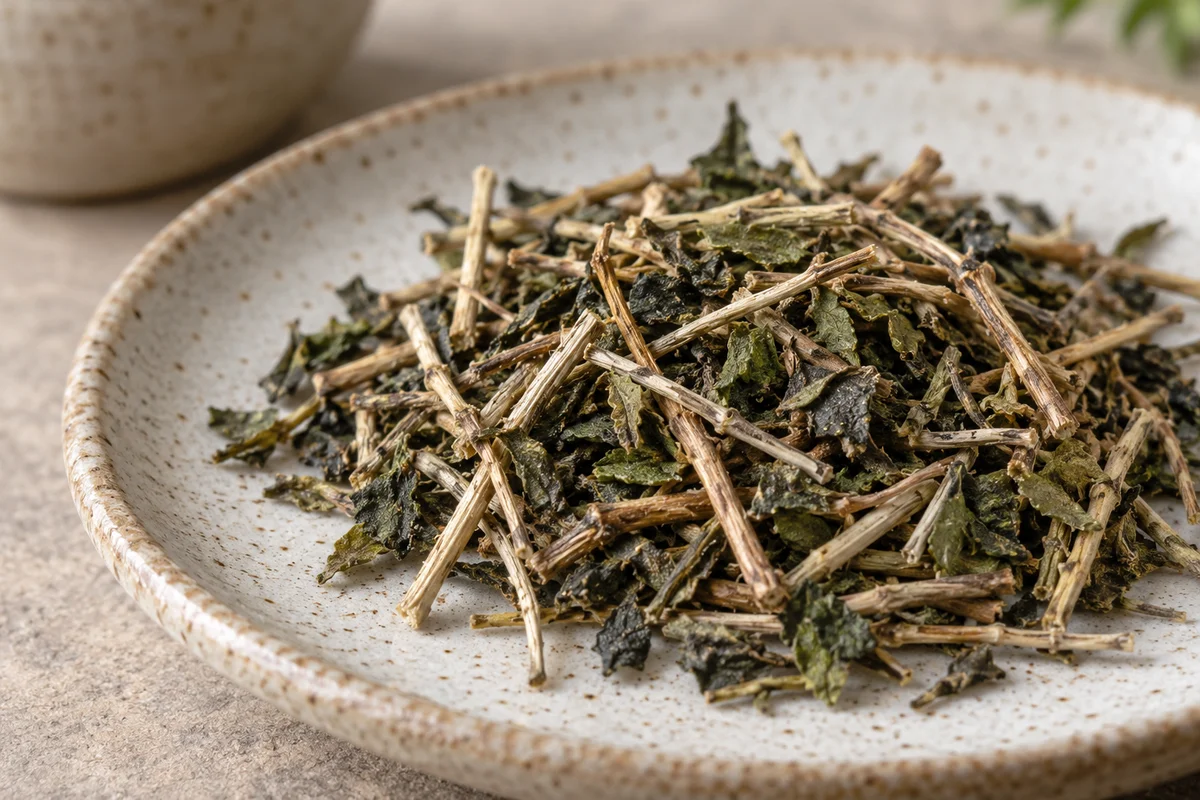
Kukicha draws attention to the stems and stalks that are separated during tea processing. In a dry mixture, their pale, slender shapes contrast with darker fragments of leaf. Seeing those pieces for the first time can make a person wonder whether the packet contains leftovers. That is the wrong starting point for this style. The material has been selected to make a particular tea, and the resulting flavour can be appealing in its own right rather than merely an inexpensive substitute.
The source leaf still matters
Stem tea can come from different kinds of Japanese green tea. A product associated with shaded tea may have a different character from one based on a more everyday leaf. Names and local terminology vary, so the description of the source material is more useful than treating kukicha as one uniform recipe. Some versions are green; roasted stem teas take the flavour in a toasty direction. It is worth checking which one you are buying before expecting a particular cup.
A light appearance can be misleading
The pale sticks do not necessarily make a flavourless drink. Depending on the tea, there may be a gentle sweetness, a fresh green aroma or a soft woody impression. Roasted examples can smell nutty and warm. These are starting points for tasting, not guaranteed notes. The same caution applies to caffeine claims: a stem-rich composition does not allow you to calculate a reliable amount from the photograph. If that matters to you, seek specific information rather than relying on the colour of the pieces.
Compare with curiosity
A useful comparison is a green kukicha beside a leaf-based sencha from the same supplier. Prepare both as advised rather than forcing them into identical steeping conditions. Notice the aroma and the way each leaves your mouth feeling. You may find the stem tea more relaxed, or simply different in ways that are hard to name. Afterwards, look at the wet material: the stems remain recognisable while the leaf fragments soften. That connection between plant part and cup is the most interesting lesson, without needing to declare one superior.