Nilgiri and a clear, fragrant black tea
Nilgiri belongs to southern India and often offers a fragrant, bright alternative to a heavy black-tea profile.
Put the name in the right place
Nilgiri tea comes from the Nilgiri Hills of southern India. It is not a garden within Darjeeling, nor another word for Assam. Those familiar northern names can dominate the black-tea shelf, making it easy to overlook how much geographical variety sits behind the phrase Indian tea. Nilgiri offers a useful reminder that one country does not have one cup.
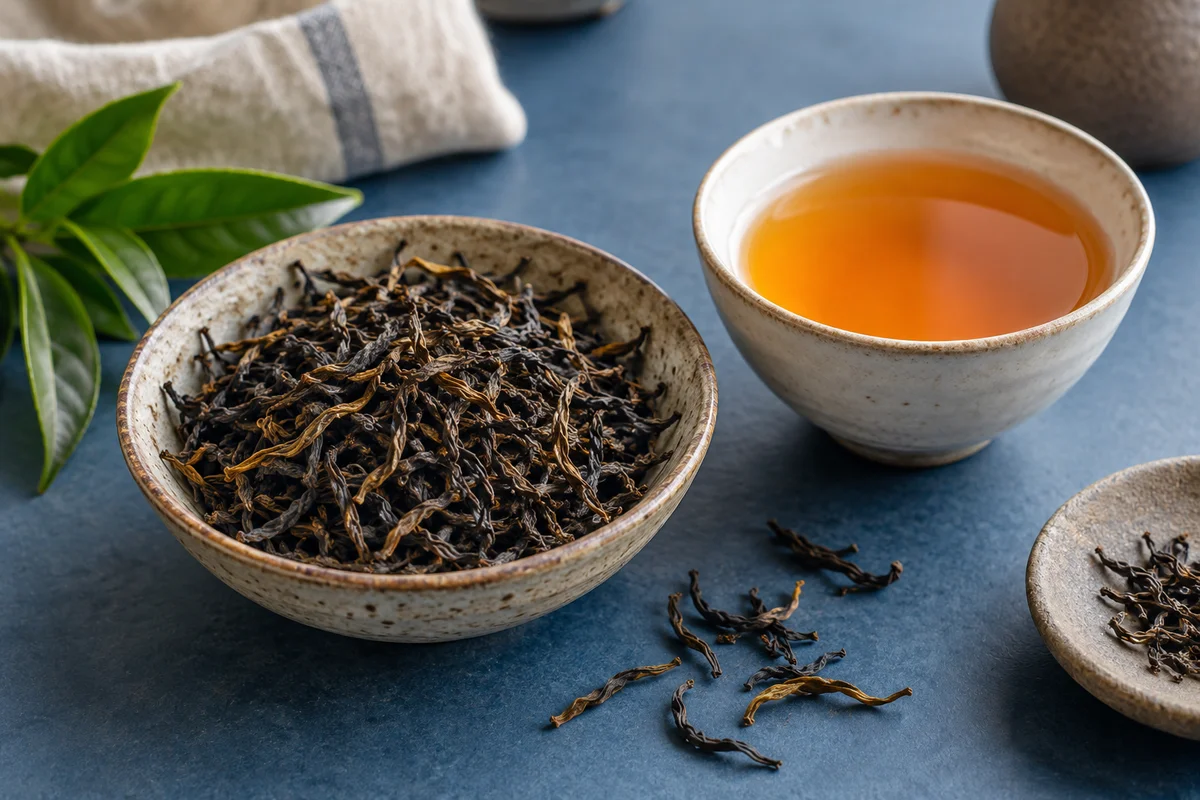
Both orthodox and CTC teas are made in the region. The name alone therefore cannot tell you whether a packet contains wiry leaf pieces or small, uniform particles. An orthodox Nilgiri often appears in descriptions as fragrant, bright and relatively clear in character, but the producer's actual selection remains more useful than a universal regional promise.
Fragrance without weight
A floral note can sit above a brisk black-tea base without making the drink taste like scented flowers. In a plain Nilgiri tea, those comparisons describe the leaf's aroma rather than added petals. The overall impression may feel more open and lively than the thick, malty cup someone expects from a breakfast tea.
Clarity is not the same thing as thinness. A tea can have a defined flavour and a satisfying finish without a heavy texture. Notice whether the scent remains distinct as the cup cools slightly, and whether the dry sensation at the end feels clean or rough. These small observations help describe the tea more accurately than simply assigning it a strength score.
Allow the individual tea to lead
Seasonal lots and different manufacturing choices can shift the balance. Some Nilgiri teas are particularly delicate; others are designed for a more assertive everyday cup. A regional label should open that range rather than close it. Even an attractive mountain photograph cannot tell you the exact fragrance, body or finish of the leaves in the packet.
For someone learning tea styles, Nilgiri is worth placing alongside another Indian black tea as a comparison of character, not a competition. Ask what each does clearly: perhaps one provides malt and fullness while the other offers a lighter aromatic line. That is a more useful lesson than deciding that all southern teas are light or that all northern teas are strong.