Read the ingredients before the tasting notes
A name such as peach garden tells you a mood. The ingredient list tells you what is in the packet.
Begin on the back of the packet
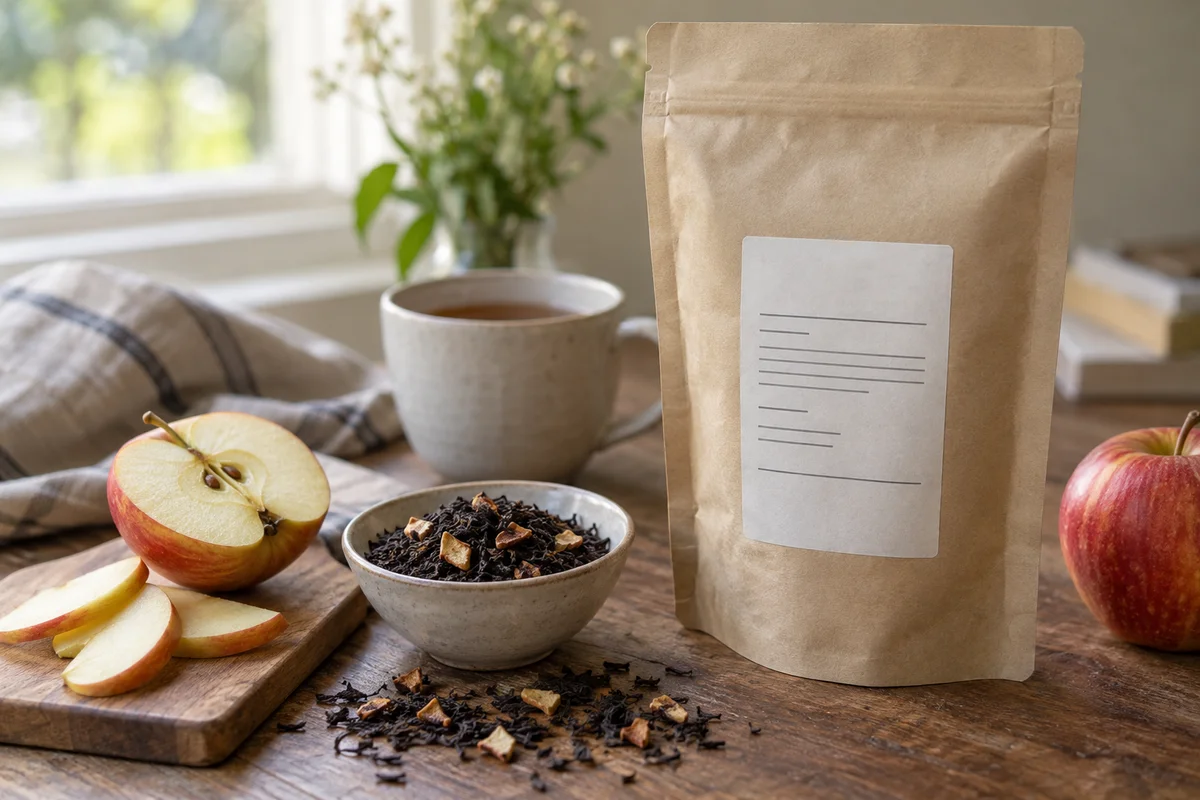
A large fruit photograph does not tell you how much fruit a blend contains, or whether the main drink is black tea, green tea, or an infusion without tea leaves. Turn the packet over before deciding. Find the base ingredient first, then work through the additions. Apple pieces, rosehip, hibiscus, spices, sweetening ingredients, and flavourings lead to quite different cups even when the front labels describe the same fruit.
Treat the ingredient list and the tasting description as two separate pieces of information. A plain tea can be described as having honey or cocoa notes without containing either ingredient. Conversely, a blend with cocoa shells or honey granules should identify those actual additions. This distinction matters when you want an unflavoured tea, dislike a particular ingredient, or are choosing for someone whose preferences you do not know well. A poetic product name cannot answer those questions.
Look for the detail that changes your choice
If avoiding a particular food matters, read the full allergen information and any relevant precautionary statement rather than relying on a picture. Keep the original packaging when giving the tea away. Decanting a blend into an attractive unlabelled jar removes information the recipient may need. Where the wording is unclear, ask the seller about that exact product; a general answer about the brand is not necessarily enough.
For flavour preferences, look especially at ingredients that can dominate the cup. Hibiscus can make a fruity infusion noticeably tart, while liquorice can bring a lingering sweetness without ordinary sugar being the main story. Mint can obscure a delicate base tea. None of these ingredients is inherently a problem, but their presence helps explain why a blend might not taste like the fruit on its front. Buy a small quantity if you are unsure.
Keep a useful comparison
Photograph or save the label of a blend you enjoy. When it disappears from a shop, the ingredient pattern can help you find a sensible substitute. Compare the base and the important additions before comparing the attractive names. Do not expect matching lists to guarantee identical proportions or flavour. They provide a starting point, and your own cup supplies the final answer. Recheck the label when buying again, because recipes and product ranges can change.