What a tea really costs per cup
Price per packet is easy to see. Price per cup depends on how much leaf you use and what you actually finish.
Start with the dry weight
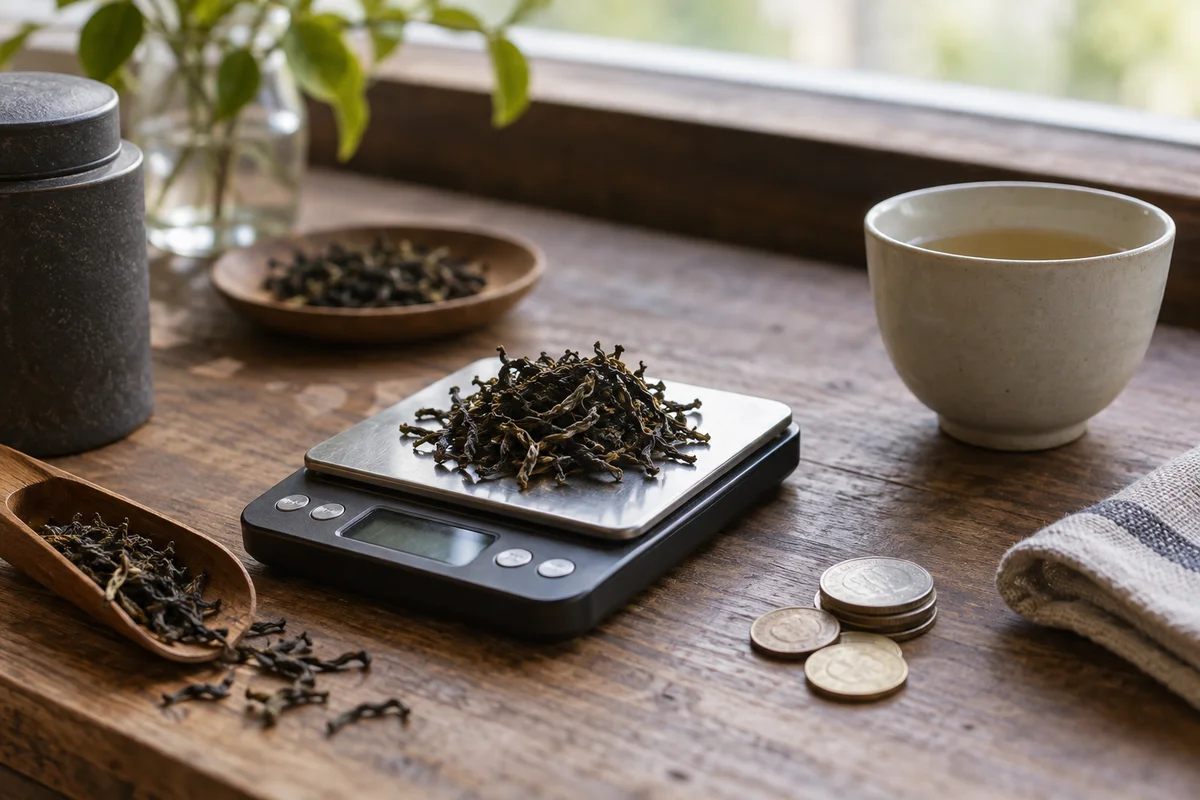
Two packets standing next to each other may contain very different amounts of tea. Ignore the height of the tin and find the net weight. For a simple comparison, divide the price by the grams in the packet, then multiply by the grams you use for one preparation. A fictional ten-euro, hundred-gram bag used at three grams per session costs thirty cents in leaf for that session. Water, energy, milk, and delivery are separate costs.
Be careful with the word cup. A seller may be imagining a small tasting vessel while you are filling a large breakfast mug. Compare the quantity you actually drink, not an impressive serving count printed on a box. If a tea needs a larger dose to give the cup you like, its low price per hundred grams may not produce the lowest everyday cost. There is nothing wrong with that, provided the comparison is honest.
Count repeat infusions only when you drink them
Some leaves can make several enjoyable infusions, but a theoretical fifth cup does not save money if you stop after the first. Work from your habits. For an afternoon spent with a small pot, calculate the cost of the whole session. For a hurried morning, calculate the cup you take with you. Keep the same basis when comparing another tea, rather than counting every possible infusion for one and only the first for the other.
Packaging can complicate the price too. A reusable tin may be worth buying once, while refills offer a different ongoing cost. A sample costs more per gram but may prevent a much larger unwanted purchase. Delivery thresholds can tempt you to add tea you did not intend to buy. Compare the final basket, including postage, and do not call unused stock a saving merely because its unit price was lower.
Put enjoyment into the calculation
The cheapest tea you avoid drinking is poor value. Equally, an expensive tea is not automatically a better everyday choice. Set a comfortable spending range and use samples to find what earns its place there. After a month, look at what you finished and what is still waiting. That small piece of evidence is usually more useful than trying to assign a precise monetary value to every tasting note.