Adjust the second infusion to the leaves
The second brew starts with wet, opened leaves. Its timing may need to change, and its flavour does not have to copy the first cup.
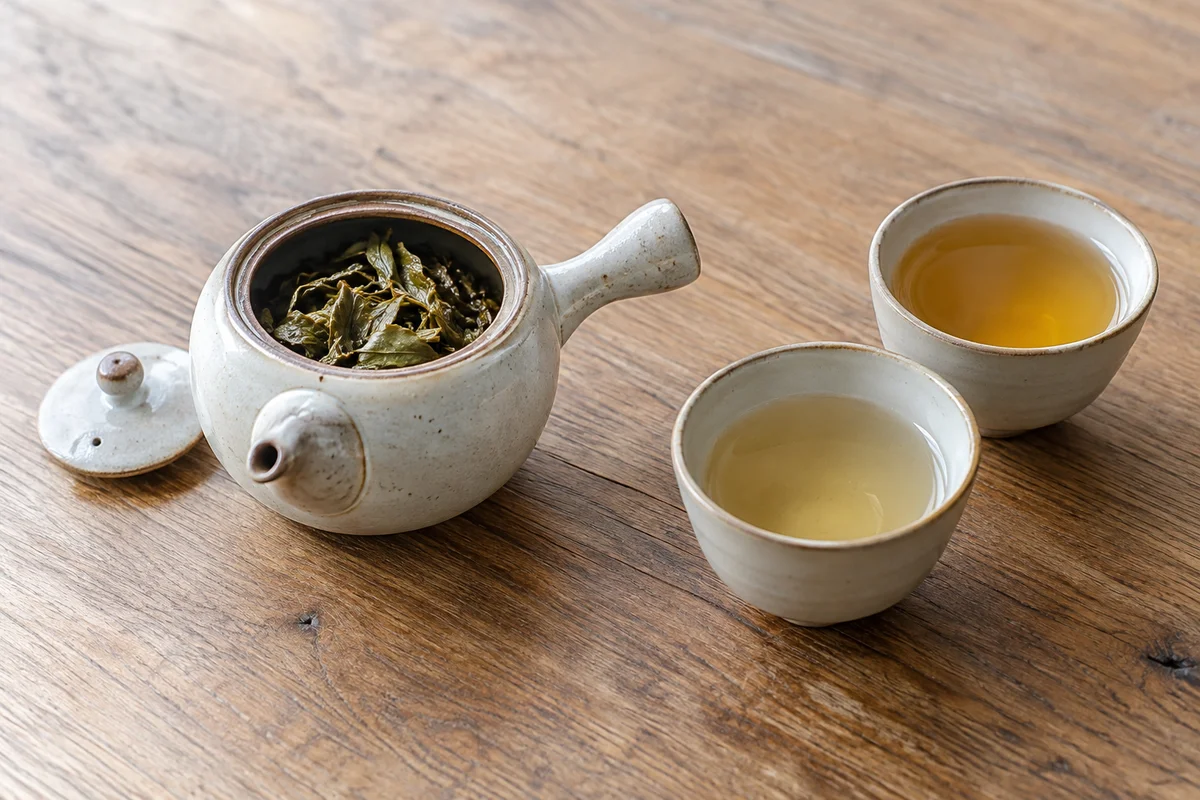
The leaves are no longer at the starting line
Dry leaves need to become wet and, in some styles, unfold before they behave like the leaves in a later infusion. After the first brew, that opening stage has already happened, while some soluble flavour has moved into the first cup. These two changes pull in different directions. The second infusion may not simply need a longer wait because it is second.
Begin with any repeat-brewing guidance supplied for the particular tea. A tightly rolled oolong prepared in short infusions is a different proposition from a finely broken breakfast bag left for several minutes in a large mug. Do not assume every tea or every preparation will produce an equally satisfying second cup. Trying a small amount is more informative than promising a fixed number of infusions for all leaves.
Drain the first brew completely
Pour off the first tea or remove the basket so that the leaves are not sitting in a pool of liquid between rounds. Retained tea continues to change and can make the next result harder to predict. Keep the leaves in a clean vessel during the same tea session and handle them with clean utensils. Do not turn a plan for consecutive infusions into leaving damp leaves on the counter overnight.
For the next round, keep track of the water amount and starting temperature. Taste after a short, deliberate interval rather than automatically repeating a long first steep. If the result is too light, the next attempt can allow more time. If it is unexpectedly strong, the already-open leaves may need less contact. Record the sequence briefly so you can recognise the pattern next time you brew that tea.
Enjoy the change when it is pleasant
A later cup may become softer, less aromatic, sweeter in impression or simply thinner. You do not have to declare each change an improvement. Stop when the result is no longer enjoyable, and discard the spent leaves. Repeated infusions are a way to explore a tea during a session, not an obligation to extract every possible trace of flavour. The useful endpoint is the cup you still want to drink, rather than an impressive number of rounds written in a notebook.