Smoke and roast are different tea flavours
Toasted warmth and smoke can overlap in everyday language, but they describe different influences on a tea.
Two warm aromas, two explanations
A tea that reminds you of toast has not necessarily been smoked. Roasting applies heat to develop a particular character in the leaf; smoking exposes the material to smoke or creates a deliberately smoky profile through a specified process. In casual tasting language the words sometimes drift together, especially when both aromas seem dark and warm.
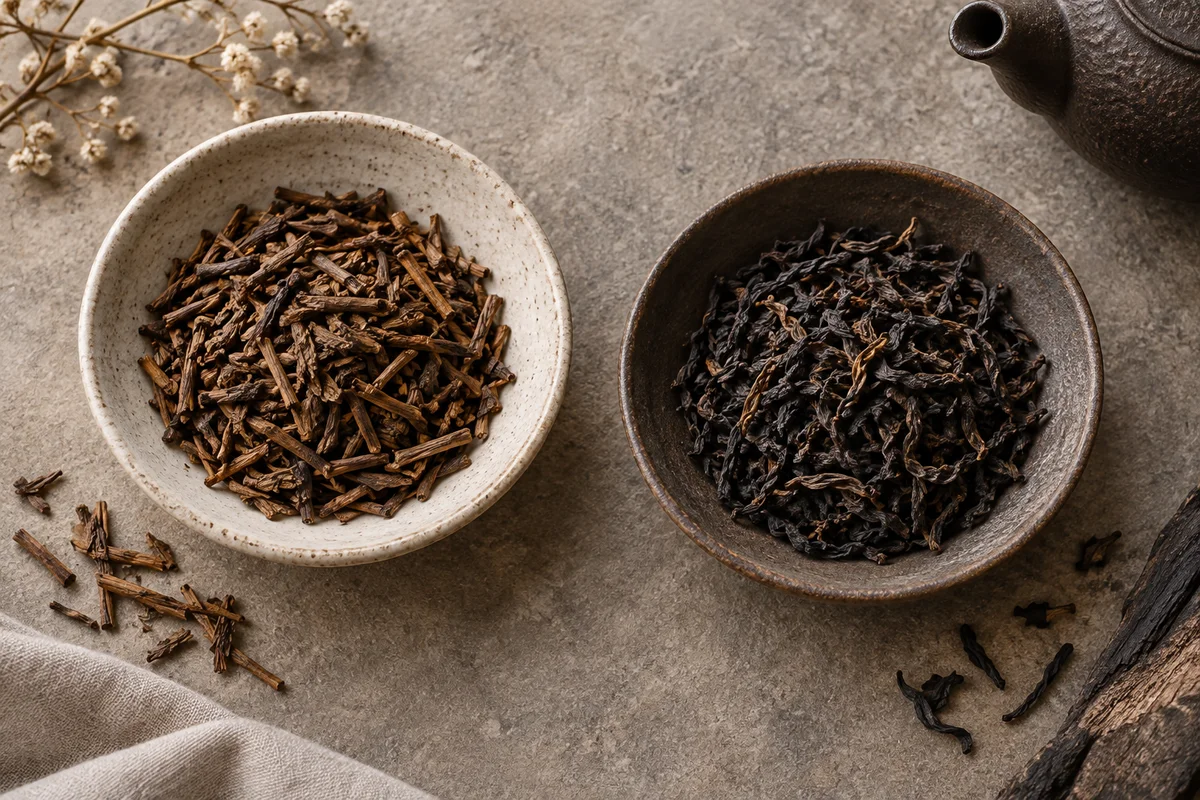
Hojicha offers a clear example of a roasted Japanese green tea. Its brown leaf and toasted fragrance do not turn it into black tea or automatically make it a smoked tea. A smoked Lapsang Souchong begins from a different black-tea tradition. Comparing the two makes the distinction easier to smell than a definition alone can do.
Find a more exact comparison
Roast can suggest toasted grain, nuts, bread crust or a gentle caramel-like aroma. Smoke may suggest pinewood, a hearth or the lingering scent after a fire. These are sensory comparisons rather than literal ingredients, and individual teas can be more complicated than either short list. The point is to find the nearest useful description, not to force every cup into one box.
A roasted oolong may still have a floral or fruity thread beneath its darker notes. A smoked black tea may leave room for a rounded, sweet-smelling base. Intensity and balance vary in both cases. Neither roast nor smoke should be assumed to erase everything else the leaf contributes.
Dark is not a complete tasting note
When a tea seems burnt, smoky and bitter all at once, pause before treating those words as synonyms. Burnt is an impression of excessive charring; smoky points toward a particular aroma; bitter describes a taste. They can appear together, but one does not prove the others. A brown leaf can make a soft cup, and a strongly scented cup need not be sharply bitter.
Keeping these terms distinct helps explain preferences. Someone who enjoys hojicha's toasted cereal note may dislike heavy pine smoke, while another drinker may prefer the opposite. There is no inconsistency to solve. The teas offer different kinds of warmth, and a precise description gives each one room to be appreciated for what it actually brings.