Photograph tea without interrupting the gathering
A few considered photographs can preserve a tea visit without turning the table or the people working there into a photo set.
Decide what the photograph is for
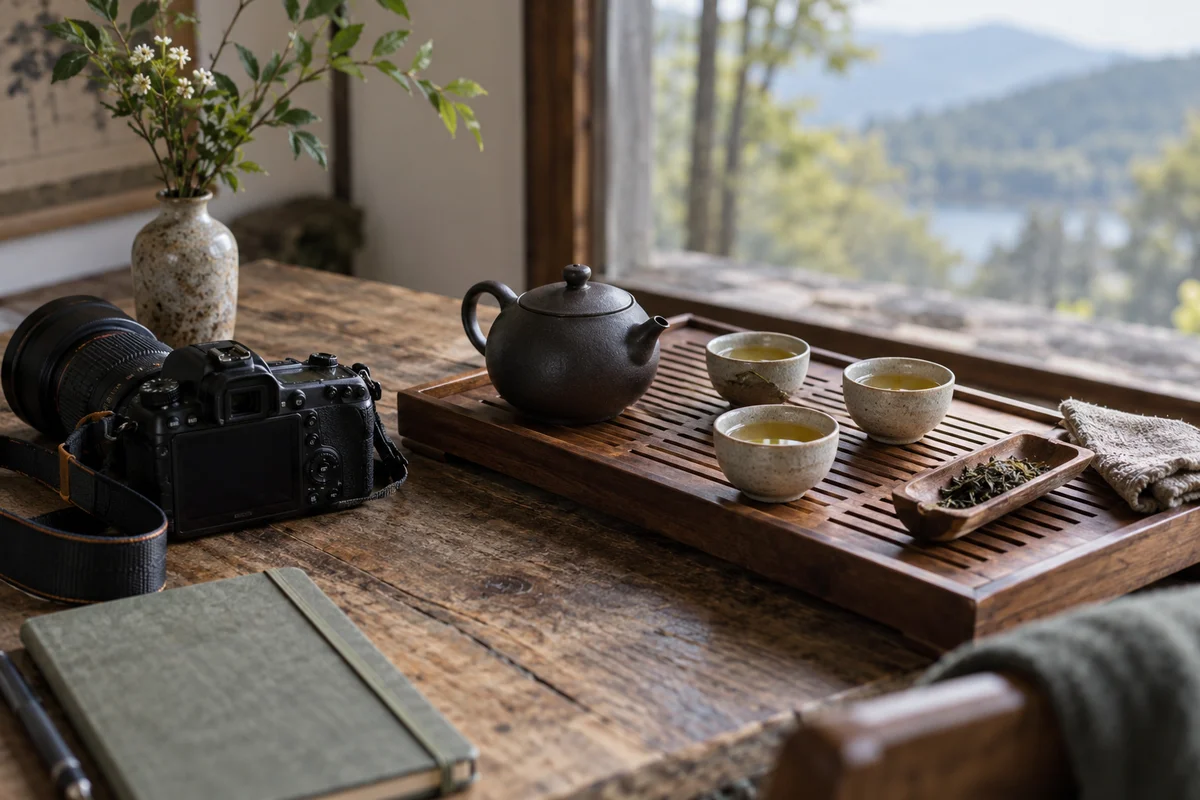
A photograph can help you remember a tea, identify a packet, or record the atmosphere of a place. Those are different purposes, and they do not all need the same picture. A clear label photograph may be more useful later than ten close-ups of steam. Decide what you want to keep before reaching for the phone. That small pause often reduces the number of pictures and makes it easier to remain part of the gathering.
Check the venue's photography policy and ask before including identifiable people. Permission to photograph your own cup does not automatically extend to staff, other guests, private rooms, or a demonstration. A person may be happy to explain a tea while not wanting their face posted online. Keep those decisions separate. If someone declines, put the camera away without asking them to justify the boundary or trying to take the same picture from farther away.
Let the table remain usable
Avoid moving utensils, flowers, or serving items simply to improve a composition. They may have a practical position or belong to a presentation you have been invited to observe. Hot water and fragile objects also make an improvised rearrangement risky. Photograph from your own place when possible, keep straps away from the table, and never step into a service route for a better angle. A working tea house does not pause its ordinary business for a visitor's camera.
One quick image before drinking is usually less disruptive than repeatedly lifting the cup into the light between pours. In a guided session, wait for an indicated moment rather than assuming every action is available for recording. Flash, shutter sounds, and a bright screen can change the atmosphere even when the photographer remains quiet. If the room is dim, accepting a less perfect picture may preserve a much better experience for everyone present.
Write a caption that the image can support
Afterwards, describe the actual place and drink as accurately as you can. A close-up of a bowl does not establish the age of a tradition or the beliefs of the person who served it. Keep any explanation tied to what you learned there, and avoid publishing private details from a conversation. A modest caption with a correct tea name often holds more value than a grand statement attached to a beautiful but poorly understood scene.