Make a small tea tasting feel sociable
Keep a friendly tasting small, give everyone room for their own words, and let conversation matter as much as comparison.
Pick a comparison people can follow
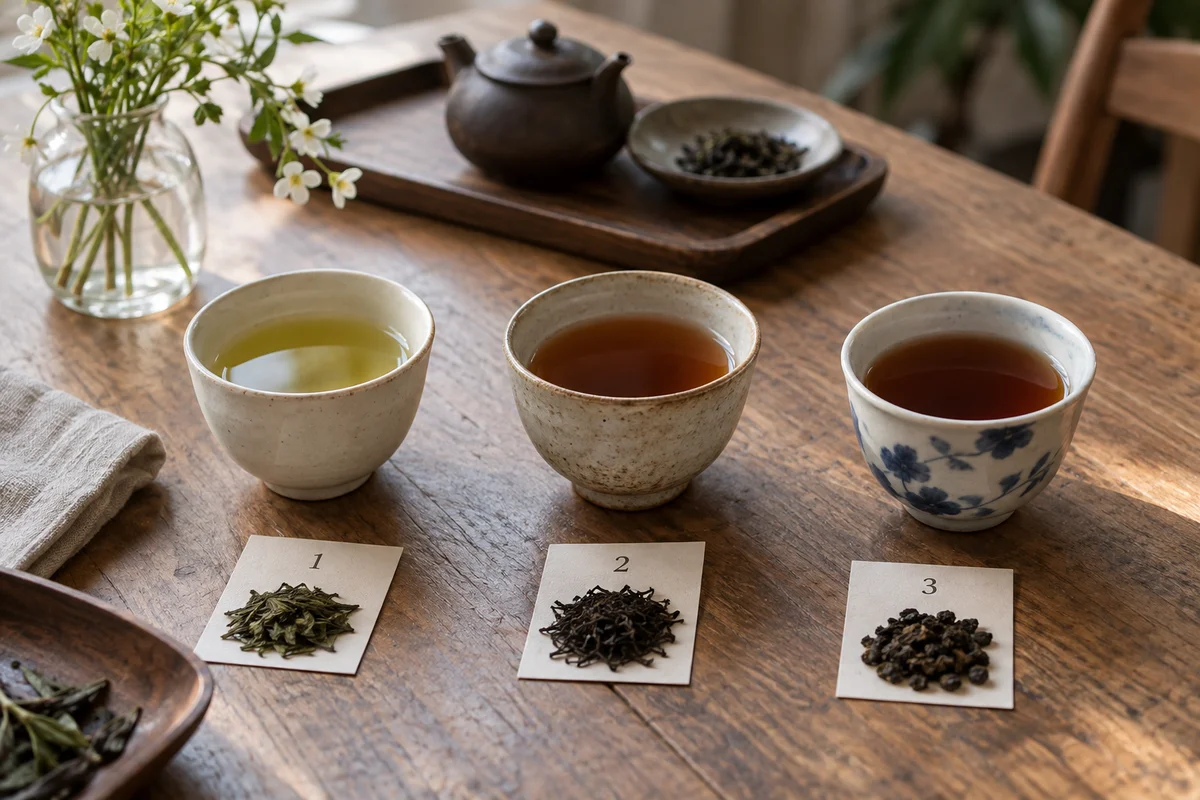
For a first tasting with friends, choose two or three teas with a clear reason for appearing together. They might offer contrasting aromas or represent two purchases you want to understand better. A large line-up can become tiring before anyone has formed a useful impression. Tell the group what you are comparing in one sentence, and make it clear that nobody needs previous knowledge or an impressive vocabulary to take part.
Decide whether to reveal the names before tasting. Showing them gives useful context; hiding them briefly can reduce the pull of packaging and price. Either approach can work, provided it is friendly rather than a trick. Do not make people guess a tea's identity as proof of ability. If you keep labels hidden, reveal them afterwards so that anyone who likes a cup can connect the experience to an actual product.
Make room for individual impressions
Offer small servings and give everyone a quiet moment before the discussion starts. Otherwise the first confident description can steer the whole table. Invite plain observations such as softer, more roasted, drying, or reminds me of warm bread. Someone may notice texture more readily than aroma, and another person may simply know which cup they would like again. These are useful responses, not failures to produce a detailed tasting note.
Keep water available and avoid strongly flavoured food during the comparison if it would distract from the teas. You can bring out snacks afterwards and see how preferences change. The setting should remain comfortable: enough space for cups, an easy way to set aside an unfinished serving, and no expectation that everyone will drink every pour. Explain ingredients and respect caffeine preferences before starting rather than making a guest announce a concern halfway through.
Finish with a choice, not a ranking of people
At the end, ask which tea each person would choose for an ordinary afternoon and why. The answer may differ from the tea they found most interesting. That distinction is worth keeping. Write down a few observations beside each name if the group wants a record, then let the conversation move on. A successful tasting does not produce unanimous scores or identify the most knowledgeable friend. It leaves people more comfortable noticing what they enjoy and sharing that enjoyment without needing to agree.