Visit Uji with more than matcha on your list
A visit to Uji can connect tea shops, landscapes, and everyday food instead of becoming a race between matcha desserts.
Give the town more than one category
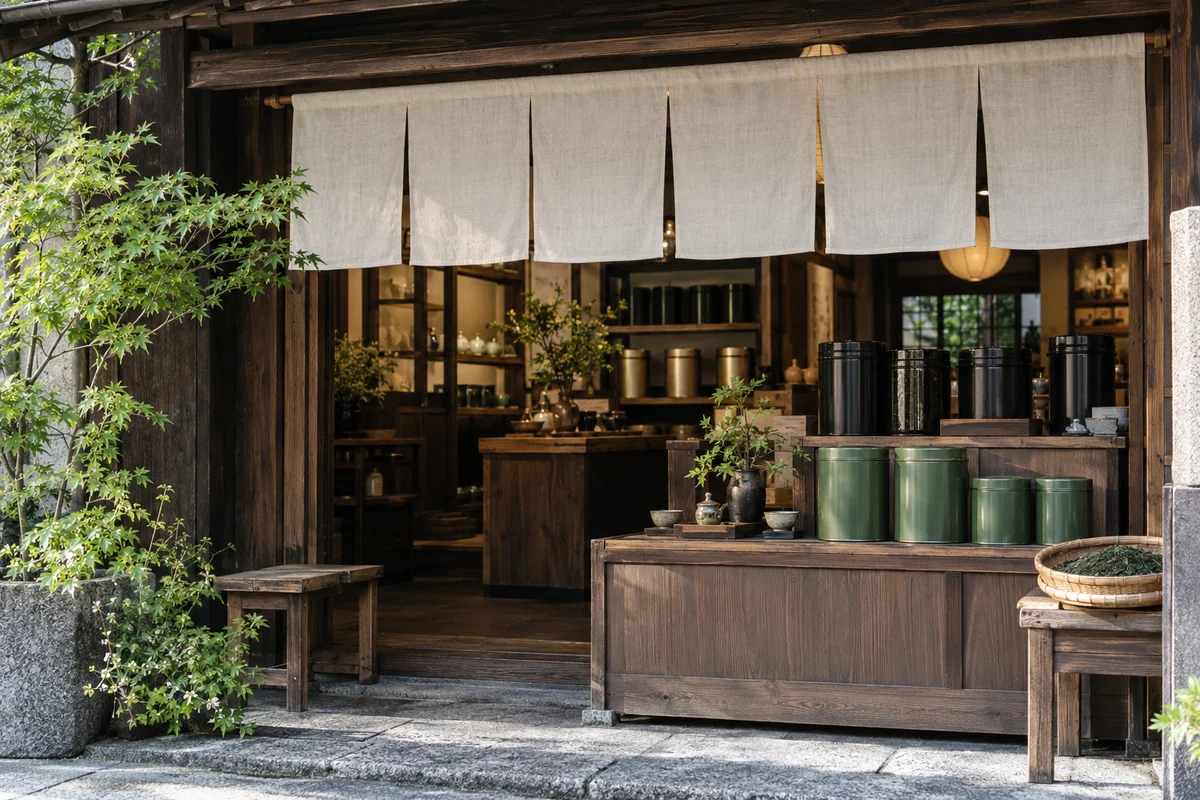
Uji is strongly associated with Japanese tea, but a useful visit need not stop at finding a green dessert. The wider tea history of southern Kyoto includes changing cultivation, production, and ways of drinking. Tea shops, objects, and local foods offer different ways into that story. Build a day with room for more than one of them, while remembering that a working town also has residents, ordinary errands, and places that are not visitor attractions.
Choose one place where you can ask about a tea, one stop connected with local history, and enough time to walk without rushing between bookings. This makes a more coherent day than collecting a long list of products bearing the same place name. Check current opening arrangements before travel. A shop, a museum, and a production visit may have very different schedules, and a public storefront does not imply that its working areas are open.
Separate tea on the menu from tea on the shelf
A matcha-flavoured sweet and a packet of tea answer different questions. Enjoy the sweet as food; assess the packet by its label, intended use, quantity, and storage needs. The flavour of a dessert cannot tell you how a particular tea will taste on its own. If buying a gift, ask for a manageable amount and information the recipient can use at home. A beautiful package is less useful if nobody can identify what is inside.
Keep your questions local and concrete. You might ask what the shop recommends for ordinary daily drinking, which information on the packet identifies the product, or whether a small size is available. These questions leave room for the seller's knowledge without demanding a sweeping account of Japanese tea. If a tasting is offered, follow the arrangement and avoid opening packets or touching display leaves simply because they look inviting on a counter.
Leave with a connected memory
The best note from the day may link a place, an object, and a flavour: a quiet street, a tea container you noticed, and a cup you enjoyed. Photograph labels you actually bought so that you can find the tea again, and keep receipts if the producer or shop name would otherwise be lost. Uji becomes more memorable when tea is connected to its setting, rather than reduced to a colour repeated across a shopping bag.