Rock oolong: roast, leaf and place
Rock tea is a family of Wuyi oolongs. Roast is part of the story, but the name does not promise a literal taste of stone.
A family rather than a single recipe
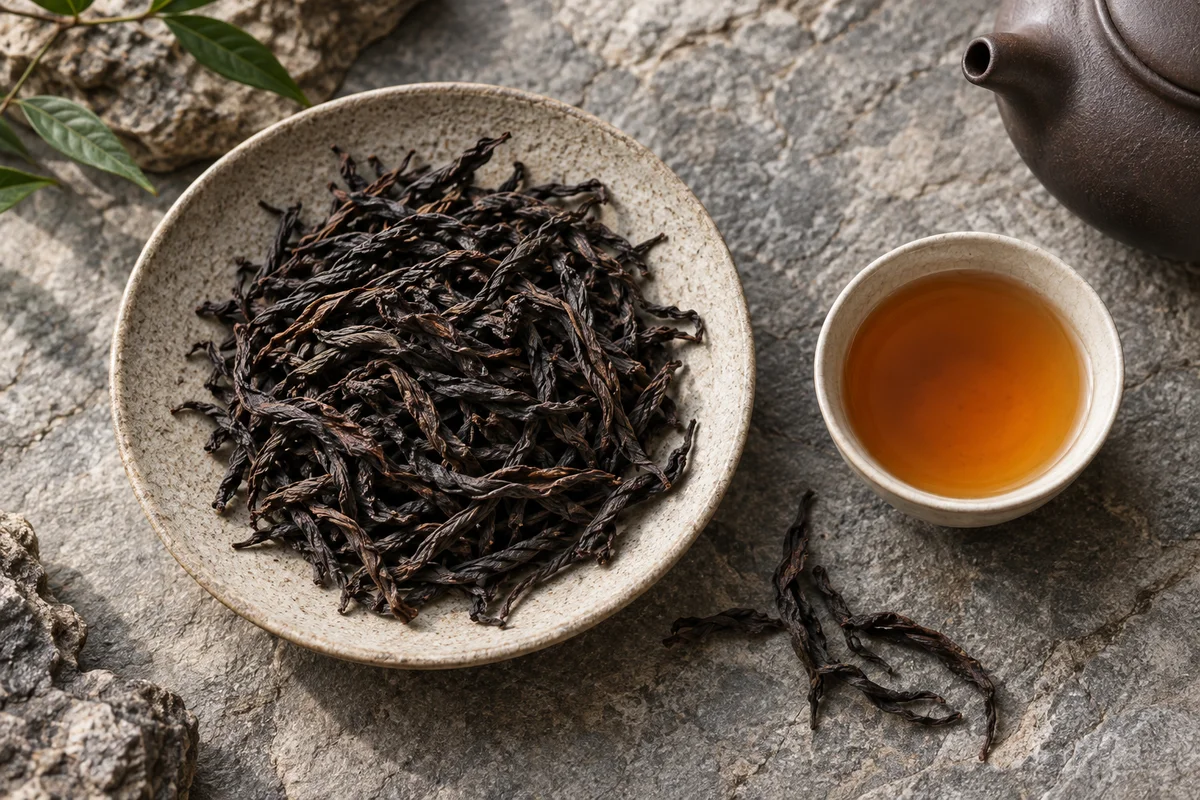
Wuyi rock tea, or yancha, refers to oolong associated with the Wuyi region of Fujian. Names such as Da Hong Pao, Rou Gui and Shui Xian identify different teas within this wider world. Seeing rock tea on a menu therefore leaves plenty unanswered. It is rather like being offered bread without knowing whether the loaf is rye or wheat. The family resemblance is useful, but the particular leaf and the way it has been finished still shape the experience.
Roast should not erase everything
These teas often have long, twisted leaves and a noticeable roast, though the degree varies. A warm baked aroma can be the first thing you notice. Underneath it, a tea may show floral, fruity, woody or spicy impressions. The interesting question is not how dark the roast can become, but whether the different parts of the cup remain in balance. If all you can taste is an unpleasant burnt edge, an impressive origin description does not require you to enjoy it.
Mineral is a common tasting word in this area. It is best understood as an impression, not as proof that you are tasting a measurable amount of the surrounding rock. Home tasting cannot authenticate a precise growing site.
Make the name more useful
Ask the seller for the specific tea, roast style and origin information. Rou Gui may be associated with a cinnamon-like aromatic impression, but that does not mean cinnamon bark has been added. The same distinction applies to other evocative names. Ingredient information and production description should do different jobs.
For a first tasting, a small sample with clear guidance is enough. Smell the leaves after the first pour and return to them after a later infusion if you make one. Roast and underlying leaf character may become easier to separate as the session progresses. Keep attention on the cup rather than on reaching a promised number of infusions. A rock tea is worth understanding through the parts you can observe, while leaving unverifiable prestige claims outside the teapot.