What leaf-grade letters can tell you
Leaf-grade abbreviations can describe the form of a tea. They are not a universal scoreboard for how much you will enjoy it.
Letters belong to a particular system
Long strings of letters on a black tea packet can look like a quality certificate. In practice, grading language is tied to particular producing traditions and describes features such as leaf size and the presence of tips. It is useful information, but it should not be treated as a single worldwide ranking. A Chinese oolong and a Japanese green tea are not waiting to be placed on the same Orange Pekoe ladder as a black tea from another region.
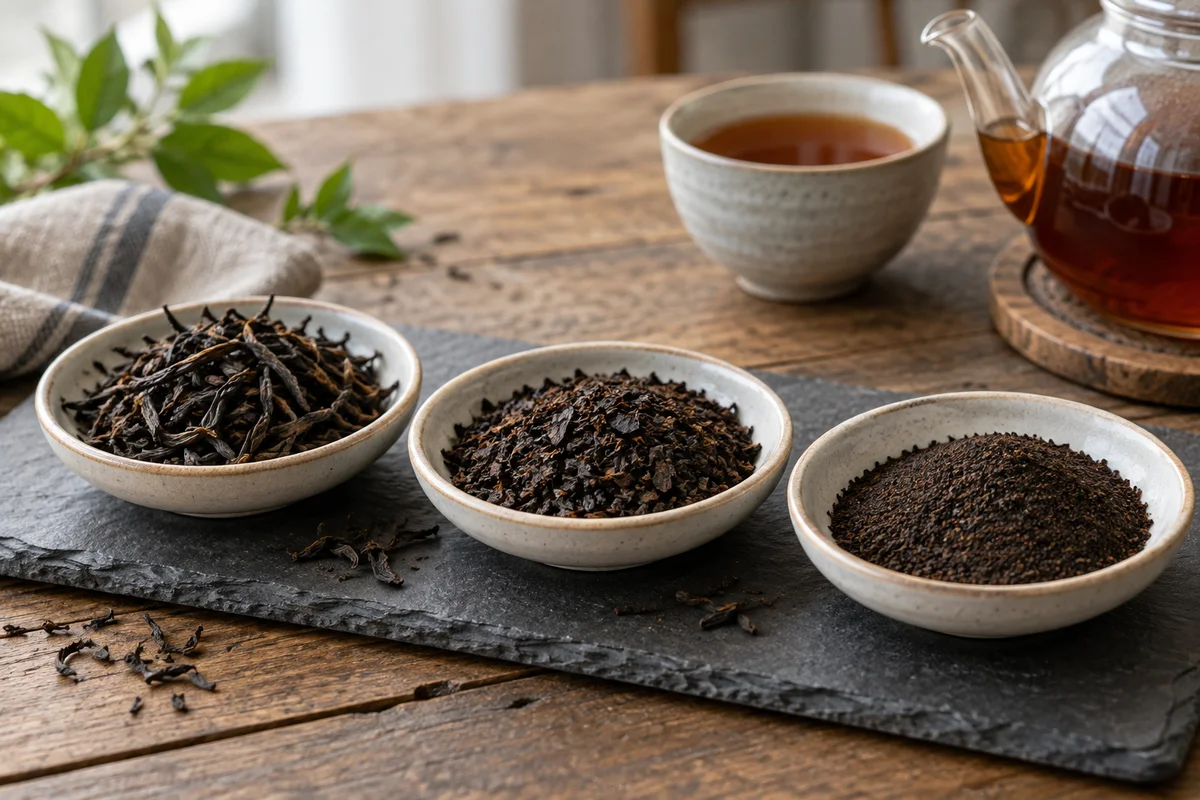
Begin with the distinction you can actually use: whole leaves, broken leaves, and smaller particles behave differently in water. Smaller pieces expose more surface and may make a brisk cup quickly. Larger leaves can need more room to open. That does not make one automatically pleasant and the other unpleasant. Freshness, processing, the particular lot, and preparation still influence the result. A fine-looking dry leaf can disappoint, while a modest broken-leaf tea may be exactly right for breakfast.
Do not read flavour into the name
Orange Pekoe is not a promise of orange flavour. If you want citrus, check the ingredient list or a clear tasting description instead. Likewise, impressive-sounding words within a grading term do not tell you whether a tea will be floral, malty, smoky, or gentle in your own mug. Ask the seller to explain the abbreviation used on that exact product, especially if it is the main reason for a much higher price.
For a practical comparison, buy two small samples within a similar style and origin. Notice the leaf form, then prepare each according to the supplied directions. Record how quickly the cup becomes strong, whether it works with your usual additions, and whether you enjoy its texture. You will learn more from this than from memorising every possible prefix before making your first purchase. Keep the full product names so that the comparison can be repeated.
Let the grade do a limited job
A grade helps identify and discuss a tea; it cannot drink the cup for you. Use it alongside origin, harvest information where relevant, storage, and a sensible sample size. If a seller offers only a prestigious abbreviation and no practical description, there is still an important part of the buying conversation missing.