Sencha beyond the word grassy
Sencha can be brisk, savoury and sweet in the same cup. Grassy is only one possible description.
A familiar tea with many accents
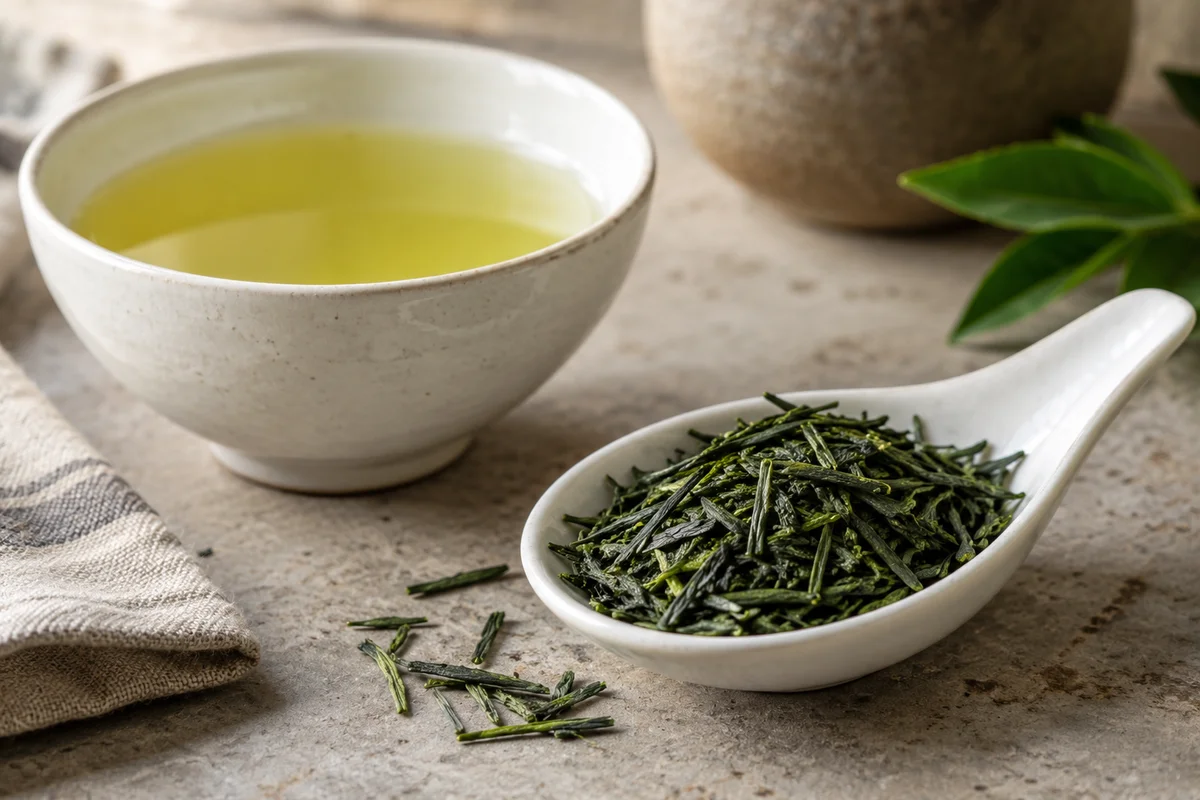
Sencha is a Japanese green tea commonly made by steaming the harvested leaves, then rolling and drying them. Its dry needle-like shape is a useful visual clue, but it does not describe the whole drinking experience. Some examples feel crisp and light; others have a fuller savoury centre. Differences in plant material, growing conditions and finishing mean that two senchas can be noticeably different without either being an unusual exception to the category.
Give grassy a little more detail
Grassy is often the first word offered for green tea, and it can be too blunt to help. Does the smell remind you of freshly cut grass, cooked greens, a snapped bean or dry hay? These comparisons lead in different directions. A faintly sea-like note is another possibility, but it does not mean that seaweed has been added. Try smelling the dry leaf and the warm, wet leaf separately; the second often gives a clearer impression than the first.
Taste and texture are separate
A sencha may have sweetness, umami and a drying edge in the same mouthful. Umami is a savoury impression rather than saltiness, while astringency describes a drying sensation rather than a particular flavour. You can enjoy one and dislike the other. If the cup seems punishingly sharp, check the packet instructions before judging the leaf. Water that is too hot or a steep that runs too long for that tea may emphasise a side you did not intend to bring forward.
Find your own reference cup
Instead of collecting several packets at once, become familiar with one plain sencha over a few preparations. Notice how it tastes with breakfast, without food, and after the cup has cooled a little. Keep the leaf and water amounts reasonably consistent so that those impressions mean something. Later, compare another sencha with that reference. You may discover that you prefer a clearer, brisker cup to a richer one, or the reverse. Neither preference needs to match a price ranking or someone else's idea of the most refined tea.