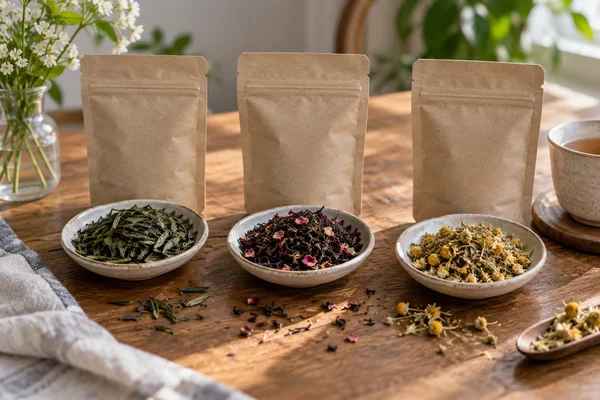
Single origin and blends: two different promises
A named origin offers a particular reference point. A blend may aim for a dependable flavour across changing harvests.
Read the scale of the origin
Single origin sounds precise, but it can refer to different geographical scales. A country, a growing district, an estate, and a particular lot are not the same claim. Look for the actual wording rather than filling in details that the packet does not provide. A tea described only by country may still be enjoyable and honestly sold; it simply gives you less information for comparing it with a specific garden or harvest.
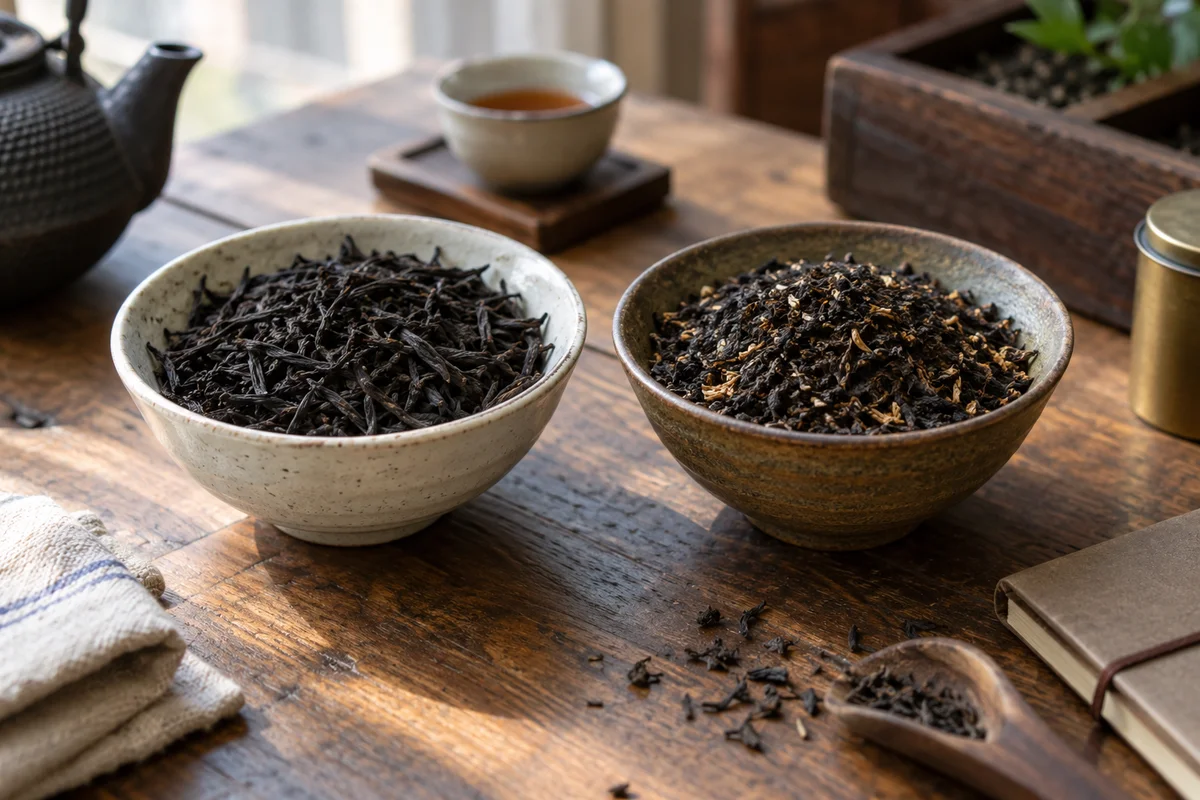
A blend combines teas to achieve an intended result. That may be a sturdy breakfast cup, a particular aroma, or consistency as available lots change. Blending is skilled work, not automatically a way to hide inferior material. Equally, a named estate does not guarantee that you will prefer its tea. Processing, storage, and your own taste still matter. The useful question is what the maker is trying to deliver and whether the description makes that aim clear.
Choose the kind of comparison you want
If you enjoy following seasonal differences, a clearly identified origin and harvest can make repeat purchases interesting. Keep the label and note the year so that you know what changed. If you mainly want your regular morning cup to remain familiar, a well-described blend may suit you better. Neither preference needs defending. You are choosing a relationship with the tea, not ranking the sophistication of the person drinking it.
Do not confuse a blend of plain teas with a flavoured blend. A breakfast mixture can contain only tea leaves, while a single-origin base might have citrus flavouring added. Read the ingredients separately from the origin statement. The front of a packet may emphasise a landscape or a famous district even when other ingredients play a large role in the finished drink. Both pieces of information deserve attention before you pay a premium.
Ask one specific question
When the label is vague, ask the seller what single origin means for that product, or what flavour the blend is designed to maintain. A concrete answer is more helpful than a list of flattering adjectives. Buy a small amount and compare it with a tea you already know. If the cup earns a place in your routine, the origin or blending story becomes useful context rather than the whole reason for the purchase.